
Review · TEREZIN MEMORIAL TOURS
From Prague: Terezin Concentration Camp Private Tour
Gloomy gates, careful guiding, real survivor stories. This private trip is built to help you follow the story from the first prison days to the ghetto-transit period, with a guide who can keep the facts clear while also honoring what happened. I especially like the private, adjustable pacing for a small group, and you get survivor-focused storytelling that makes the history feel human, not just textbook.
I also like that the day is structured around the places that mattered, not a quick drive-by. You’ll spend time in the Small Fortress and the Big Fortress, then circle back to the museum, crematorium, and cemetery so the timeline lands in your mind. The main drawback to consider is that this is heavy, emotional ground, and the 6-hour schedule moves with purpose, so plan for a quiet, unhurried evening back in Prague afterward.
In This Review
- Key takeaways before you go
- A six-hour door-to-door tour that keeps the focus on meaning
- How the timing works from Prague, and why it feels well-paced
- Entering Terezín: the gate message and the WWII context you need
- The Small Fortress walkthrough: prison spaces you can actually picture
- Big Fortress and the ghetto-transit transformation during WWII
- Museum, crematorium, and the Jewish Cemetery stop for remembrance
- Survivor stories told by your driver-guide, and why it matters
- Transportation and group size: what private really buys you
- Cost and value: entrance fees are separate, but most of the day is included
- Practical notes for your day in Prague to Terezín
- Who this Terezín private tour is best for
- Should you book the Prague-to-Terezín private tour?
- FAQ
- How long is the tour and how much time is driving?
- What does the tour include besides the guided stops?
- Is the entrance fee included in the price?
- Is there a live guide, and what language do they speak?
- Do I need ID for this tour?
- Is food included during the day?
Key takeaways before you go
- Guides bring the story close: George, Natalia, Michaela, and Prem are names that come up for their careful, moving delivery
- You see the full site layout: Small Fortress, Big Fortress, museum, and a cemetery stop so the day feels complete
- Small group comfort: up to 3 people in a private car or up to 7 in a van, with pickup and drop-off in Prague
- The tour is built for understanding: you learn the WWII background behind the fortress and the transformation into a Jewish ghetto-transit camp
- You pay for the guide time, not the site fees: entrance is separate, but transport and guided time are included
A six-hour door-to-door tour that keeps the focus on meaning
This is the kind of tour that works when you want more than a checklist of sights. I like that it starts with pickup in Prague and returns you to your address, so you do not have to wrestle with schedules or navigation on a tough day. For a private group, it also makes it easier for your guide to steer the visit toward what you care about most, instead of forcing everyone into the same pace.
The visit runs about 6 hours total, and you are not just sitting on a bus waiting for the next stop. There is walking and driving through Terezín, and each major piece of the memorial world gets time. That matters because Terezín can feel confusing if you only see parts of it. A guide helps you connect the physical layout to what happened there.
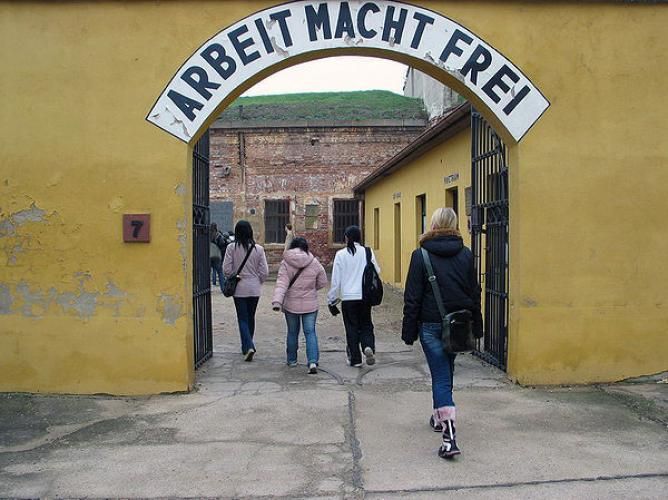
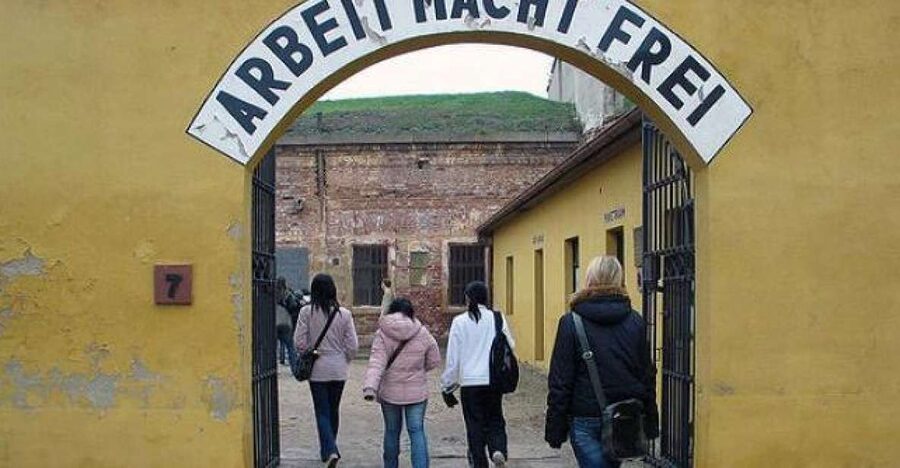
This is also a trip where tone matters. The experience begins at the main gate with the words ARBEIT MACHT FREI, and that sets an immediate, uncomfortable mood. The point is not spectacle, it is context, so you know what you are looking at and why it was built the way it was.
More Terezin memorial trips:
- From Prague: Terezin Concentration Camp Guided Tour w/ Audio
★ 4.6 · 2,248 reviews - Terezin Concentration Camp Day Tour from Prague
★ 4.0 · 1,007 reviews - From Prague: Terezín and Ghetto Museum Guided Tour
★ 4.3 · 571 reviews
How the timing works from Prague, and why it feels well-paced
Your day includes transport time, which is clearly built into the schedule. You leave Prague, spend about 1 hour in the van, then you move through the memorial stops with guided time at each location. The pattern looks like this, in plain terms: museum introduction, then the two fortress areas, then the crematorium and cemetery, and finally additional time within Terezín before heading back to Prague.
That breakdown is useful because it prevents the most common problem on memorial tours, rushing past the places that deserve attention. You get an hour at the Ghetto Museum and another hour at the main concentration camp area, then shorter focused time later for the crematorium and cemetery. You also get a longer final guided block to tie things together.
For some people, 6 hours can feel like a lot. That is especially true if you are sensitive to the subject matter or you like to linger. If you know you will need more pauses than the schedule allows, you can still choose this tour, but you should mentally plan for a day that is intentionally structured, not flexible free time.
Entering Terezín: the gate message and the WWII context you need
Right when you arrive, the visit frames the meaning of the site. The gate message ARBEIT MACHT FREI creates a gloomy baseline for what follows. Then your guide sets the historical stage so you are not trying to piece together decades of events while walking.
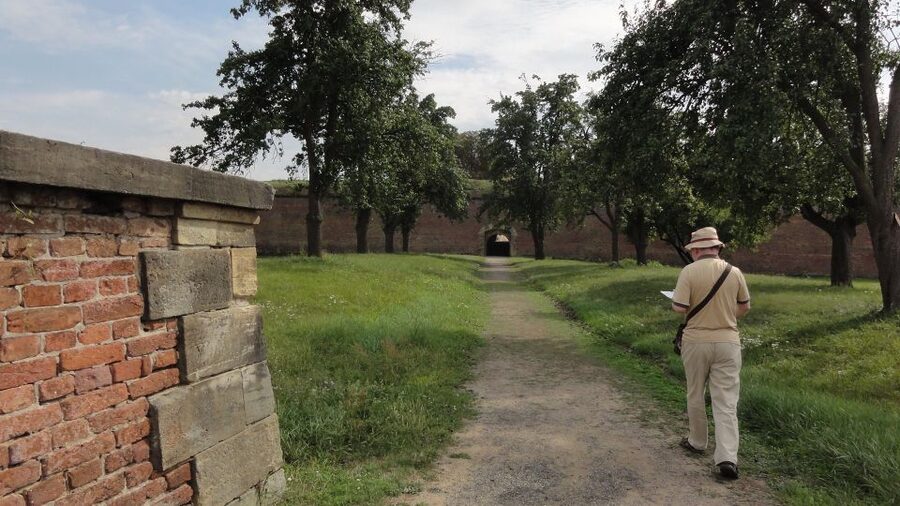
Terezín started as something different long before WWII. In the late 18th century the Habsburg Monarchy built the fortress as a stronghold against threats from the north, and it was named after Empress Maria Theresa. That background is important because it shows how the Nazis repurposed places that already existed, turning military infrastructure into a system of confinement and transport.
The darkest chapter came during WWII. Around 1940, Prague’s Gestapo established the Minor Fortress as a police prison. Roughly 32,000 prisoners passed through the Minor Fortress between 1940 and 1945, and about 2,500 were killed by hunger, disease, tyrannical guards, and executions. Later, in 1941, the town of Terezín was transformed into a Jewish ghetto-transit camp. Until the end of the war, more than 150,000 deportees passed through, and about 35,000 died there. Russian forces liberated Terezín on May 10, 1945, just 8 days after Berlin fell.
When your guide presents those numbers while you are physically in the area, it helps the site stop feeling abstract. You start to see how the camp functioned, not just that it existed.
The Small Fortress walkthrough: prison spaces you can actually picture
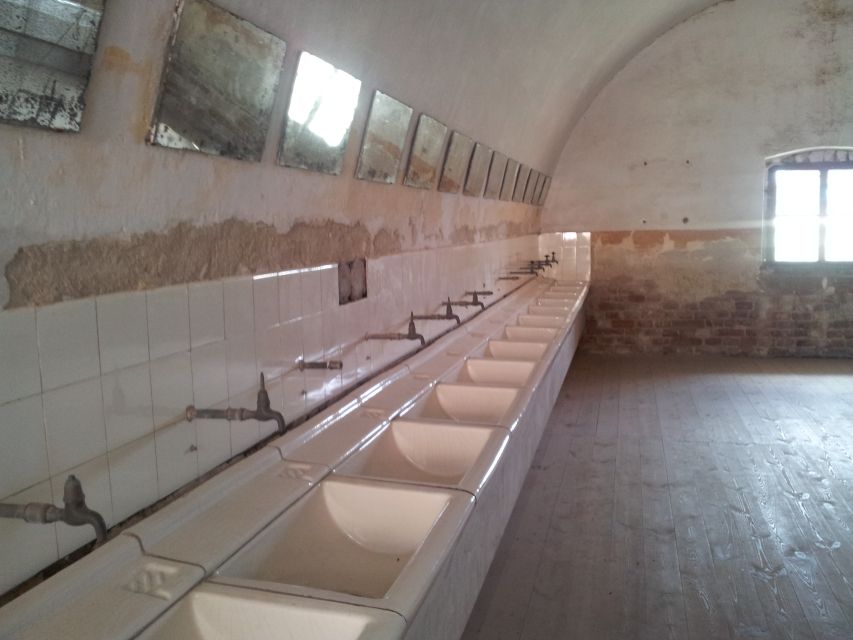
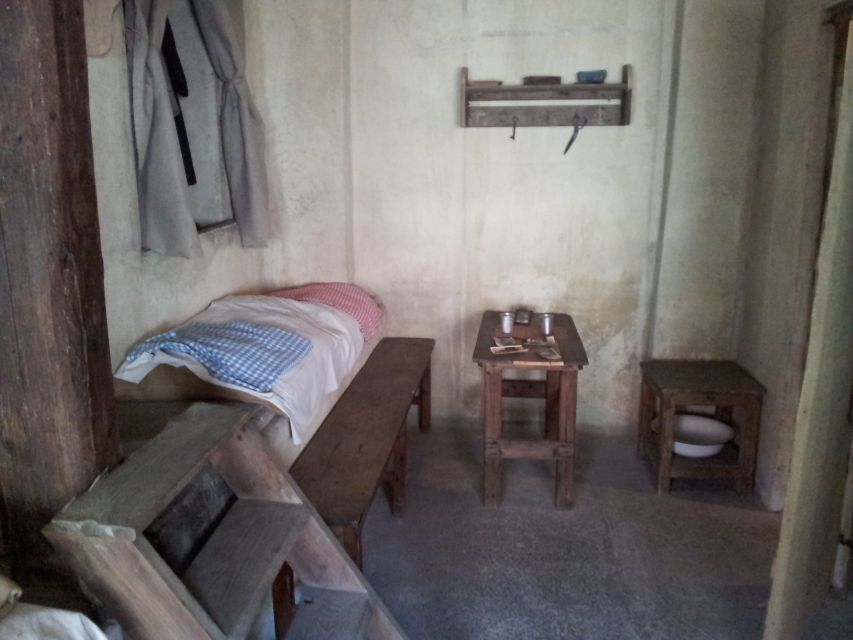
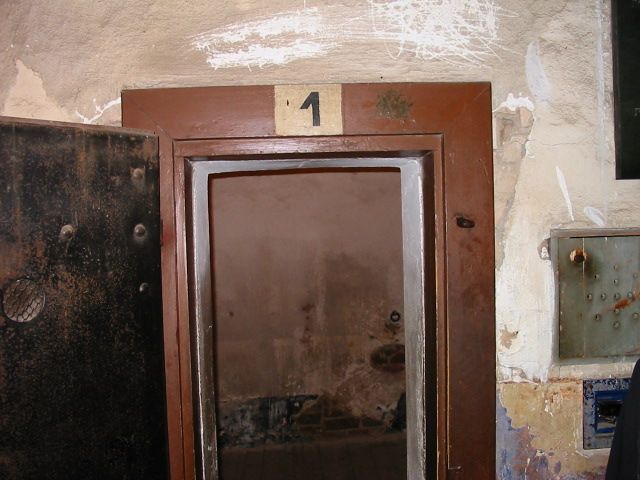
One of the most impactful parts of this tour is the time in the Small Fortress. This is where you are guided through the spaces that connect to the daily reality of imprisonment. You can expect to see barracks areas and spaces associated with punishment and control, including execution grounds, workshops, and isolation cells.
I like how this portion forces your brain to picture what incarceration meant in practice. It is not enough to know the word prison. You see how the rooms, paths, and restricted areas were set up. A good guide keeps that visual experience tied to the broader WWII story, so you do not end up with disconnected scenes.
Also, the tour does not pretend the experience is neutral. The guide’s job is to keep the facts clear while treating the place with seriousness. That shows up in the way guides are described by people who have gone before, including accounts of George speaking quietly but powerfully and guides like Natalia and Michaela bringing energy that stays respectful.
Because the Small Fortress is emotionally heavy, pace matters. If you tend to get overwhelmed in tense spaces, tell your guide early. This is private, so the flow can be adjusted within the overall structure of the day.
More day trips out of Prague:
- VIP Best Reviews: Bohemian & Saxon Switzerland from Prague
★ 5.0 · 3,050 reviews - Bohemian & Saxon Switzerland From Prague-Travelers’ Choice 2025
★ 5.0 · 2,475 reviews - From Prague: Kutna Hora UNESCO Site Tour with Bone Chapel
★ 4.6 · 1,917 reviews - From Prague: Full-Day Trip to Český Krumlov
★ 4.6 · 1,172 reviews
Big Fortress and the ghetto-transit transformation during WWII
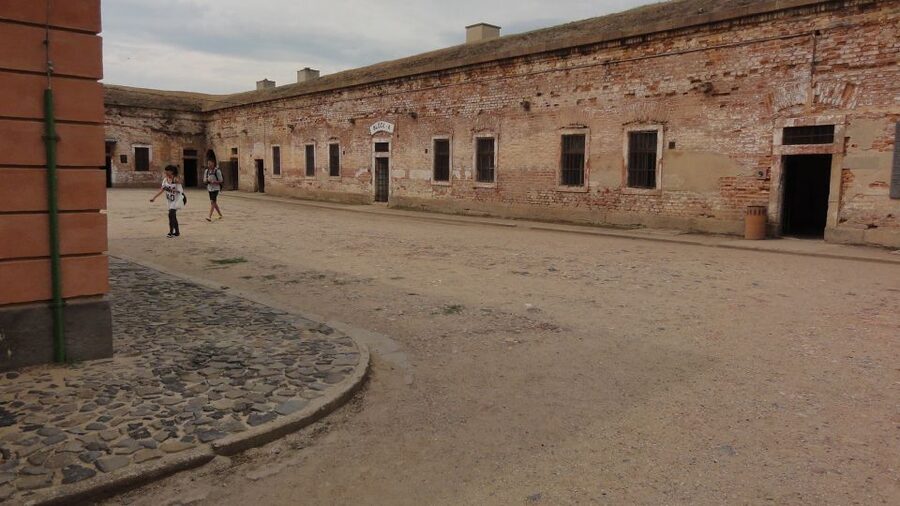
After the Small Fortress, the tour turns toward the larger concentration camp area and what became of Terezín under Nazi policy. This is where the story broadens from imprisonment to the camp’s role in deportation and transit.
You learn how the town was reshaped in 1941 into a Jewish ghetto-transit camp. The key takeaway is that Terezín was not only a place where people suffered while they waited, it was also a node in the machinery of deportation. With more than 150,000 deportees passing through and about 35,000 dying there, the scale is hard to grasp without guidance.
The Big Fortress portion is therefore about understanding systems, not just locations. With the guide, you connect the physical layout to what it was used for, and you learn how Terezín functioned in the larger pattern of WWII persecution.
I also like that the tour ties the end of the timeline to the site itself. Liberation arrived on May 10, 1945, 8 days after Berlin fell. When you hear that and then look at the memorial landscape, you get a clearer sense of how long the suffering lasted and how quickly the world moved after Berlin.
Museum, crematorium, and the Jewish Cemetery stop for remembrance
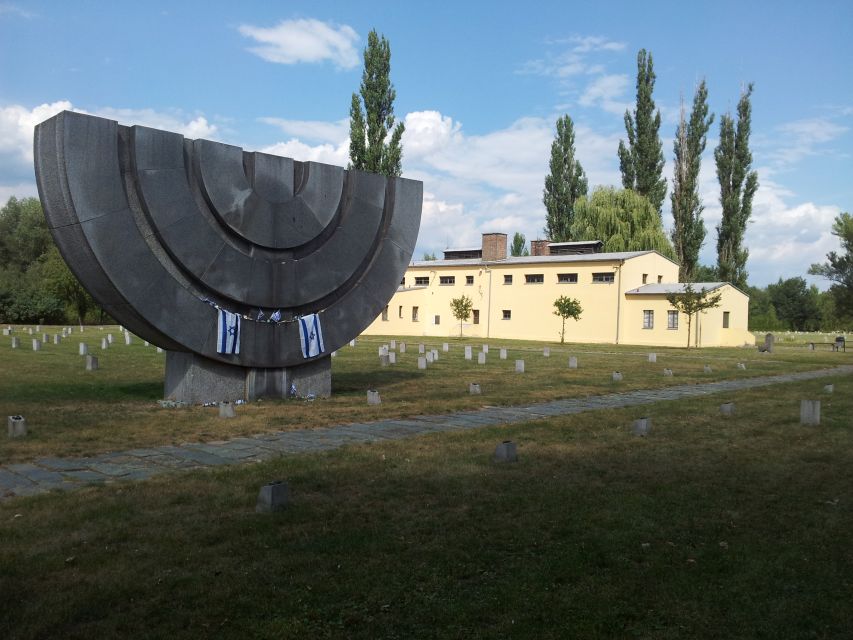
You start with the memorial museum and ghetto museum area, then later you return for crematorium and cemetery time. That order helps. The museum portion gives you a guided entry point, and the later cemetery stop grounds the visit in how remembrance takes physical form.
The museum tour includes time in a local museum and also an educational movie. I like this combination because it gives you two ways to understand what you are seeing: objects and visuals, plus narration and context. Even if you already read about Terezín before you go, the movie and guided explanation can help you fill in gaps and organize the timeline.
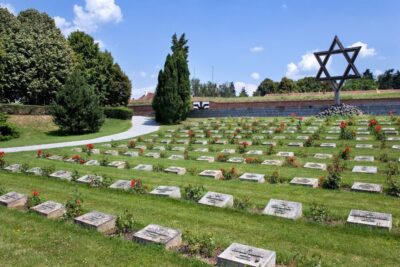
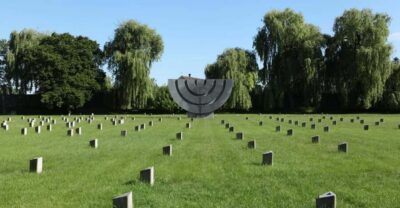
Then, about halfway through the day, you get a focused 30-minute segment at the crematorium and Jewish Cemetery. This shorter stop is purposeful. It keeps the emotional center of the visit from getting lost in the more expansive fortress areas.
This is also a moment to slow down mentally. The place asks for it. If you are prone to rushing to the next site, make a small effort here to pause, look around, and let the meaning settle.
Survivor stories told by your driver-guide, and why it matters
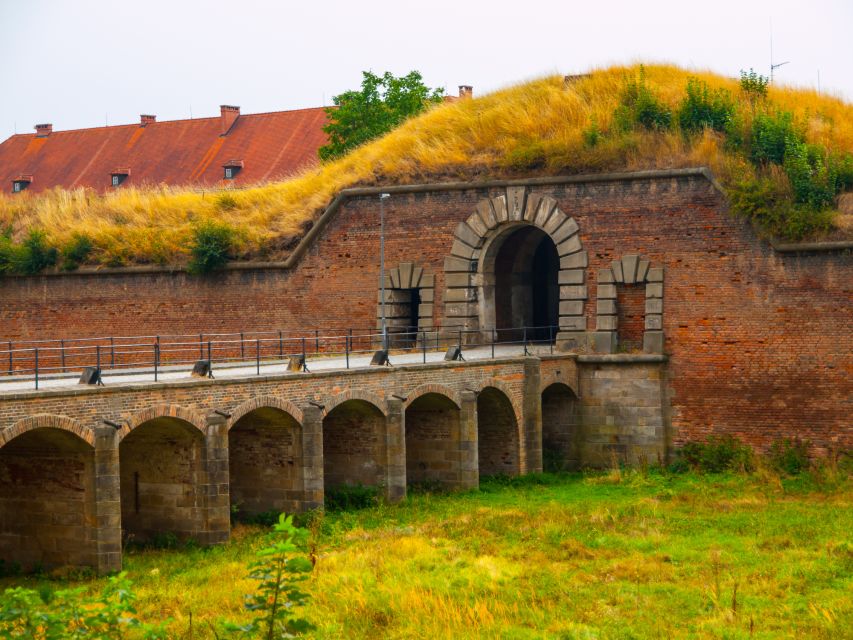
The best part of a memorial tour is often not the buildings. It is the human interpretation you bring to those buildings.
That is where guides like George make a real difference. People specifically highlight him for knowing survivors connected to Terezín and for speaking in a quiet, powerful way about what happened. Others note Natalia’s skill and positive energy, Michaela’s exuberant approach paired with strong knowledge, and Prem’s patience and well-traveled understanding of regional history.
You might not walk out knowing every date, but you can walk out with a better sense of what the system did to real lives. That is the core value of hearing survivor-centered stories, because it changes the way you process the numbers. The statistics become more than facts. They become the scale of choices and suffering that were imposed.
Also, because this is a private tour, you have a better chance to ask questions. In one account, a guest asked to add Lidice to the itinerary. The key detail for you is that the day can be adjusted to your interests. If you want to connect the broader WWII experience across locations in the region, it is worth bringing that up with your guide.
Transportation and group size: what private really buys you
This tour is designed as private from the start. Up to 3 passengers ride in a private car, and up to 7 ride in a van. Either way, you get pickup and drop-off from your hotel or apartment in Prague.
That private format is not just a comfort perk. It changes the quality of the day. You can ask questions without worrying about timing the needs of a larger group, and your guide can pace your attention on the spots that hit hardest. On a memorial site, that matters.
It also helps you manage door-to-door logistics. You are not planning multiple transitions, and you do not have to figure out how to get between fortress areas on your own. Transport quality is also noted as strong, with many reviewers giving transport a perfect score.
For most people, the value comes from buying time with a guide, plus stress-free transport. If you would otherwise spend that time piecing together independent travel on a heavy itinerary, the private format feels like the clearer choice.
Cost and value: entrance fees are separate, but most of the day is included
The price is $459 per group, for up to 3 people. That is the headline cost, but the value depends on how many people you bring.
If you go as a trio, you can think of it as roughly $153 per person for the guided tour and transport component, before entrance fees. If you go solo, the same group price spreads across one traveler, so your per-person cost rises. Either way, you should factor in entrance costs and meals.
Entrance fee is 310 CZK per person, about 13 EUR, and it is not included. Food and drinks are also not included. So budget for lunch or snacks on your own, either before you depart or after you return to Prague.
What is included is the heart of the day: the driver-guide, the private vehicle, pickup and drop-off, the walking and driving portion of Terezín, and a charitable contribution. For me, that last detail matters because it signals that part of your day’s cost is directed toward memorial support rather than only operations.
Practical notes for your day in Prague to Terezín
This tour gives you one clear prep item: bring a passport or ID card. For a memorial tour, that is not always top of mind, and it is easy to forget until you are already waiting at pickup.
Pickup timing also matters. You should be ready about 5 minutes before your scheduled pickup time at your hotel reception or apartment building entrance. This keeps your schedule running smoothly, which matters when the day is set up with guided time blocks.
Because food and drinks are not included, plan your day around that. If you need a break, it helps to have a plan for when you will eat, rather than hoping you can pick something up at the last minute.
Who this Terezín private tour is best for
Choose this tour if you want a guided visit that connects the history to the physical site, with enough time at the museum and the fortresses to build a coherent picture. It is also a strong fit if you prefer learning from a guide who can tailor the day, which is easier in a private group.
This tour is especially suitable for people who care about WWII context and Jewish history and want it presented with care. The strongest feedback emphasizes guides’ storytelling ability and their ability to explain the big picture, with names like George and Natalia standing out for how they help guests understand the wider Jewish WWII experience.
If you are traveling with another person or two and want a quieter, more personal experience than a larger group tour, this is likely the smarter move. You are also in a better position to ask questions and make small changes, such as adding an extra historical stop like Lidice if your schedule allows.
Should you book the Prague-to-Terezín private tour?
If you are deciding whether to book, I would frame it like this: book it if you want guided understanding, not just a self-guided walk through painful places. The private format, the mix of museum plus fortress areas, and the attention to survivor-connected storytelling make this tour more than a drive out of Prague.
You should think twice if you know you want a very light day or you struggle with emotionally intense sites. This is serious history in real spaces. Even with the best guide, the content will stay heavy, and the schedule is tight enough that you will not have endless free time.
But if you can handle the subject matter, this tour is a strong value way to do Terezín right. You get a structured timeline from the fortress origins through the WWII prison and ghetto-transit period, and you end with memorial spaces like the cemetery and crematorium that help the meaning land.
FAQ
How long is the tour and how much time is driving?
The total duration is 6 hours, with about 1 hour of van time from Prague to Terezín and about 1 hour back.
What does the tour include besides the guided stops?
It includes a driver-guide, private transport in a car or van, hotel or apartment pickup and drop-off in Prague, guided walking and driving through the Terezín area, and a charitable contribution.
Is the entrance fee included in the price?
No. The entrance fee is 310 CZK per person (about 13 EUR) and is not included.
Is there a live guide, and what language do they speak?
Yes, there is a live tour guide, and the tour is in English.
Do I need ID for this tour?
Yes. You should bring a passport or an ID card.
Is food included during the day?
No. Food and drinks are not included, so plan to eat before or after your tour.
Just added around Prague
- WWII and Communism History in Prague’s Old Town Private Tour★ 5.0 · 4 reviews
- Prague: Historical Walking Tour with Focus on World War 2★ 4.3 · 12 reviews
- World War II 4WD Tour from Prague with Lunch★ 4.4 · 3 reviews
- World War II History Tour of Prague’s Old Town★ 5.0 · 4 reviews
- Walking tour of Prague in French : Nové Město★ 4.9 · 16 reviews
- Walking tour of Prague in french: Old Town & Charles Bridge★ 4.9 · 62 reviews
- Organ Concert in St Francis Church Admission Ticket★ 4.5 · 88 reviews
- Unique salt cave in Prague★ 4.9 · 10 reviews
Terezin Memorial Tours, compared.

Terezin Concentration Camp Guided Tour w/ Audio
Read our review →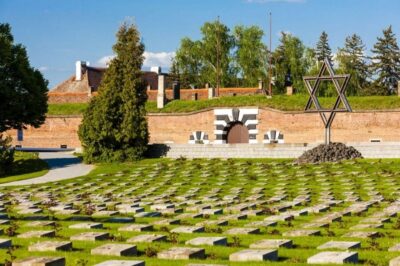
Terezin Concentration Camp Day Tour from Prague
Read our review →

Terezin & Bohemian Switzerland from Prague: Bastei, Narnia & Café
Read our review →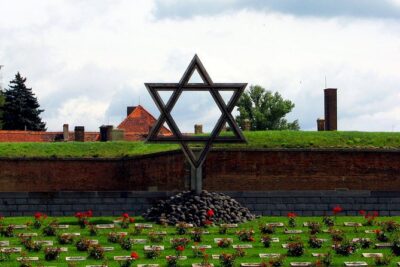
Browse the lists this tour appears in