Review · TICKETS
Prague: Castle Tour with Local Guide and Entry Ticket
Prague Castle feels like a live fairy tale. With headphones for expert commentary and skip-the-line convenience, this tour helps you move through one of Europe’s biggest historic complexes without getting lost in the crowd. You cover the core sights and the stories that connect them.
What I like most is how the guide turns major landmarks into understandable history, especially at St. Vitus Cathedral and the Old Royal Palace. You get pointed stops that actually help you notice what matters, like Alfons Mucha’s stained glass and the vaulted space of Vladislav Hall.
One consideration: Prague Castle is huge, and on rare occasions some areas may be closed by official regulations. In winter, expect extra time outdoors before and between entrances, so dress for cold and wind.
In This Review
- Key points to know before you go
- Why This Prague Castle Tour Works Better Than Going Alone
- Meeting at Malostranská and Getting Up the Hill on Time
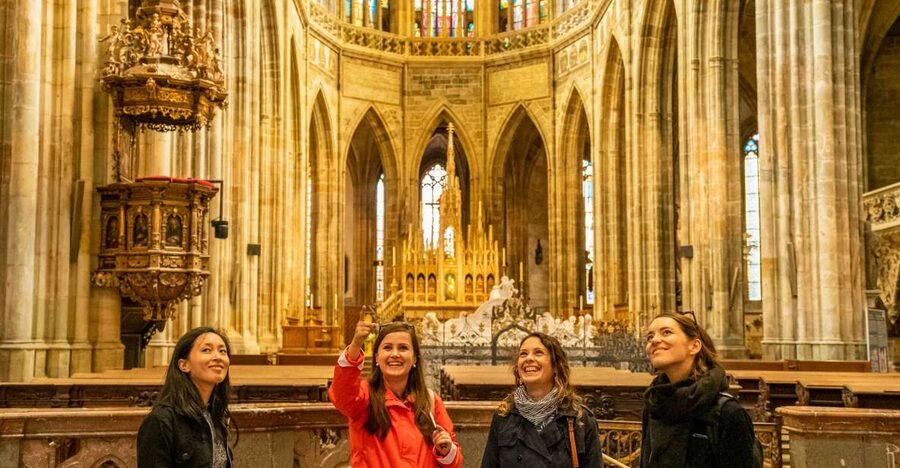
- St. Vitus Cathedral: Mucha Stained Glass and Gothic Details You Will Actually Notice
- Tombs and Chapels: From Saints to Rulers, and Why the Stories Matter
- Old Royal Palace and Vladislav Hall: Architecture Meets Big Political Drama
- St. George’s Basilica: Fresco Fragments and the Double Staircase
- Golden Lane: Sharpshooters, Goldsmiths, and Kafka’s Alley
- Price and Value at About $61 Per Person
- Who This Tour Fits Best (And Who Should Rethink It)
- Booking Choice: Small-Group or Private, and Why It Matters
- Should You Book This Prague Castle Tour?
- FAQ
- How long is the Prague Castle tour?
- Where do I meet the guide?
- What’s included in admission?
- Does this tour help with long lines?
- Are headphones provided?
- Which language options are available?
- What should I bring or wear?
- Are there any special child pricing rules?
Key points to know before you go
- Local guide with live headset commentary so you can hear clearly in crowded rooms
- Skip-the-ticket line and short security line to cut wasted time at checkpoints
- St. Vitus Cathedral stops you can name later including Mucha stained glass and key tombs
- Old Royal Palace focus with time in Vladislav Hall and the Defenestration of Prague site
- St. George’s Basilica and Golden Lane for both power and everyday life under the castle
- Choose small-group or private for a more tailored pace
Why This Prague Castle Tour Works Better Than Going Alone
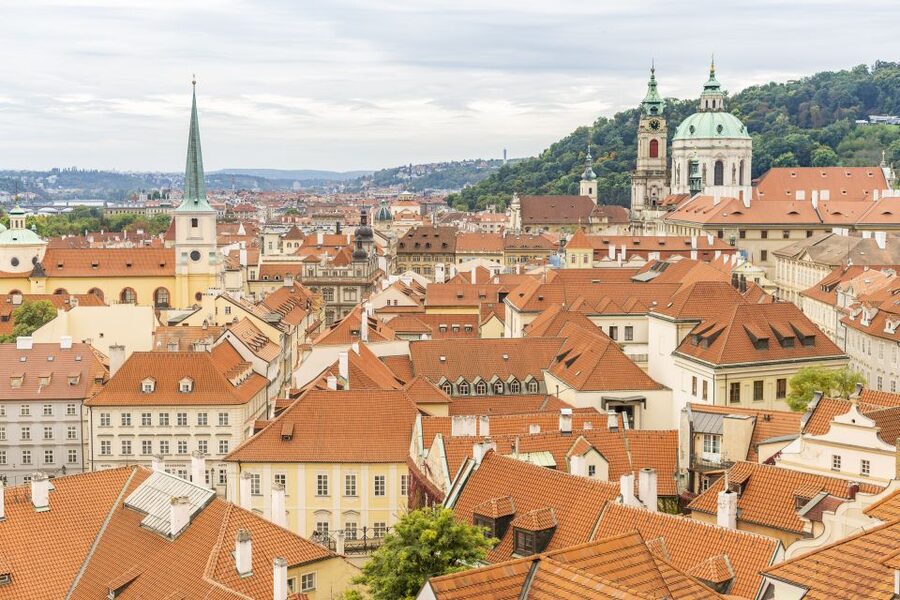
Prague Castle is the kind of place that overwhelms you fast. Even if you love history, you can end up doing a checklist walk, staring upward, and forgetting what you just saw. This tour fixes that with a local guide and a clear route through the main buildings.
The headset system is a big deal. When you are inside St. Vitus or moving through busy passages, it is easy for normal conversation to fail. With headphones, you can keep your eyes on the architecture and still catch the explanation. Many guides get high praise for keeping people together and for making crowded areas manageable, including guides such as Ross and Hannah who were repeatedly mentioned as clear and engaging.
The other practical win is the time savings at entry points. You still wait, because this is Prague Castle and it’s popular, but skipping the usual ticket line and using the short security line helps you get into the first interiors faster. That matters because the tour is only about 150 minutes, and you want that time inside where it’s warmer and where the highlights actually are.
A few more Prague outings to weigh up
- Prague: Skip-the-line Castle Ticket and Optional AudioGuide
★ 4.3 · 11,121 reviews - Prague Castle 2.5-Hour Tour Including Admission Ticket
★ 4.7 · 8,927 reviews - Prague: Old Town Hall Tower Entry Ticket
★ 4.5 · 6,749 reviews
Meeting at Malostranská and Getting Up the Hill on Time
The meeting point is right by the Malostranská metro station exit, near the fountain. There is a brown and white sign that says Meeting Point, and you’ll see a guide holding an orange umbrella. During winter, the fountain is covered, so focus on the sign and the umbrella, not the water.
From there, you take the tram up to Prague Castle. This is not just a convenient shortcut. It also helps you avoid the slow slog of walking uphill with bundled-up groups. The tour includes the tram ticket, so you are not juggling payment or trying to figure out which transit option is fastest.
Tip: wear comfortable shoes. Even with a tram, you still cover a lot of stone steps and uneven ground across the castle complex. If you are visiting in cold weather, bring gloves too, because you might stop for longer photos than you planned once you start spotting gargoyles, stained glass details, and carved tomb markers.
St. Vitus Cathedral: Mucha Stained Glass and Gothic Details You Will Actually Notice
St. Vitus Cathedral is the emotional core of the castle complex, and the guide helps you see it as more than a big church.
Inside, you’ll focus on the gothic architecture and specific visual moments. The tour highlights the stained glass created by the Czech artist Alfons Mucha. It’s the kind of artwork people photograph quickly, but a good explanation tells you what you are looking at and why it matters. You’ll also hear about other standout religious art in the cathedral, including a 14th-century mosaic of the last judgment.
Here’s the practical value: when your guide points out what to look for, you stop scanning randomly. Instead, you look for the features you can remember later. That is especially helpful in St. Vitus because it’s busy, echoing, and full of visual clutter.
Possible drawback here is crowding. Even with headphones, you may still be squeezed in during peak times. The upside is that the tour format keeps you moving in a way that reduces backtracking. If you are prone to getting frustrated in crowds, this is one reason the headset is worth it.
Tombs and Chapels: From Saints to Rulers, and Why the Stories Matter
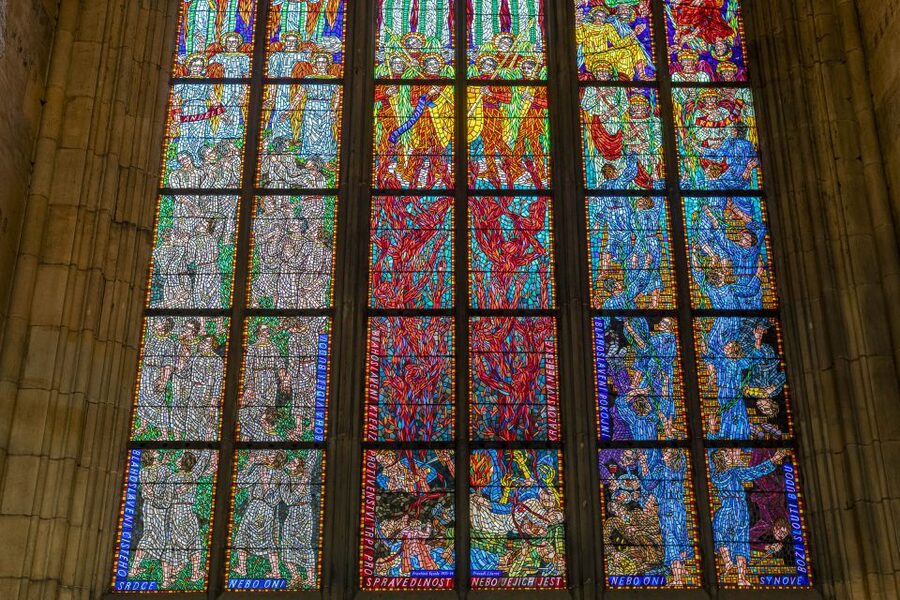
Prague Castle is also a monument to power. St. Vitus is where that power becomes personal, through tombs and chapels tied to major figures.
On this tour, you’ll see tombs and sacred spaces connected to key leaders, including St. Wenceslas and Charles IV. You’ll also visit the baroque tomb of St. John of Nepomuk and the Chapel of St. Wenceslas. These stops aren’t random. They connect religious veneration with political legitimacy, which is a recurring theme across Czech history.
You’ll also hear what these figures represent. That context turns what could look like just “old stones” into a story of competing influence: church authority, royal authority, and the politics of who gets remembered in the most visible places.
If you like your history with clear cause and effect, this portion delivers. It helps you understand why so many later events unfold the way they do. And once you start linking names, Prague stops feeling like a museum you pass through and starts feeling like a chain of decisions.
Another way to fill an afternoon in Czechia:
- Prague: 50-Minute Sightseeing Evening Cruise
★ 4.2 · 33,780 reviews - Prague: Medieval Dinner with Unlimited Drinks
★ 4.4 · 19,847 reviews - Prague: Oldtown, Medieval Underground & Dungeon History Tour
★ 4.3 · 10,277 reviews - Prague: Vltava River Night Cruise with Buffet
★ 4.3 · 7,338 reviews
Old Royal Palace and Vladislav Hall: Architecture Meets Big Political Drama
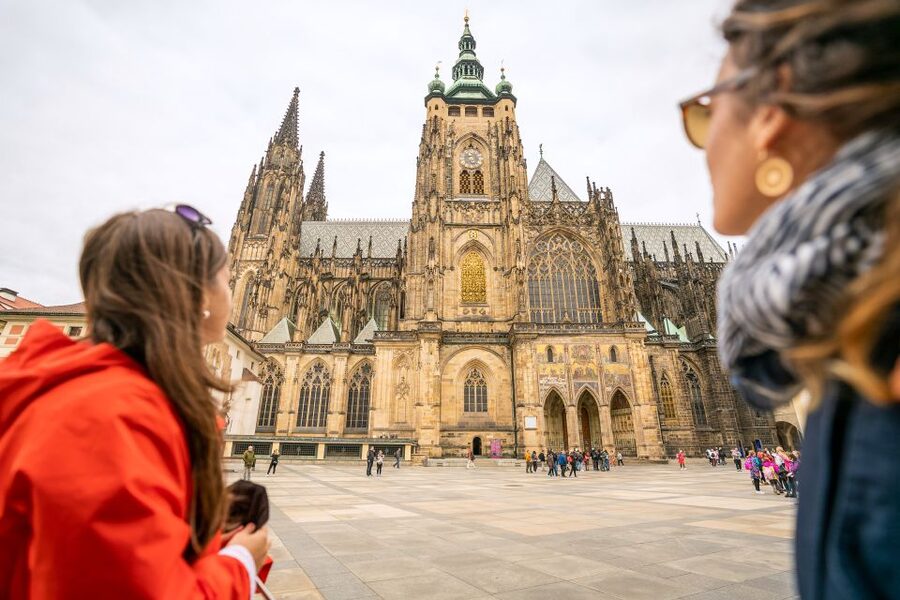
After St. Vitus, you step into the Old Royal Palace. This is where the castle shifts from church grandeur to royal administration and power display.
One of the key moments is Vladislav Hall. You get time standing under its massive vaulted ceiling, which is impressive even if you are not an architecture nerd. The guide’s commentary helps you read the space: you are not just admiring height, you are seeing how this hall was meant to signal authority and permanence.
Another strong stop is the chamber tied to the Defenestration of Prague. This is one of those events that sounds dramatic because it was: Czech Protestant aristocrats threw Catholic governors of the Habsburg emperor and their secretary out the window, an incident that helped spark the Thirty Years War.
This is where the guided format really pays off. Without a guide, it is easy to miss that a particular chamber is tied to a specific turning point. With the story, you understand why the room exists, and why the event still matters in how people talk about the period.
St. George’s Basilica: Fresco Fragments and the Double Staircase
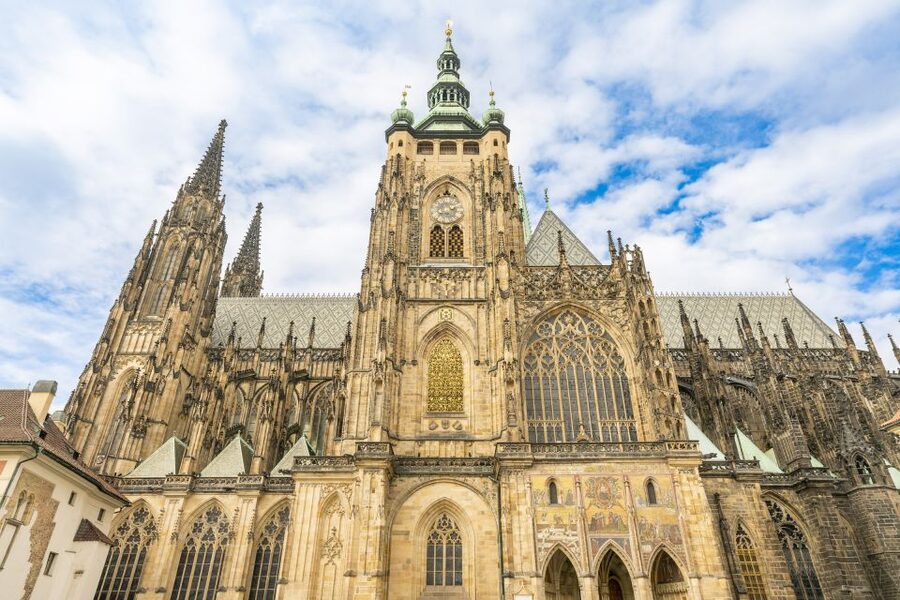
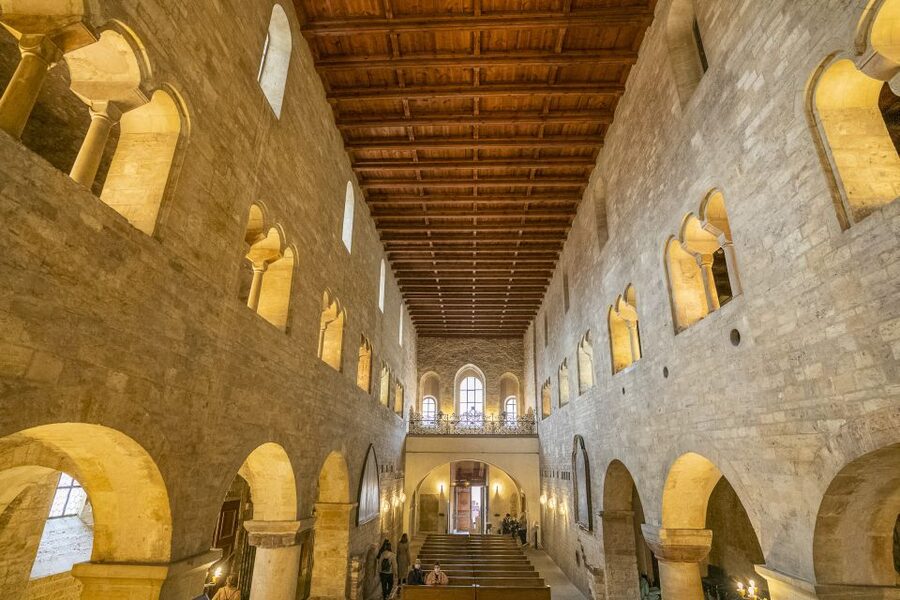
St. George’s Basilica is a great counterpoint to the cathedral. The design feels different, and the guide helps you notice those differences instead of treating it as another “beautiful interior.”
You’ll see fragments of 12th-century frescoes. Even broken or partial art can tell a lot about style and eras, and the tour focuses attention on what those fragments represent. You’ll also walk up the double staircase where the remains of St. Ludmila lie.
That double staircase stop is memorable because it forces you to slow down and pay attention to the built drama. It also helps connect the basilica to the broader castle setting, where religious devotion and royal history overlap in physical space.
If you prefer tours that do more than point and move, this is a good match. The basilica portion gives you a different type of payoff than the cathedral does, and it keeps your afternoon from turning into one long church visit.
Golden Lane: Sharpshooters, Goldsmiths, and Kafka’s Alley
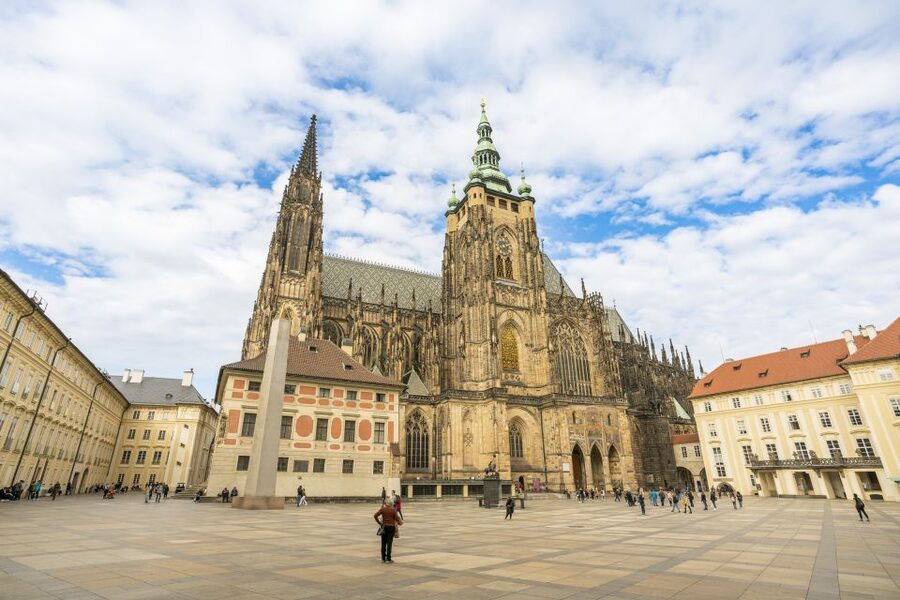
Golden Lane is where the castle becomes human-scale.
You’ll walk along the cottages that were originally built for sharpshooters. Later, those same small spaces were used by goldsmiths. The tour also points out how artists and famous residents lived there later, including Franz Kafka.
This part is especially valuable if you like history you can picture. A cathedral and a hall can feel abstract, but a narrow lane of small homes makes daily life tangible. The guide helps you connect how working people lived in the shadow of the castle, including what life likely looked like for artisans and residents.
Practical tip: Golden Lane can be tight and crowded depending on season. The headphones help again here, because you can keep your attention on the buildings and still hear the explanation without leaning in close to the guide. If you are the type who likes to take photos while listening, this section is built for you.
Price and Value at About $61 Per Person
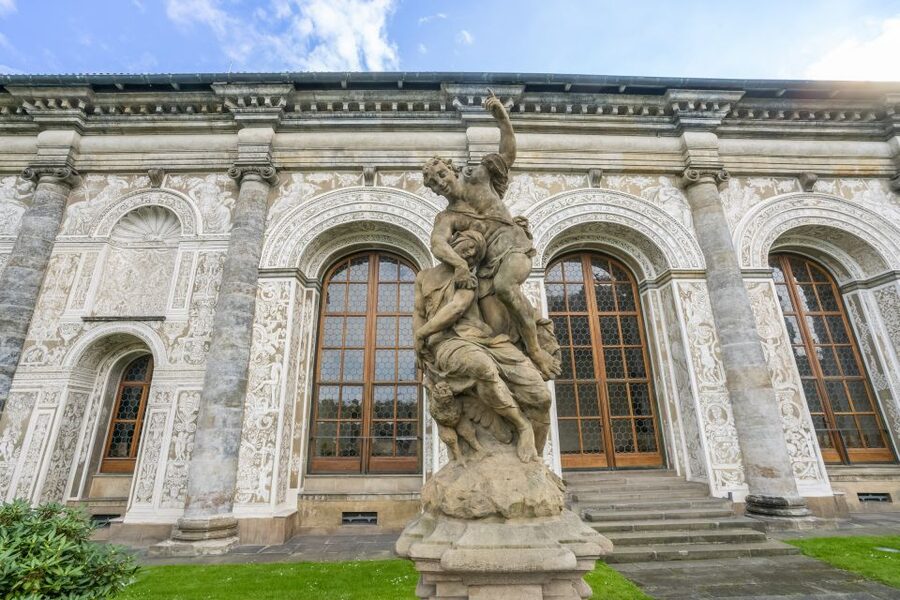
For around $61 per person, you are paying for more than entry tickets. You’re paying for three things that usually cost you time or effort on your own: a local guide, headsets, and skip-the-line support.
Included in the package is the tram ticket, admission to Prague Castle (including St. Vitus Cathedral, the Old Royal Palace, St. George’s Basilica, and the Golden Lane), and the headset system for live commentary. You also get a short security line. In other words, you are not just buying access, you are buying navigation help through a complex site.
Does it always feel worth it? Yes, if you care about understanding what you’re seeing. If you only want to wander and you don’t want commentary, you might choose a cheaper self-guided approach. But if you want to leave with names, dates, and the “why” behind the sights, this format is a strong value.
The duration, about 150 minutes, is another part of the math. You get a focused route that hits major points without turning into an all-day crawl. That keeps the experience energetic, and it helps you avoid spending your whole trip waiting outside.
Who This Tour Fits Best (And Who Should Rethink It)
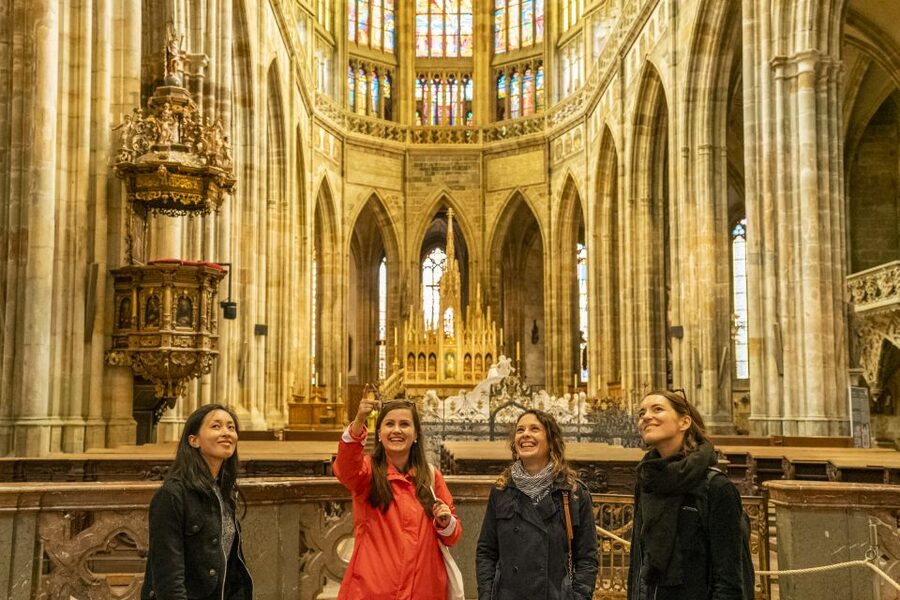
This tour is best for first-timers who want the main sights and the historical connections in a single, organized visit. It is also a smart pick if you struggle with self-guided history at large sites, because the guide’s commentary and the headphone system create structure.
It also works well if you plan to visit other parts of Prague the same day. With a tour length of about 150 minutes, you usually keep your schedule intact. At the end, you can choose how to head back, including taking the tram or using steps down, depending on what feels best.
You might rethink if you want total freedom with no fixed route. Since this is a guided highlight circuit, you will move at the guide’s pace, and some areas can be limited on rare occasions due to official closures. The guide will do their best to give you a great experience, but you should expect that major sites are the priority, not every corner of the complex.
Booking Choice: Small-Group or Private, and Why It Matters
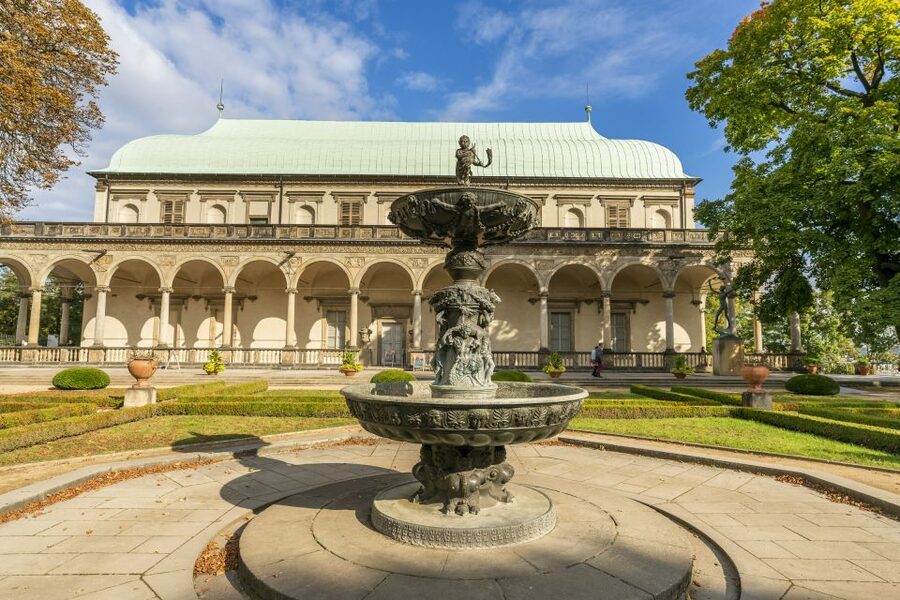
The tour gives you a choice between a small-group or a private guided experience. In practical terms, the difference is how much flexibility you get in pacing and questions.
In crowded interiors like St. Vitus, a private tour can be calmer and more customized. In a group setting, headphones and a clear plan help everyone follow along, and guides are praised for keeping momentum even on very busy days. Some guides were noted for adapting pacing to the weather, too, which is helpful if you visit during colder months.
If you are traveling with kids or older relatives, you’ll likely appreciate the structure. One review also mentioned the guide catering to someone with less mobility, which suggests you can feel supported even when the terrain is tricky.
Should You Book This Prague Castle Tour?
Yes, if you want your visit to feel intelligible and not just impressive.
Book it if you care about the meaning behind the architecture, stained glass, tombs, and political events like the Defenestration of Prague. The headphones and live commentary make it much easier to connect what you see with what it represents, even in crowd pressure.
Skip this tour or consider a different approach if you prefer silent wandering, or if you are visiting during a time when you strongly depend on access to every single building. On rare occasions, official closures can change what is available, and you will be prioritizing the main highlights either way.
If you do book, arrive on time at Malostranská, wear comfortable shoes, and plan to use the headphones immediately once you’re inside. You’ll spend less time trying to figure things out, and more time noticing what makes Prague Castle special.
FAQ
How long is the Prague Castle tour?
The tour duration is 150 minutes.
Where do I meet the guide?
Meet directly in front of the exit of the Malostranská metro station, near the water fountain. Look for a brown and white Meeting Point sign and a guide holding an orange umbrella.
What’s included in admission?
Admission is included for Prague Castle, including St. Vitus Cathedral, the Old Royal Palace, St. George’s Basilica, and the Golden Lane.
Does this tour help with long lines?
Yes. The tour includes skipping the ticket line and using a short security line.
Are headphones provided?
Yes. You get headphones so you can hear the guide’s commentary clearly throughout the tour.
Which language options are available?
Live tour guide languages include Italian, French, Spanish, English, German, and Russian.
What should I bring or wear?
Wear comfortable shoes, since you will be walking around the castle complex.
Are there any special child pricing rules?
Children aged 5 and under go free of charge.
Just added around Prague
- WWII and Communism History in Prague’s Old Town Private Tour★ 5.0 · 4 reviews
- Prague: Historical Walking Tour with Focus on World War 2★ 4.3 · 12 reviews
- World War II 4WD Tour from Prague with Lunch★ 4.4 · 3 reviews
- World War II History Tour of Prague’s Old Town★ 5.0 · 4 reviews
- Walking tour of Prague in French : Nové Město★ 4.9 · 16 reviews
- Walking tour of Prague in french: Old Town & Charles Bridge★ 4.9 · 62 reviews
- Organ Concert in St Francis Church Admission Ticket★ 4.5 · 88 reviews
- Unique salt cave in Prague★ 4.9 · 10 reviews
Tickets, compared.
Skip-the-line Castle Ticket and Optional AudioGuide
Read our review →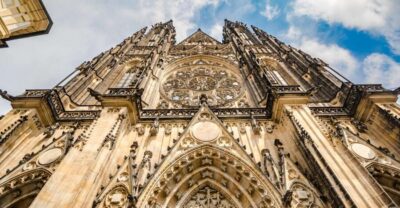
Prague Castle 2.5-Hour Tour Including Admission Ticket
Read our review →

Entry ticket to Ice Pub Prague with Nightclub Option
Read our review →
Prague Castle and Lobkowicz Palace Entry Tickets
Read our review →
Entry Ticket Classical Concert at the Mirror Chapel
Read our review →