
Review · WALKING TOURS
Private Prague Art Nouveau and Cubism Walking Tour
Prague’s art looks like it changed overnight. This private Prague Art Nouveau and Cubism Walking Tour is a focused way to spot two early-modern styles while you move through real neighborhoods, not just postcard viewpoints. I love the way the route teaches you what to notice, so the city starts to make sense by the end.
Two things I particularly liked: first, the storytelling and passion from your guide, Max Hutar (Prague Articulate), which helps you connect dates, design choices, and the people who commissioned these buildings. Second, the stop mix is smart, starting with major public architecture and ending with lesser-known street details, so you get both impact and variety.
One possible drawback to plan for: you will be walking, and the tour can run a bit longer than the advertised 2 hours 30 minutes if your group lingers on facades and details.
In This Review
- Key highlights worth your attention
- Why Prague Art Nouveau and Cubism feel so personal
- Price and logistics: what you’re really paying for
- Route snapshot: from Central Station toward Albertov
- Stop-by-stop: what to look for and what each place gives you
- Stop 1: Praha hlavní nadrazi, Art Nouveau grandeur in daily use
- Stop 2: Jerusalem Synagogue, Moorish roots with Art Nouveau timing
- Stop 3: Senovážné náměstí, Art Nouveau apartment elegance
- Stop 4: Hybernská 10, Hotel Central Palace and early Art Nouveau
- Stop 5: Obecní dům (Municipal House), a major Art Nouveau showpiece
- Stop 6: House of the Black Madonna, the Cubist flagship moment
- Stop 7: Na Příkopě, the Art Nouveau boulevard feeling
- Stop 8: Emil Kralíček’s cubist lamppost, design that behaves like sculpture
- Stop 9: Václavské náměstí, Art Nouveau hotels and department store edges
- Stop 10: Vodičkova, where Art Nouveau and Cubism sit side by side
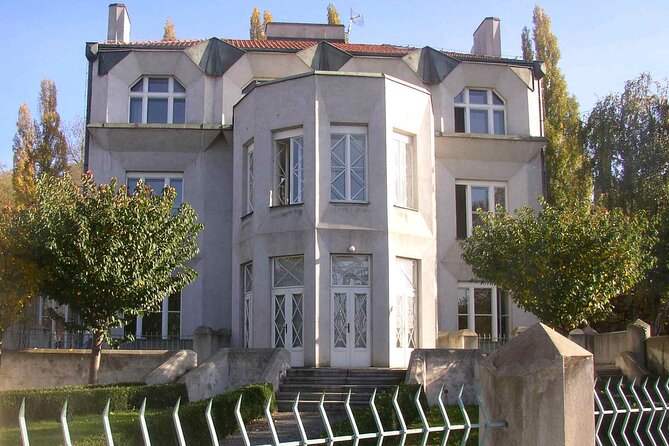
- Stop 11: Three Cubist Houses under Vyšehrad rock
- Stop 12: Villa Kovarovic (1912), Cubism with Gothic and Baroque influence
- Stop 13: Neklanova street, a Cubist apartment finish
- How to get the most from your walking time
- Who this tour is for, and who might want a different style
- Should you book this Prague Art Nouveau and Cubism tour?
Key highlights worth your attention
- Two styles, one walking “lesson”: you learn to recognize Art Nouveau curves and Cubist angles as you go.
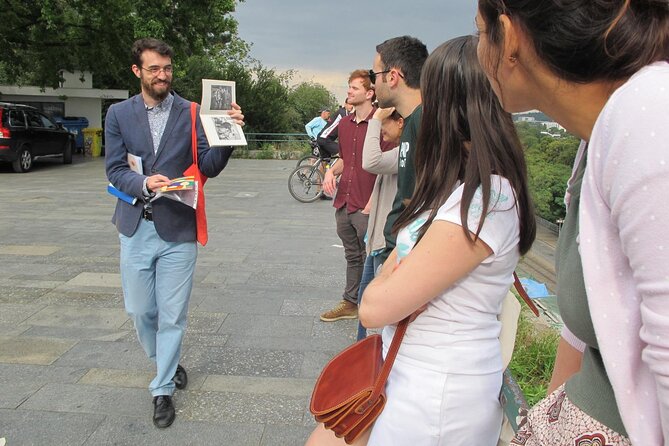
- Max Hutar’s guided perspective: the tour is built around clear explanations and engaging storytelling.
- A route with variety: train station grandeur, synagogue exterior details, and compact street furniture like the cubist lamppost.
- Good mix of free exterior stops and paid-inside options: some locations are free to view, while certain sites may require separate tickets.
- Easy public-transport link for the finish: you end near Albertov so you can get back toward the center quickly.
- Private format for up to 15 people: you stay together as a group, with more flexibility than a big bus tour.
Why Prague Art Nouveau and Cubism feel so personal
If you only visit Prague for bridges and towers, you miss a quieter story. This tour centers on the moment when designers were trying to break away from older forms, then pushing experimentation to the street level.
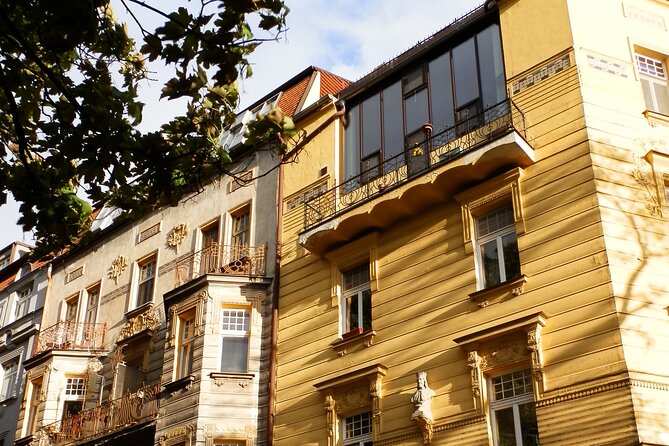
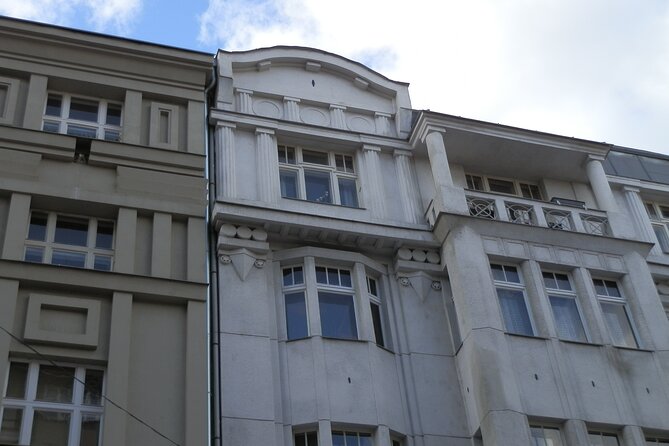
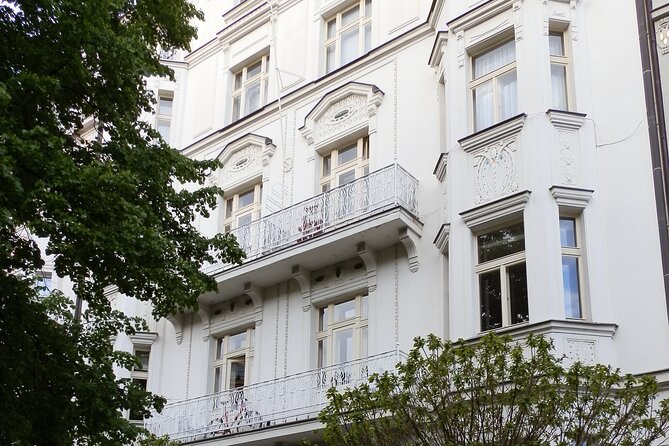
Art Nouveau in Prague often looks like it is growing, with ornate curves and “almost organic” decoration. Cubism in Prague goes the opposite direction, with sharper geometry and facades that can look like they are fractured or reassembled. The best part is that you do not have to be an art expert to enjoy it. By the time you finish, you start seeing patterns. You will likely find yourself looking at corners, windows, and ironwork and saying things like, I get it, that’s the style making a point.
This is also a great way to orient yourself. You pass through places that connect neighborhoods, so your mental map of Prague becomes more than a line on your phone. Even if you arrive with zero background, you get a practical vocabulary for what you are seeing.
More Walking Tours in Prague:
- Prague: 3-Hour Walking Tour of Old Town & Prague Castle
★ 4.7 · 5,696 reviews - Prague: Ghost Walking Tour Where Legends Come To Life
★ 4.4 · 5,253 reviews - Prague: Jewish Quarter Walking Tour with Admission Tickets
★ 4.7 · 3,729 reviews
Price and logistics: what you’re really paying for
At $94.93 per group (up to 15 people), this is priced like a private experience, not a per-person ticket. If you travel with friends or family, the math can get very reasonable fast, because the cost does not scale with headcount up to the group limit.
You should also know how the time works. The tour is advertised for about 2 hours 30 minutes, but the time assigned to each stop does not add up perfectly to that total. That is because there are short walks between locations and at least part of the route uses public transportation. Translation: expect a mix of stepping out, quick photo moments, and then moving on.
One more practical note: since admission is not included for some stops, you may want to decide in advance what you are comfortable paying extra for if you are interested in interiors. If you mainly want the exterior architecture, you can still get a full experience from the walk-by viewpoints.
Route snapshot: from Central Station toward Albertov
You start at Prague Main Station (Wilsonova 300/8) and move through the city’s Art Nouveau and Cubist zones, ending near Albertov (close to Na Slupi 2102/2b). The finish matters. After the last buildings, you are in a spot where public transit gets you back toward the center quickly, and the ticket used during the tour is still valid long enough for that last leg.
The route also follows a very logical arc: big public spaces first, then neighborhood architecture, then more focused Cubist gems near the fortress area and the river.
Stop-by-stop: what to look for and what each place gives you
A few more Prague outings to weigh up
- Prague Old Town: Private Tour
★ 5.0 · 1,223 reviews - Prague Airport Private Arrival Transfer
★ 4.5 · 991 reviews - Prague Airport Private Departure Transfer
★ 4.5 · 780 reviews - Discover Prague Private Tour – 3 hours
★ 5.0 · 705 reviews
Stop 1: Praha hlavní nadrazi, Art Nouveau grandeur in daily use
Prague’s Central Train Station building opened in 1909 and has been recently reconstructed. Even if you are not a train person, this is a smart first stop because it shows how Art Nouveau style can scale up to monumental, public architecture.
What I’d focus on: the way the station feels designed rather than just built. Look at how ornament and structure work together, especially in halls and corridors where the architecture keeps “speaking” as you move.
Good to know: admission here is free for this stop, so you can spend time inside without extra ticket friction.
Stop 2: Jerusalem Synagogue, Moorish roots with Art Nouveau timing
The Jerusalem Synagogue (from 1906) is known for a traditional Moorish style, and this one includes elements of Art Nouveau from that era. That combination is part of why this tour works. It shows that styles were not always “pure.” Sometimes they were blended to fit identity, taste, and the moment.
What to look for: even from a brief stop, try to notice how the facade language differs from the station’s Art Nouveau look. The shapes and mood shift, and that contrast helps you learn.
Admission here is not included, so if you want to go in, plan for a separate ticket.
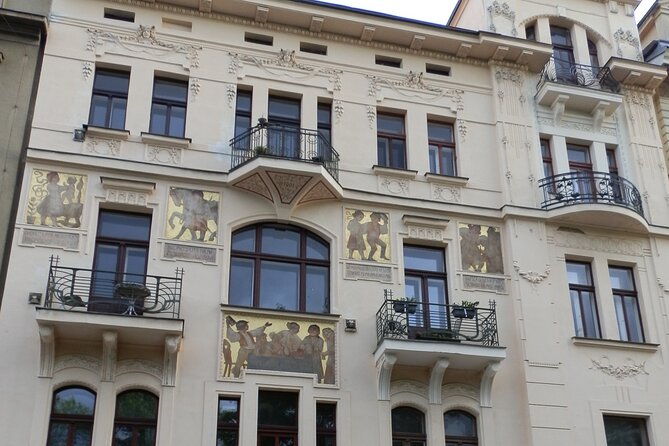
Stop 3: Senovážné náměstí, Art Nouveau apartment elegance
At Senovážné náměstí, you get a quick glimpse of three luxurious Art Nouveau apartment buildings. This is the kind of stop that makes architecture feel lived-in, not museum-locked.
What I’d notice: balconies, facade rhythm, and how apartment buildings still carried design ambitions. These buildings remind you that “modern style” was not reserved for palaces.
This is listed as free to access for the stop, which makes it easy to keep moving.
Stop 4: Hybernská 10, Hotel Central Palace and early Art Nouveau
Hybernská 10, the Hotel Central Palác building, dates to 1899. It is described as one of Prague’s earliest Art Nouveau style buildings, which makes it a key checkpoint. Early examples can feel a bit more tentative or experimental compared to later, more confident statements.
What to look for: details that signal Art Nouveau thinking, then compare the intensity of the style with later stops. That “before and after” feeling is how you start to see evolution.
This stop’s admission is not included, so you’ll likely rely more on outside viewing.
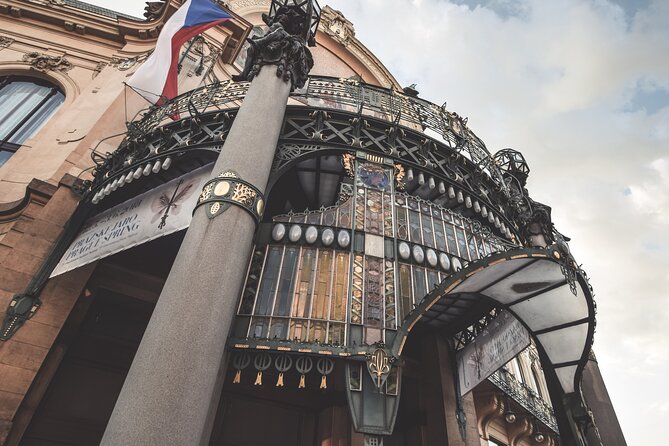
Stop 5: Obecní dům (Municipal House), a major Art Nouveau showpiece
The Municipal House of Prague (Obecní dům) was projected in 1905. It still serves as a house of culture and representation, and it is described as one of the biggest and most important Art Nouveau works in Prague.
If you are the type who likes big visual payoff, this is where your eyes get fed. Even a short stop can help because Obecní dům is visually confident, the kind of building that signals Prague was ready to make a statement.
Admission is not included here. If you want interior access, you will likely need to arrange your own tickets.
Stop 6: House of the Black Madonna, the Cubist flagship moment
Then the tour pivots into Cubism at the House at the Black Madonna (listed here as 1912). The description calls it the flagship of Cubist architecture in the years before World War I.
What I’d look for: the “Cubist logic” on a building facade. Cubism can feel like a puzzle, and Prague’s version often reads as intentional angular shifts rather than smooth curves.
Admission is not included for this stop, so treat it as a high-impact exterior architecture stop, the kind you can understand just by looking and comparing.
Stop 7: Na Příkopě, the Art Nouveau boulevard feeling
Na Příkopě is the borderline boulevard between the Old Town and New Town. This is one of those streets where architecture changes the mood of walking.
What to look for: banks and other buildings in Art Nouveau style. This street is useful because it shows how the style shows up in everyday “serious” institutions, not just in flashy residences.
Admission is listed as free for this stop, so it fits well into a quick architectural scan.
Stop 8: Emil Kralíček’s cubist lamppost, design that behaves like sculpture
This is one of the tour’s most fun ideas: a cubist lamppost attributed to Emil Kralíček. It’s described as street furniture, and also as a radical intervention added by Cubism.
What to look for: the lamp base and shape. Street objects are a good way to understand Cubism because you can see how geometry becomes functional, not just decorative. Even if you only have a few minutes, this kind of detail can change how you see the entire style.
This stop is listed as free.
Stop 9: Václavské náměstí, Art Nouveau hotels and department store edges
At Václavské náměstí, you get a dose of central Prague with Art Nouveau hotels and department store architecture around you. It’s a good place for the tour to reset your eyes after the more intense Cubist moment.
What to look for: the edges of buildings along the square, especially where storefronts and upper facade decoration meet. That contrast helps you see how Art Nouveau adapted to commerce.
This stop is listed as free.
Stop 10: Vodičkova, where Art Nouveau and Cubism sit side by side
Vodičkova is described as a street with multiple breathtaking Art Nouveau and Cubist buildings. This stop is useful because it is not one style at a time. It forces your brain to switch gears quickly.
What I’d do in the time you have: pick two facades on your left and two on your right and compare them immediately. That “fast comparison” is how you start recognizing features for yourself.
Admission is listed as free for this stop.
Stop 11: Three Cubist Houses under Vyšehrad rock
You then reach the Three Cubist Houses, described as triplet houses under the rock of the Vyšehrad fortress. This is one of the most famous Cubist constructions in Prague in the description, and it’s easy to see why.
What to look for: how the building volumes relate to the rock backdrop. Cubist architecture often feels more dramatic when you have a natural or heavy background element, because the geometry looks even more deliberate.
Admission is not included for this stop. If you mainly want the look from outside, you’re still in the right place.
Stop 12: Villa Kovarovic (1912), Cubism with Gothic and Baroque influence
Next comes Villa Kovarovic, built in 1912 on the Vltava river banks. The description says it is inspired by Gothic and Baroque architecture, which is a big clue. Prague’s Cubism can mix with other traditions, so do not expect one single Cubism “template.”
What I’d look for: the way the villa’s Cubist influence interacts with more historic styling. If you notice a shape that looks older or more ornate, that’s part of the point. Prague designers were not trying to erase the past. They were bending it.
Admission is not included for this stop, so plan for exterior viewing time.
Stop 13: Neklanova street, a Cubist apartment finish
The tour ends on Neklanova with an amazing Cubist apartment building from 1913. Finishing on a residential street detail is smart because it reminds you this was not only grand civic architecture. People lived in this style.
What to look for: the facade composition and window patterns. Residential buildings can be less showy than public ones, but they often reveal the “rules” of the style more clearly.
Admission is listed as free for this stop.
How to get the most from your walking time
This tour is best when you treat it like a “spotting game.” You do not need a checklist of art vocabulary, but you should have a couple of habits:
- Wear comfortable shoes. The stops are spaced with short walks, and if your group slows down, the tour can run longer than the advertised time.
- Use your camera like a learning tool. Take a shot from the same angle at two different stops, then compare later.
- Keep your questions ready. The guide is clearly strong at connecting design choices to the era, and that’s what makes the buildings feel alive instead of just pretty.
If you have some prior interest in design, you’ll probably enjoy this even more. If you have none, you’ll still be fine, because the tour is designed to help you recognize the differences for yourself.
Who this tour is for, and who might want a different style
I’d point you toward this tour if you love architecture, street-level design details, or you want a more modern side of Prague than the usual tourist loop.
It is also ideal if you like small-format travel. It is private, it is offered in English, and it stays limited to your group. That makes it easier to ask questions and adjust pace.
If you mainly want castles, river views, and the big classic sights, you may find this too niche. This is a modernism-focused walking experience, and it rewards attention to facade features.
Should you book this Prague Art Nouveau and Cubism tour?
Yes, if you want an architecture-led introduction that helps you see Prague differently, this is a strong pick. The value is especially good because pricing is per group up to 15, not per person. The route is compact but varied, and the combination of Art Nouveau and Cubism gives you a clear learning arc.
I would book it in advance if you can, since it is often reserved about a month in advance on average. And if you are the type who enjoys looking closely and comparing buildings, you are going to leave with real pattern-recognition, not just a pile of names.
Just added around Prague
- WWII and Communism History in Prague’s Old Town Private Tour★ 5.0 · 4 reviews
- Prague: Historical Walking Tour with Focus on World War 2★ 4.3 · 12 reviews
- World War II 4WD Tour from Prague with Lunch★ 4.4 · 3 reviews
- World War II History Tour of Prague’s Old Town★ 5.0 · 4 reviews
- Walking tour of Prague in French : Nové Město★ 4.9 · 16 reviews
- Walking tour of Prague in french: Old Town & Charles Bridge★ 4.9 · 62 reviews
- Organ Concert in St Francis Church Admission Ticket★ 4.5 · 88 reviews
- Unique salt cave in Prague★ 4.9 · 10 reviews
Walking Tours, compared.
3-Hour Walking Tour of Old Town & Prague Castle
Read our review →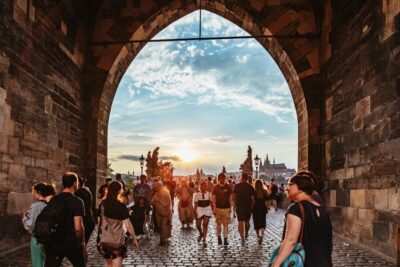
Ghost Walking Tour Where Legends Come To Life
Read our review →
Jewish Quarter Walking Tour with Admission Tickets
Read our review →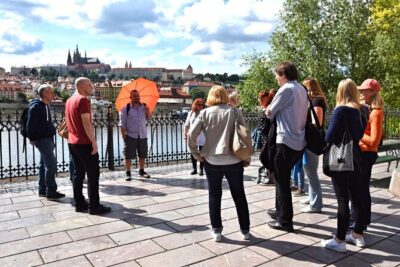
Prague Guided Walking Tour and Cruise with Authentic Czech Lunch
Read our review →
Old Town and Jewish Quarter Guided Walking Tour
Read our review →
Prague Ghost and Legend of Old Town Walking Tour
Read our review →
Prague 3-hour Afternoon Walking Tour including Prague Castle
Read our review →
Ghosts and Legends Nighttime Guided Walking Tour
Read our review →Browse the lists this tour appears in