
Review · WALKING TOURS
Private Prague Renaissance & Baroque Gardens Walking Tour
Prague has secret gardens worth the walk. This private Prague Renaissance and Baroque Gardens tour strings together palace courtyards and sculpted green spaces into one smooth, story-led 3-hour route. You start near Malá Strana, meet your guide, then take the tram (yes, the 22) up toward the Castle Gardens so you waste less time figuring out logistics.
I love the scholar guide approach here, because every fountain, statue, and wall detail comes with clear context. You’ll hear why Ferdinand I gave his wife the Belvedere summer palace and how the gardens became a stage for power and taste, not just pretty scenery.
My only real heads-up is practical: some garden admission fees are not included, and the Vrtba Garden upper terrace involves steep stairs. If stairs or extra stops for tickets are an issue, plan accordingly.
In This Review
- Key highlights at a glance
- A Renaissance-to-Baroque Prague garden route that actually makes sense
- Meeting in Malá Strana, then up by tram to Castle Gardens
- Vrtba Garden: Baroque walls, sculptural detail, and the climb for the views
- Wallenstein Garden: mythological statuary, grotto features, and a Senate-area setting
- Royal Garden of Prague Castle: where medieval vineyards became a Renaissance show
- Queen Anne’s Summer Palace: pure Renaissance architecture with a fig-tree story
- Ball Game Hall: sport and stables in a Renaissance setting
- The stories between gardens: tulips, a bronze singing fountain, and palace power games
- Tickets, fees, and how to budget without surprises
- Who should book this private garden tour
- Should you book this tour?
- FAQ
- How long is the Private Prague Renaissance & Baroque Gardens Walking Tour?
- How big is the group for this private tour?
- Where is the meeting point?
- Is hotel pickup available?
- Do I need to buy admission tickets for all the gardens?
- How will I get from the meeting point to the Castle Gardens area?
- Is there a choice of departure time?
- What fitness level do I need?
- Are the gardens open year-round?
Key highlights at a glance
- Private group up to 10 keeps the pace comfortable and questions actually get answered.
- A scholar guide turns garden design into real historical storytelling, from tulip politics to Renaissance-to-Baroque style shifts.
- Vrtba Garden’s upper terrace views are the kind you remember when you walk back down into Malá Strana.
- Wallenstein Garden details include sculptural work, grotto features, and even the chance to see unusual birds.
- Castle Garden architecture stops like Queen Anne’s Summer Palace add big “why it matters” context.
A Renaissance-to-Baroque Prague garden route that actually makes sense
Prague’s garden world can feel scattered if you visit on your own. You walk in, you admire, you move on, and the bigger picture stays blurry. This tour does something smarter: it stitches the gardens together by theme, style, and the people who funded them.
You’ll get the Renaissance and Baroque shifts explained in plain language as you move through courtyards and terraces under Prague Castle. Along the way, you’ll pick up garden clues that change how you look at the scenery. A fountain is not just decorative. A statue is not just decoration. Even the way plant choices were encouraged is part of a bigger story about trade, diplomacy, and prestige.
And because it’s a private tour for up to 10 people, you’re not stuck matching a large group’s pace. That matters on garden tours, where the best moments are often the ones where you stop for a closer look or ask one more question.
More Walking Tours in Prague:
- Prague: 3-Hour Walking Tour of Old Town & Prague Castle
★ 4.7 · 5,696 reviews - Prague: Ghost Walking Tour Where Legends Come To Life
★ 4.4 · 5,253 reviews - Prague: Jewish Quarter Walking Tour with Admission Tickets
★ 4.7 · 3,729 reviews
Meeting in Malá Strana, then up by tram to Castle Gardens
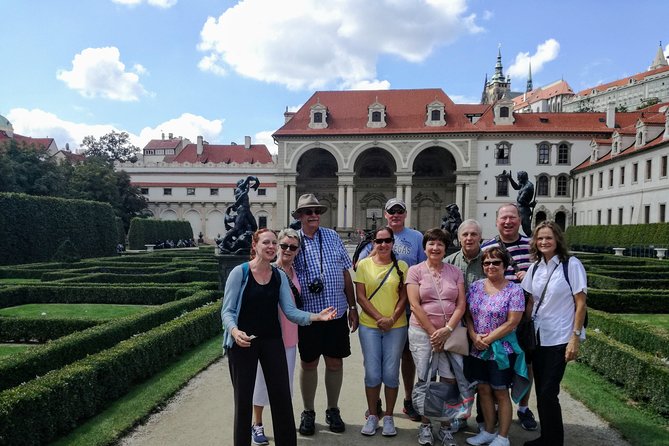
You meet at Bagel Lounge Malostranska, Letenská 118/1 in Malá Strana (unless you arranged pickup from your central hotel or flat). The location is handy because you’re already in the part of Prague that feels classic and walkable, before you start the garden circuit.
After the meeting point, the group takes the tram to reach the Castle Gardens area. That one choice saves you energy and time, and it also keeps the morning or afternoon flow more relaxed. You also get a mobile ticket, which helps you avoid last-minute paper scrambling.
One practical note: you should be ready for a moderate walking pace. The route is spread across garden terraces, courtyards, and uphill sections. It is manageable for most people, but comfortable shoes are not optional.
Vrtba Garden: Baroque walls, sculptural detail, and the climb for the views
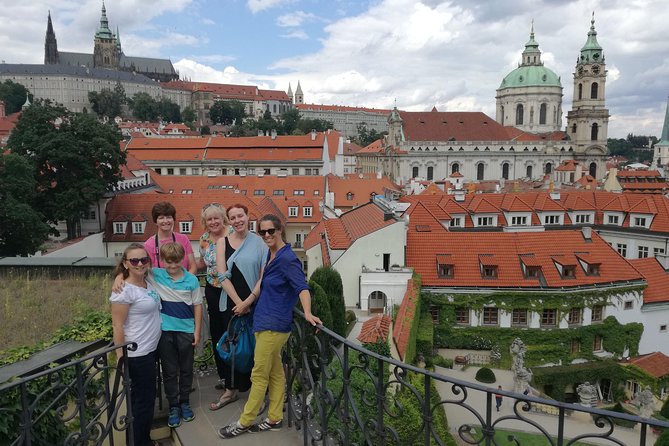
The tour’s garden centerpiece is Vrtba Garden, a Baroque walled garden dating to 1720. This is the kind of place you do not stumble into by accident. It’s also a garden where symbolism and design are meant to be read, not just glanced at.
Plan on time to enjoy the original statuary and sculptural decor from the early 1700s. The garden’s layout guides your eye toward specific “designed moments,” especially in the way the paths and terraces frame Prague Castle and the wider city views. It’s also tied to historic cultural values listed by UNESCO, which your guide helps you understand without turning it into a textbook.
The tradeoff is height. In Vrtba Garden, you climb some steep stairs to reach the upper terrace. If you have mobility concerns, you may want to pause below and wait, or consider a private tailored option if available. This is not about being “dramatic,” it’s about matching your comfort level to the best viewpoint.
Wallenstein Garden: mythological statuary, grotto features, and a Senate-area setting
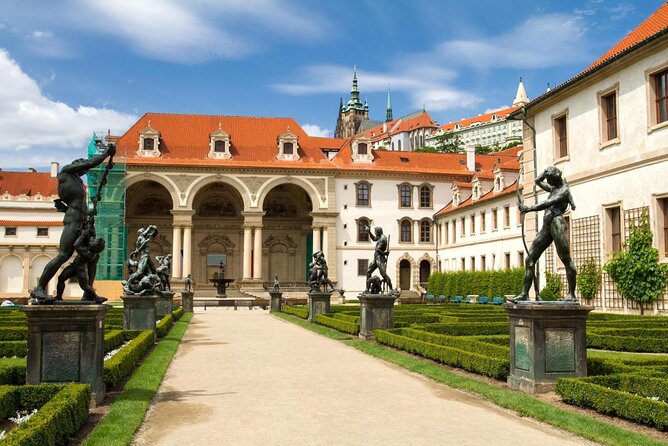
Next you head to the Waldstein or Wallenstein Garden area (the names are used for the same garden complex in practice). This part of the route includes the gardens of Wallenstein Palace, with public access today tied to the Senate of the Czech Republic.
What you’ll notice here is the Italian-style feel, plus a set of garden features that look like they were built to surprise you. There’s mention of an aviary, an artificial grotto, a sculptural gallery of mythological heroes, and a fountain created by Adrian de Vries. Even if you do not know the names of every figure, the guide can point out how these choices reinforce the era’s ideas about power, taste, and order.
And yes, there’s a fun detail that stands out in this garden: albino peacocks. It’s the sort of detail that turns a garden walk into a story you can retell.
Because this stop is free and open to the public, it adds real value. You get a lot of “big garden energy” without paying extra entry on that segment.
A few more Prague outings to weigh up
- Prague Old Town: Private Tour
★ 5.0 · 1,223 reviews - Prague Airport Private Arrival Transfer
★ 4.5 · 991 reviews - Prague Airport Private Departure Transfer
★ 4.5 · 780 reviews - Discover Prague Private Tour – 3 hours
★ 5.0 · 705 reviews
Royal Garden of Prague Castle: where medieval vineyards became a Renaissance show
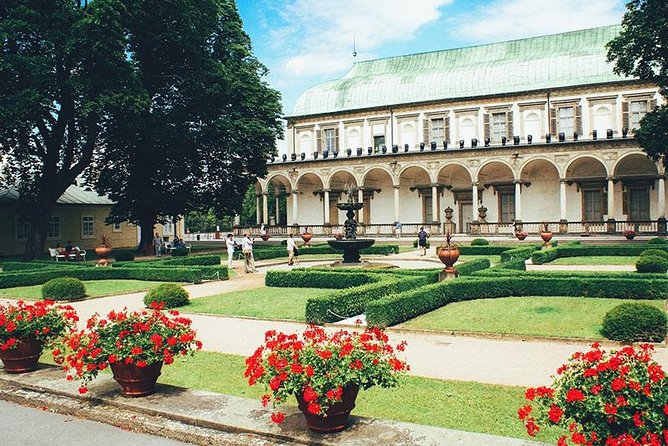
From the Senate-area gardens, you move into the Royal Garden of the Prague Castle. This is one of those “you can feel the layers” places. The garden started on medieval vineyards in the 1500s, and later a Renaissance design pushed it into a famous botanical showcase.
Here’s what makes it interesting for your brain, not just your camera. The garden reflects how European elites thought about rare plants and exotic specimens. The guide’s explanations help you see the Royal Garden as a living display of connections across borders, not just greenery planted for beauty.
You also get short, focused time in the Royal Garden so you can notice both the layout and the details. The vibe is less about wide open lawn and more about structured paths and designed viewing points, which fits the Renaissance style.
This stop is admission free for your tour portion, so it’s a smart way to spend time. You get architectural context, botanical context, and the sense that Prague treated gardens like cultural messaging.
Queen Anne’s Summer Palace: pure Renaissance architecture with a fig-tree story
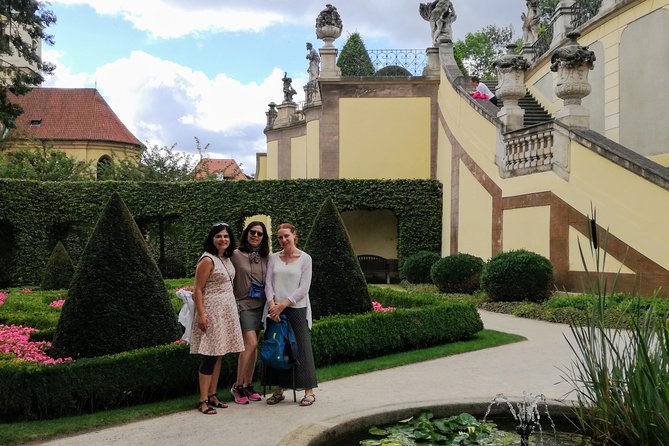
Right after the Royal Garden, you see Queen Anne’s Summer Palace, which is described as the purest Renaissance architecture outside Italy. That’s a bold claim, but the details give it weight.
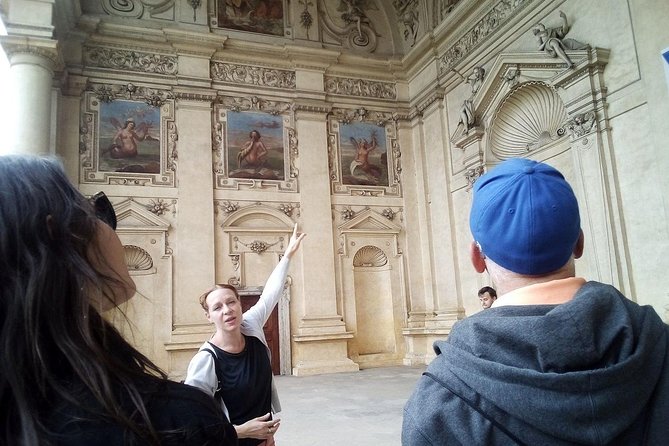
Look for the building’s ornamental and figurative frieze. Notice the Tuscan heads on the pillars of the outside arcades. Then watch for the reliefs on the walls showing scenes from mythology, hunting, and wars. The guide ties these decorations to how Renaissance rulers framed themselves as enlightened patrons and strategic actors.
One particular story is tied to Ferdinand I and Queen Anna. The reliefs include Ferdinand offering Queen Anna a fig tree blossom, and it’s tied into the idea of gifting and legacy through art and architecture.
This is not a stop that feels long, which is good. It gives you a dense hit of Renaissance symbolism without dragging you through hours of museum pacing. And since entry is free for this segment, it’s an excellent use of time.
Ball Game Hall: sport and stables in a Renaissance setting
A quick hop from the summer palace brings you to the Ball Game Hall. This Renaissance building sits on the south side of the Royal Gardens, above the Stag Moat. It was built in the mid-1500s, and it served as a ball games hall.
The fun twist is what happened next. Later it became a riding school and stables. That kind of reuse is common in European royal spaces, but it’s easy to miss if you only look from far away. The guide’s explanation helps you connect the building form to its shifting practical use over time.
This stop is short, and that’s exactly right. You get one more piece of how daily life and leisure fit into a grand castle garden complex.
The stories between gardens: tulips, a bronze singing fountain, and palace power games
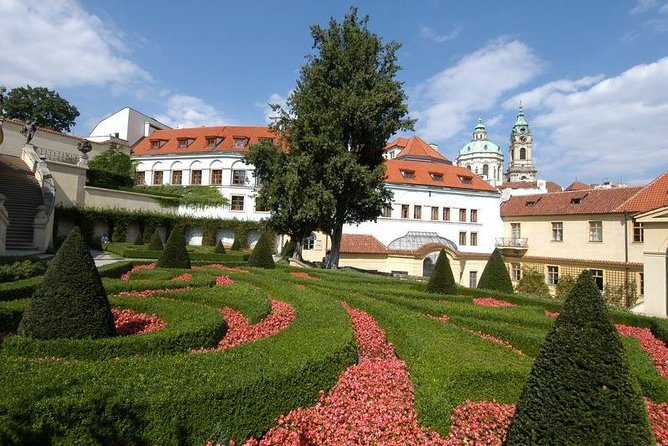
The route is not just “walk from one garden gate to another.” It’s structured around the story threads that made these spaces famous.
You’ll hear how Ferdinand I presented his wife with the Belvedere summer palace and surrounding castle gardens. You’ll also get the tulip origin tale: a Turkish Sultan sending royal gardeners a gift of tulips, and how that sparked the beginning of a tulip craze. Even if you know tulips are popular in Europe, this gives the political and social reason they caught fire.
Another highlight in the palace garden imagination is the bronze-cast singing fountain. The guide explains what made it special and why these water features were part of how the elite showed off control over nature.
As you continue through castle courtyards toward the South Gardens and Garden of Paradise, you’ll also see terraced gardens on a slope below the castle. This is where the Renaissance-to-Baroque shift starts to feel tangible. The garden design changes as the style changes, and you start noticing how the space directs your movement and your views.
That’s the value of having a private, scholar-led format: you’re not just looking at greenery, you’re reading the place.
Tickets, fees, and how to budget without surprises
Two segments involve admission fees that are not included: Vrtba Garden and the gardens under Prague Castle (your tour overview flags this as separate from the included portion). Everything else listed for the main garden architecture stops, like the Waldstein Garden and the Royal Garden structures including Queen Anne’s Summer Palace and the Ball Game Hall, is free for your tour stops.
So the value question becomes simple. You’re paying for a focused, guided route that links multiple sites you might not string together well on your own, plus a private scholar explanation for why each piece matters. That $397.36 per group price (up to 10 people) can be a strong deal if you’re traveling as a small party and want a guided plan that keeps things efficient.
You still need to budget for the extra garden admissions, and you should also plan time for the steep stairs at Vrtba so you do not rush that final viewpoint.
Also keep in mind seasonal closures: gardens under Prague Castle and Vrtba Garden are closed from November until March.
Who should book this private garden tour
This is a good fit if you want a garden tour with real context and a guide who can connect art, architecture, and politics. If you care about details like statuary themes, Renaissance building symbolism, and how designs shift from one style to another, you’ll feel rewarded.
It’s also a good choice for couples and small groups who want to move at their pace. With private group up to 10, you can pause more often without worrying about holding everyone back.
If your group includes anyone who struggles with stairs, treat the Vrtba terrace as the main decision point. The tour notes that there are steep stairs, and waiting below or a private tailored option may be possible.
And if you end up with a guide like Bonita, based on past reviews, you can expect an approach that points out details you might otherwise miss, including stories that make the gardens feel personal instead of distant.
Should you book this tour?
Book it if you want a 3-hour, private Prague garden route that feels planned rather than random. You’ll get strong value from the guide storytelling, the way the tour links Renaissance and Baroque garden design, and the chance to see a rarer stop like Vrtba Garden.
Skip or switch to something else if you are traveling in winter season, or if steep stairs and separate admission fees would genuinely stress your group.
If you’re the kind of traveler who likes gardens more when they have meaning, this tour is a very smart way to spend your time in Prague, especially if you want viewpoints, architecture, and history to show up in the same walk.
FAQ
How long is the Private Prague Renaissance & Baroque Gardens Walking Tour?
The tour lasts about 3 hours.
How big is the group for this private tour?
It is a private tour, with your group only, and the price is listed per group up to 10 people.
Where is the meeting point?
The meeting point is in front of Bagel Lounge Malostranska, Letenská 118/1, 118 00 Praha 1-Malá Strana, Czechia.
Is hotel pickup available?
Yes, pickup is offered from your central hotel or flat. If you do not provide a pickup address, you meet at the listed meeting point.
Do I need to buy admission tickets for all the gardens?
No. Gardens under Prague Castle and Vrtba Garden have admission fees that are not included.
How will I get from the meeting point to the Castle Gardens area?
After meeting, the group takes tram 22 together to get to the Castle Gardens.
Is there a choice of departure time?
Yes, morning or afternoon departure is available.
What fitness level do I need?
The tour is listed for travelers with moderate physical fitness.
Are the gardens open year-round?
No. Gardens under Prague Castle and Vrtba Garden are closed during winter season from November until March.
Just added around Prague
- WWII and Communism History in Prague’s Old Town Private Tour★ 5.0 · 4 reviews
- Prague: Historical Walking Tour with Focus on World War 2★ 4.3 · 12 reviews
- World War II 4WD Tour from Prague with Lunch★ 4.4 · 3 reviews
- World War II History Tour of Prague’s Old Town★ 5.0 · 4 reviews
- Walking tour of Prague in French : Nové Město★ 4.9 · 16 reviews
- Walking tour of Prague in french: Old Town & Charles Bridge★ 4.9 · 62 reviews
- Organ Concert in St Francis Church Admission Ticket★ 4.5 · 88 reviews
- Unique salt cave in Prague★ 4.9 · 10 reviews
Walking Tours, compared.

3-Hour Walking Tour of Old Town & Prague Castle
Read our review →
Ghost Walking Tour Where Legends Come To Life
Read our review →
Jewish Quarter Walking Tour with Admission Tickets
Read our review →
Prague Guided Walking Tour and Cruise with Authentic Czech Lunch
Read our review →
Old Town and Jewish Quarter Guided Walking Tour
Read our review →
Prague Ghost and Legend of Old Town Walking Tour
Read our review →
Prague 3-hour Afternoon Walking Tour including Prague Castle
Read our review →
Ghosts and Legends Nighttime Guided Walking Tour
Read our review →Browse the lists this tour appears in