
Review · WALKING TOURS
Prague Art Nouveau and Cubism Walking Tour
Prague turns architecture into a story you can read. This Art Nouveau and Cubism walking tour strings together elegant façades, sharp angles, and real city history, with a historian guide walking you from landmark sites to the details most people miss. I love how it trains your eye for signature Art Nouveau motifs like gingko leaves, and I also appreciate that it connects style to the wars and ideas that shaped Prague.
My other favorite part is the pacing and the guide. This is a small-group walk (up to 8), and the better guides here, like Vadim, Bonita, Matous, and others named in past departures, are praised for answering questions and tailoring what you see to what you care about. You do not just stare at buildings, you learn how to spot the building choices behind the look.
The one drawback to keep in mind is that you are covering a lot of ground in about 3 hours. If you want lots of long sit-down time inside every stop, or if rain soaks your plans, you may feel a bit rushed because the tour is designed as a walking overview, not a slow museum day.
In This Review
- Key points to know before you go
- Why Prague’s Art Nouveau and Cubism belong together
- Getting the most out of a 3-hour small-group walk
- Spotting Art Nouveau details, from gingko leaves to decorative light
- House of the Black Madonna, where Cubism shows up loud and clear
- Obecní dům, Art Nouveau landmark plus serious building tech
- K+K Hotel Central and Café Imperial, where the “period look” becomes personal
- Czechoslovak Legion Bank, Cubism with a political purpose
- Prague Main Train Station dome, architecture you can use
- Wenceslas Square, Art Nouveau to Art Deco in one conversation
- Lucerna Music Bar arcades, optimism in Art Nouveau form
- The upside-down statue and Czech history’s meaning
- Finishing near Café Louvre, with a classic Prague café atmosphere
- Price and value: what you pay for and what you get
- My quick decision guide: should you book it?
- FAQ
- How long is the Prague Art Nouveau and Cubism walking tour?
- What is the price per person?
- What group size is this tour capped at?
- Where does the tour start and end?
- Are food and drinks included?
- Is the tour offered in English, and is cancellation free?
Key points to know before you go
- Art Nouveau motifs you can actually spot: gingko leaves, distinctive curvy typography, and decorative light fixtures shaped by wider European tastes
- Cubism comes in clear contrast: crystal-like forms and pyramids that make Prague’s Cubist story feel immediate
- A historian guide, not a script: past guides named like Vadim and Bonita are repeatedly praised for flexibility and answering questions
- Architecture tied to real engineering: you learn how buildings were made to work, not just how they looked
- A tight route through major landmarks and lesser-known interiors: from Obecní dům to Lucerna’s arcades
- Small group feel: up to 8 people makes it easier to ask things and move with less crowd pressure
Why Prague’s Art Nouveau and Cubism belong together
Prague at the turn of the 1900s was a city obsessed with “the next thing.” You can see it in Art Nouveau, which loves sweeping curves, nature-inspired decoration, and expressive typography. Then you hit Cubism, which reacts like a snap of the scissors: angular, geometric, and almost crystalline in the way it breaks up forms.
This tour is built to show you that the styles were not random fashion choices. They were tied to shifting cultural influences, changing ideas about art, and the political forces that later reshaped daily life. You will get Eastern influences mentioned as part of how these aesthetics formed, and you will also hear how wars changed the course of Prague history, giving the pretty details a sharper edge.
If you like architecture for its own sake, you are in the right place. If you like architecture because it helps you understand people and power, you are also in the right place.
More Walking Tours in Prague:
- Prague: 3-Hour Walking Tour of Old Town & Prague Castle
★ 4.7 · 5,696 reviews - Prague: Ghost Walking Tour Where Legends Come To Life
★ 4.4 · 5,253 reviews - Prague: Jewish Quarter Walking Tour with Admission Tickets
★ 4.7 · 3,729 reviews
Getting the most out of a 3-hour small-group walk
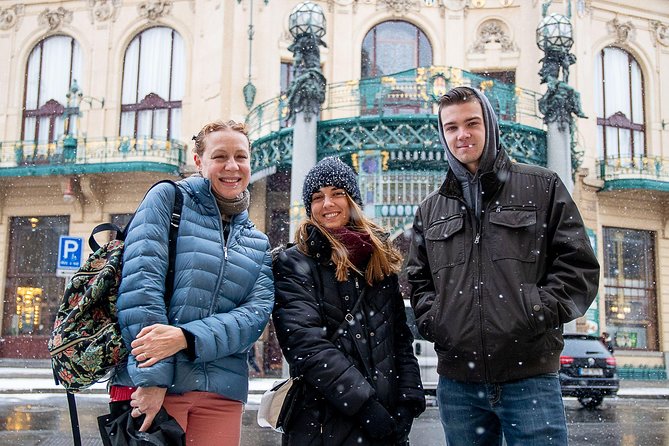
This experience runs for about 3 hours and keeps the group small, with a maximum of 8 travelers. That matters because Prague’s center can get crowded, and architecture sightseeing gets better when your guide can slow down at the exact spot you need.
You also have a choice of morning or afternoon departures, and the tour is offered in English. You will meet at Ovocný trh 19 in Staré Město, and you will finish near Café Louvre in Nové Město. The route is designed so you can keep moving, with public transportation nearby if you need a breather or want to shorten the walk.
Practical tip: wear grippy shoes. This is a “look, walk, listen” tour, with enough time at each stop to notice details, but not so much time that you can wander off and come back.
Spotting Art Nouveau details, from gingko leaves to decorative light
Art Nouveau in Prague is not just “ornate.” It has recognizable signatures that you will start seeing on your own after this tour.
At multiple points, you will learn what to look for, including gingko leaves on Art Nouveau façades. The tour also points out the way Eastern art and aesthetics influenced the movement, which shows up in the decorative choices, the way forms flow, and even how letters look when they are treated like part of the design.
Look for the “small stuff” your brain usually skips: shaped brackets, patterned window frames, and those playful light fixtures that look almost botanical. Once you know what your guide wants you to notice, Prague stops feeling like a postcard and starts feeling like a place where design choices were deliberate.
House of the Black Madonna, where Cubism shows up loud and clear
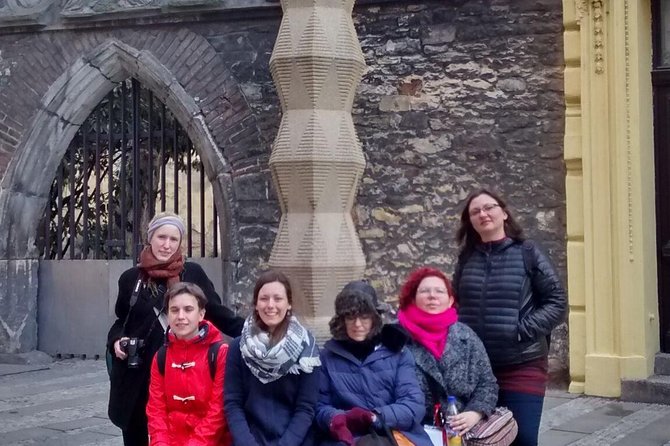
Stop 1 is the House of the Black Madonna, known for its Cubist style. This is one of the fastest ways to get oriented to the whole theme of the tour, because Cubism here looks like it belongs to a different visual universe than Art Nouveau.
During your short time at this stop (about 10 minutes), focus on the building’s structure and how it treats space. Cubism tends to slice objects into planes, and you will likely be encouraged to notice the sharper geometry rather than any decorative “flourish.” That shift is the point of this early stop: you are training your eye to see the difference.
Potential drawback: because this is a walking tour with a tight schedule, you will not have a long, leisurely time to soak in every angle. Come with a plan to take photos quickly, then look again with fresh attention when your guide highlights specific features.
Another way to fill an afternoon in Czechia:
- Prague: 50-Minute Sightseeing Evening Cruise
★ 4.2 · 33,780 reviews - Prague: Medieval Dinner with Unlimited Drinks
★ 4.4 · 19,847 reviews - Prague: Skip-the-line Castle Ticket and Optional AudioGuide
★ 4.3 · 11,121 reviews - Prague: Castle Tour with Local Guide and Entry Ticket
★ 4.6 · 10,422 reviews
Obecní dům, Art Nouveau landmark plus serious building tech
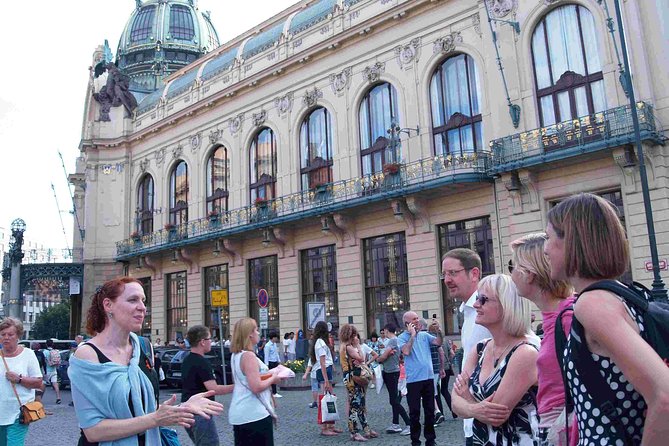
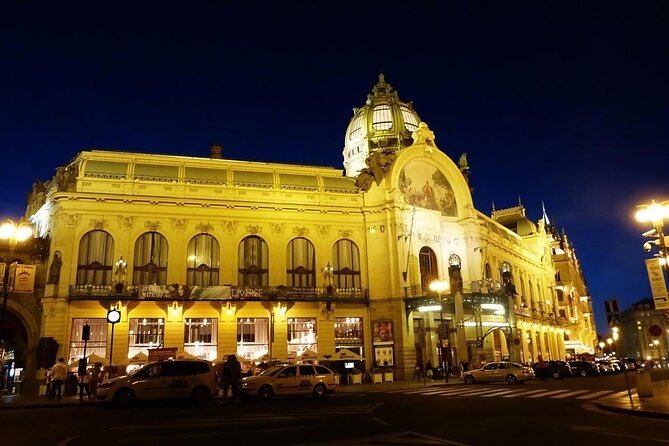
Next up is Obecní dům, one of the most iconic Art Nouveau landmarks in Prague. It is also where the tour does a good job of turning “beautiful” into “understandable.”
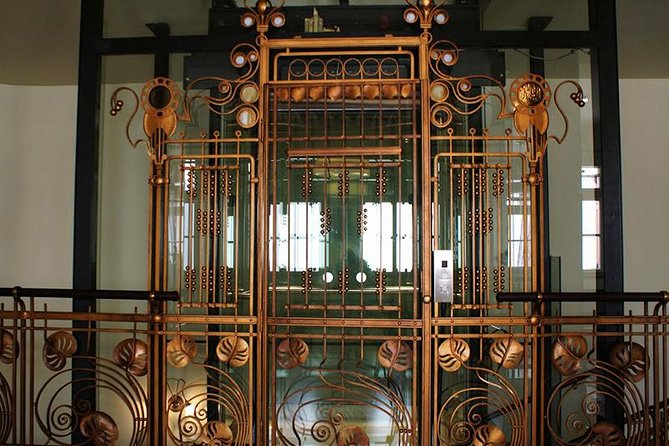
You are not just learning visual style. You will hear about groundbreaking technologies used during construction, including central heating and ventilation, drinking water systems, hydraulic elevators, steam-powered laundry, and an intercom system. These are the kinds of details that make turn-of-the-century architecture feel real, not decorative.
Here is why that matters for you: it changes how you read a building. Instead of thinking only about ornament, you start thinking about how people lived day to day, how services worked, and how modern a city Prague was trying to be at the time.
Time at this stop is about 15 minutes. Use it to step back and take in the whole façade first, then come forward and look for the fine Art Nouveau cues your guide is pointing out.
K+K Hotel Central and Café Imperial, where the “period look” becomes personal
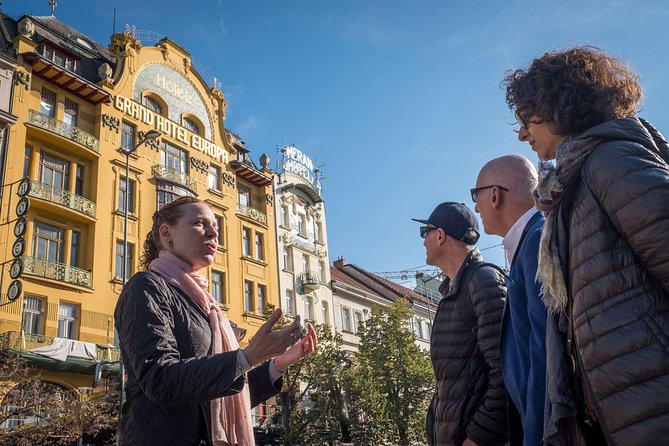
Stop 3 is K+K Hotel Central Prague, described as the first Art Nouveau building in Prague. That detail alone makes it worth paying attention to. If it was first, then the design choices may feel more experimental or ambitious, the way early innovators often do.
Stop 4 is Café Imperial, with a unique Art Nouveau interior. Even with limited time (about 5 minutes), this stop can be a turning point, because it shifts you from reading façades to experiencing the mood inside.
What to do here:
- Look for how interior design and exterior style match the Art Nouveau attitude
- Notice typography, metalwork, and decorative patterns, even if you can only catch fragments
- Take one wide photo and one close photo, so you remember both the overall vibe and specific details
Potential drawback: café interiors can be busy, and you may have less quiet space than you want. If it gets crowded, let your guide finish the key points, then grab a couple quick shots and move on.
Czechoslovak Legion Bank, Cubism with a political purpose
Stop 5 is the Czechoslovak Legion Bank, highlighted for its Cubist architecture and interior dedicated to the Czechoslovak Legion of the First World War.
This is where Prague’s architecture connects to identity. Cubism is not only about shape. In this context, the style supports a message about modernity, national pride, and memory. When you see Cubist design paired with a specific historical theme, the whole tour stops being only about art movements and starts being about why people use art to tell stories.
Time is about 10 minutes. If you want the most value, ask your guide what visual cues are tied to the Legion theme. That question helps you learn faster because you are giving your brain a purpose while you look.
Prague Main Train Station dome, architecture you can use
Stop 6 is Praha hlavní nadrazi, Prague Main Train Station, with a magnificent interior Art Nouveau dome.
This stop does double duty. It is visually dramatic, and it is practical. One of the recurring praises in past tours is that guides help people navigate the station layout, so you leave not only with photos but with a better sense of how to move there.
Even if you never change trains here, you will appreciate the scale. Train stations are architecture that must handle crowds, schedules, and movement. It is a real-world test of design, not just a decorative statement.
Time at this stop is about 10 minutes. My advice: keep your attention on the ceiling dome and major interior lines first, then let your guide point out how to find key areas quickly if you need to use the station later.
Wenceslas Square, Art Nouveau to Art Deco in one conversation
Stop 7 is Wenceslas Square, and the tour discusses both Art Nouveau and Art Deco architecture of the area.
This is an important part of the learning arc. Art Nouveau tends to feel organic and curvy. Art Deco tends to feel cleaner, more structured, and more machine-friendly. When you see both discussed on the same walk, you start understanding how Prague moved from one taste to the next.
Your time here is about 15 minutes, which is fairly generous for a walking tour stop in this theme. Use it to look both at the buildings and the rhythm of the square itself. The square is where you feel how design changes with public space, not just private façades.
Potential drawback: if you are exhausted from walking, Wenceslas Square can feel like a lot of open space. Take a rest break if you need one, then re-enter the “look for details” mode your guide trained you for earlier.
Lucerna Music Bar arcades, optimism in Art Nouveau form
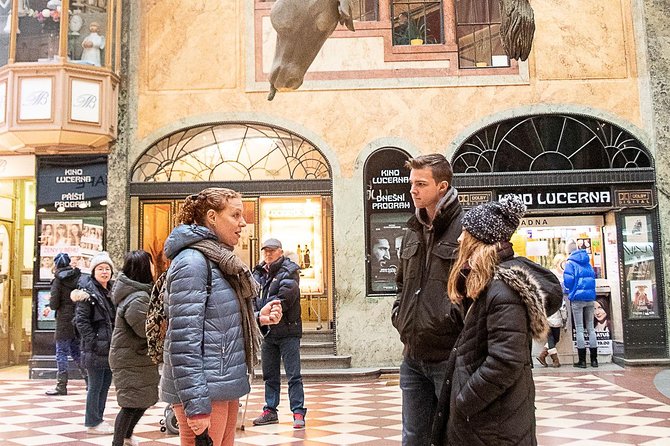
Stop 8 is Lucerna Music Bar, described as having one of the most beautiful arcades in Prague and a stunning Art Nouveau interior.
This is the part of the tour that often feels like the reward. After hours of comparing styles and learning why things look the way they do, you get a space that feels like it belongs to the optimistic cultural mood of turn-of-the-century Prague.
When your guide points out the arcade details, watch how the architecture frames movement. Arcades are all about transitions, and Art Nouveau in that setting often looks even more theatrical because it surrounds you instead of just decorating a façade.
Time at this stop is about 10 minutes. If it is crowded, the key is to focus on proportions and repeat patterns, not trying to capture everything in one perfect photo.
The upside-down statue and Czech history’s meaning
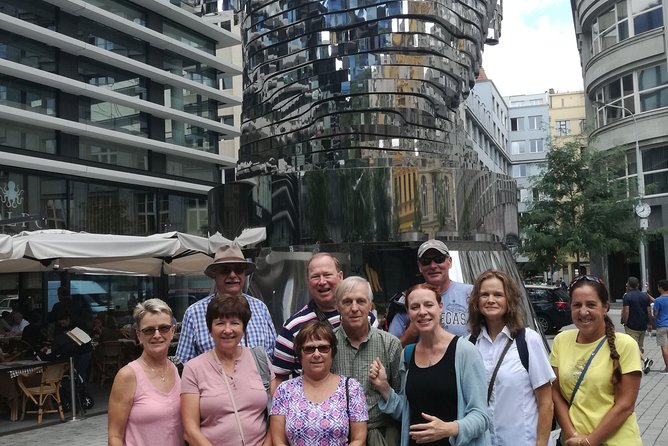
Stop 9 is the upside-down statue of King Wenceslas riding a dead horse. This stop is less about architecture and more about how symbolism works in Czech history and in the National Revival context.
That contrast is useful. It reminds you that Prague is not only a city of styles. It is also a city of political memory. By the time you see a contemporary sculpture like this, you understand the theme better: design choices, from Art Nouveau ornament to Cubist planes, are tied to identity and power.
Time is about 10 minutes. If you like learning through stories, this stop tends to connect the dots between the earlier architecture lessons and the later reality of history.
Finishing near Café Louvre, with a classic Prague café atmosphere
The tour ends near Café Louvre at Národní 22. This matters because it puts you in a good position to continue your day, eat something, and keep exploring.
Café Louvre opened in 1902, and it is still known for the kind of atmosphere that figures like Franz Kafka, Albert Einstein, and T. G. Masaryk would have recognized. Even if you do not spend long inside, stepping near a place like this helps you feel the “period energy” that Art Nouveau and Cubism came from.
If you want an easy next move, choose one nearby restaurant, then look back on the tour in reverse order. I find that helps everything stick: you see the buildings in your mind and start noticing details you missed on the first pass.
Price and value: what you pay for and what you get
At $126.71 per person for about 3 hours, this is not a budget tour. But the price makes sense when you look at what is included.
You get:
- A historian guide
- A small-group format (up to 8)
- A route that pairs major landmarks with specific architectural themes, including both Cubism and Art Nouveau
- Free admission tickets for the listed stops (as shown for each stop)
The real value is not only that you see the sights. It is that you learn how to see them fast and correctly, which is hard to replicate on your own unless you already know what to look for. If you like asking questions, this format is especially strong because your guide can adjust pace and focus.
Who it is best for:
- People who want a structured orientation to Prague architecture in a half-day window
- Travelers who enjoy history and political context, not only photos
- Anyone curious about Cubism but unsure where to start
Who might be less satisfied:
- If you want a long, slow interior-heavy tour where you sit and linger for extended periods at each stop
- If your main goal is only iconic exterior photos with minimal explanation
My quick decision guide: should you book it?
Book this tour if you want Prague architecture to click into place. The best part is how the guide connects design style to history and real building choices, so you finish with a “new way to look” rather than just a list of places.
Skip it if you are mainly in relaxation mode, or if you prefer a self-guided plan with unlimited time inside. Otherwise, for the price, this is a solid deal for a guided architecture overview that stays small, stays focused, and helps you notice things you would miss alone.
FAQ
How long is the Prague Art Nouveau and Cubism walking tour?
It runs for about 3 hours.
What is the price per person?
The price is $126.71 per person.
What group size is this tour capped at?
The maximum group size is 8 travelers.
Where does the tour start and end?
It starts at Ovocný trh 19, Staré Město, 110 00 Praha, Czechia, and it ends at Café Louvre, Národní 22, 110 00 Praha, Czechia.
Are food and drinks included?
No. Food and drinks are not included unless specified.
Is the tour offered in English, and is cancellation free?
The tour is offered in English. You can cancel for a full refund up to 24 hours before the experience’s start time.
Just added around Prague
- WWII and Communism History in Prague’s Old Town Private Tour★ 5.0 · 4 reviews
- Prague: Historical Walking Tour with Focus on World War 2★ 4.3 · 12 reviews
- World War II 4WD Tour from Prague with Lunch★ 4.4 · 3 reviews
- World War II History Tour of Prague’s Old Town★ 5.0 · 4 reviews
- Walking tour of Prague in French : Nové Město★ 4.9 · 16 reviews
- Walking tour of Prague in french: Old Town & Charles Bridge★ 4.9 · 62 reviews
- Organ Concert in St Francis Church Admission Ticket★ 4.5 · 88 reviews
- Unique salt cave in Prague★ 4.9 · 10 reviews
Walking Tours, compared.
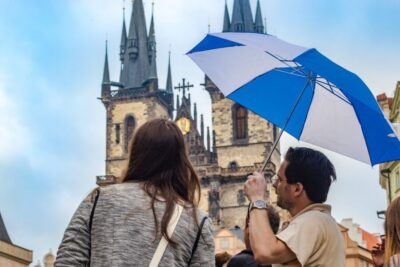
3-Hour Walking Tour of Old Town & Prague Castle
Read our review →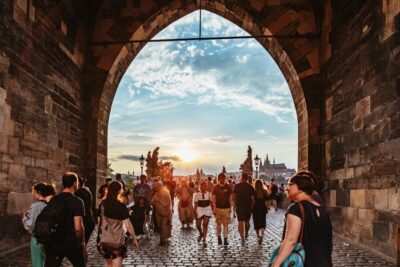
Ghost Walking Tour Where Legends Come To Life
Read our review →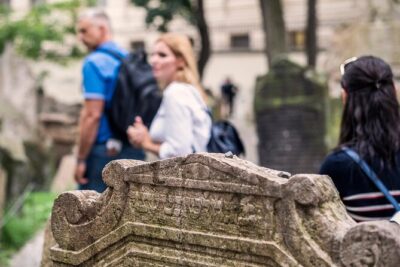
Jewish Quarter Walking Tour with Admission Tickets
Read our review →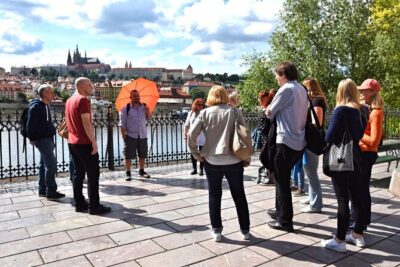
Prague Guided Walking Tour and Cruise with Authentic Czech Lunch
Read our review →
Old Town and Jewish Quarter Guided Walking Tour
Read our review →
Prague Ghost and Legend of Old Town Walking Tour
Read our review →
Prague 3-hour Afternoon Walking Tour including Prague Castle
Read our review →
Ghosts and Legends Nighttime Guided Walking Tour
Read our review →Browse the lists this tour appears in