
Review · WALKING TOURS
Prague: Highlights Walking Tour to the German embassy 1989
Prague in 150 minutes sounds impossible, but this walk makes 1989 feel right next door. I especially love how the route ties together major sights and turning points in 20th-century history, and you end at the German Embassy where Hans-Dietrich Genscher made his famous balcony speech. One thing to consider: this is a walking-focused tour and it is not suitable for mobility impairments, so you’ll want comfortable shoes and a steady pace.
You’ll move through Old Town and Lesser Town, with stops that range from photo-friendly facades to moments that hit emotionally. The guide David Klaus Travel Manager Service Prag (your live German-speaking guide may be David, based on past tour experiences) explains what was happening in Czechoslovakia and the wider communist block as people tried to flee to the West.
If you want Prague as more than postcards, this is a strong choice. You’ll cover big, recognizable landmarks, but the story is the point, especially the refugee escape toward the West German Embassy in Prague in 1989, and what it meant for people on the street.
In This Review
- Key Highlights You’ll Feel Immediately
- Starting at the Faculty of Law: A Practical Way to Begin
- Old Jewish Cemetery, Josefov, and the Street-Level Meaning of Memory
- Jan Palach Square and the Velvet Revolution Memorial: When Protest Became a Spark
- Charles Bridge Photo Stop to Guided Walk: Prague’s Most Famous Shortcut
- The John Lennon Wall: Peace Symbols in a Political City
- Wenceslas Square, the National Museum Photo Stop, and Malostranské Square
- German Embassy 1989: Genscher’s Balcony Moment and Why It Mattered
- Price, Pace, and What You Get for $32
- Who Should Book This Tour (And Who Might Skip It)
- Should You Book the Prague Highlights Walking Tour to the German Embassy in 1989?
- FAQ
- How long is the tour?
- How much does the tour cost?
- What language is the tour guide?
- Is hotel pickup included?
- Where do I meet the guide?
- Will I be able to enter the German Embassy?
- What major stops are part of the walk?
- Is the tour suitable for people with mobility impairments?
- Can I cancel and get a full refund?
Key Highlights You’ll Feel Immediately
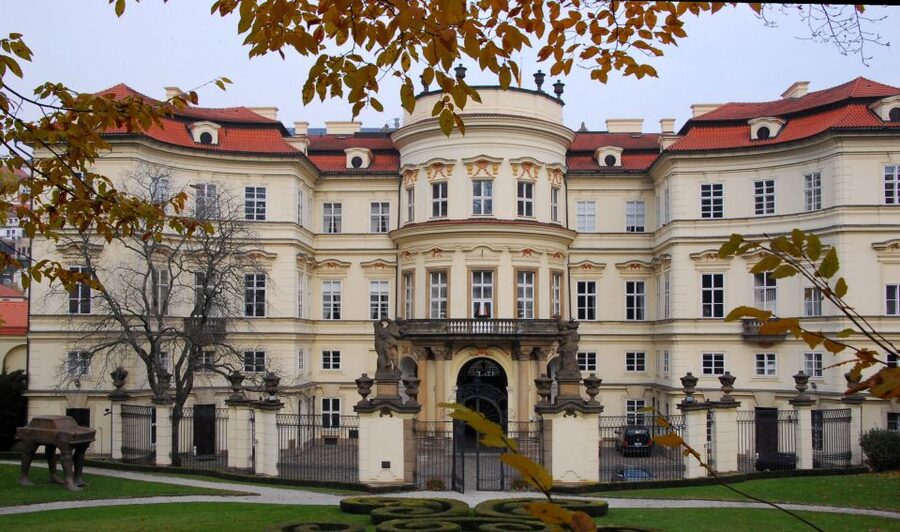
- Genscher’s 1989 balcony angle from outside the German Embassy grounds, including a balcony-view moment tied to the escape and the end of an era
- Charles Bridge twice in one tour, first for photos and later for a guided walk with context
- John Lennon Wall and Lennon-era Prague spirit, explained in the setting you see today
- Jan Palach and the 1968 Prague Spring, with attention to how sacrifice shaped public emotion
- Velvet Revolution Memorial stop, linking the street-level story to the larger political shift
- Old Town, Josefov, and Jewish heritage stops, placed within the same walk so the city reads as one living map
Starting at the Faculty of Law: A Practical Way to Begin
This tour kicks off at the Faculty of Law area of Charles University, a very workable meeting point if you’re using public transit. If you arrive by metro, get off at Staromětká, about 550 meters from the meeting spot. If you’re coming by tram, hop on tram 17 and get off at Pravnicka Fakulta.
Why I like this setup: it’s in the center of Prague, so you can plan your day without adding a complicated detour. Also, you’ll start your history walk close to where you’ll later wander for major landmarks.
The total time is about 150 minutes, so think of this as a focused, half-day style experience. You’ll have photo stops, short guided explanations, and a couple of short walks where you can absorb what you’re seeing without feeling rushed.
More Walking Tours in Prague:
- Prague: 3-Hour Walking Tour of Old Town & Prague Castle
★ 4.7 · 5,696 reviews - Prague: Ghost Walking Tour Where Legends Come To Life
★ 4.4 · 5,253 reviews - Prague: Jewish Quarter Walking Tour with Admission Tickets
★ 4.7 · 3,729 reviews
Old Jewish Cemetery, Josefov, and the Street-Level Meaning of Memory
Early on, you’ll head toward Prague’s former Jewish quarter, moving between places that are easy to photograph and harder to forget once you know why they matter. You’ll stop by the Old Jewish Cemetery area and then continue with a Josefov photo stop.
These moments work best when you slow your camera down. Take a second to look at details you would otherwise skip, like the sense of layers in the city. Prague isn’t only about political speeches and protests. It’s also a city where communities have lived, changed, and endured, often all within the same few streets.
Then your guide shifts the tone. You’re still walking through real neighborhoods, but the story starts bending toward 20th-century pressure, resistance, and the human cost of ideology. That makes the later stops feel less like “random history facts” and more like one long conversation across time.
Jan Palach Square and the Velvet Revolution Memorial: When Protest Became a Spark
One of the tour’s strongest sections is the chain of political memory sites. You’ll reach Jan Palach Square for a photo stop and guided context, and then you’ll move to the Velvet Revolution Memorial for a longer photo stop and explanation.
Jan Palach is central to this story. He was a student at the Faculty of Philosophy, and in 1968 during the Prague Spring his actions became a symbol that people carried forward as the pressure returned. On this tour, you’re not just told the outline. You’re shown where the story connects to the city’s public spaces, so it lands where it actually happened.
What I find especially useful is that your guide doesn’t treat 1968 and 1989 as separate chapters. Instead, you get the sense of a long arc, where public emotion, political repression, and eventual change all connect through lived experience.
Practical tip: bring a little mental patience here. Memorial stops often feel dense, and the best way to get value is to listen first, then photograph second.
Charles Bridge Photo Stop to Guided Walk: Prague’s Most Famous Shortcut
Charles Bridge is the big postcard moment, but this tour handles it in a smart way. You’ll do an initial Charles Bridge section for photos and a guided introduction to the views along the way, then later you’ll come back for a proper guided walk.
That first approach is quick, and it helps you get oriented. When you return later, you recognize the bridge as a corridor connecting different parts of the city’s past and present. Your guide uses the walk to place political meaning into the physical route.
You’ll also get views related to your final destination. Specifically, you’ll see the building of the German Embassy from the bridge and learn how the location became part of the 1989 refugee story. Even if the end point is what you came for, this “bridge as context” moment is what makes the tour feel cohesive.
If you like classic Prague but also want a reason to care beyond beauty, this section gives you both. You get the scenery, then you get the story behind why people were moving and why some destinations mattered more than others.
Another way to fill an afternoon in Czechia:
- Prague: 50-Minute Sightseeing Evening Cruise
★ 4.2 · 33,780 reviews - Prague: Medieval Dinner with Unlimited Drinks
★ 4.4 · 19,847 reviews - Prague: Skip-the-line Castle Ticket and Optional AudioGuide
★ 4.3 · 11,121 reviews - Prague: Castle Tour with Local Guide and Entry Ticket
★ 4.6 · 10,422 reviews
The John Lennon Wall: Peace Symbols in a Political City
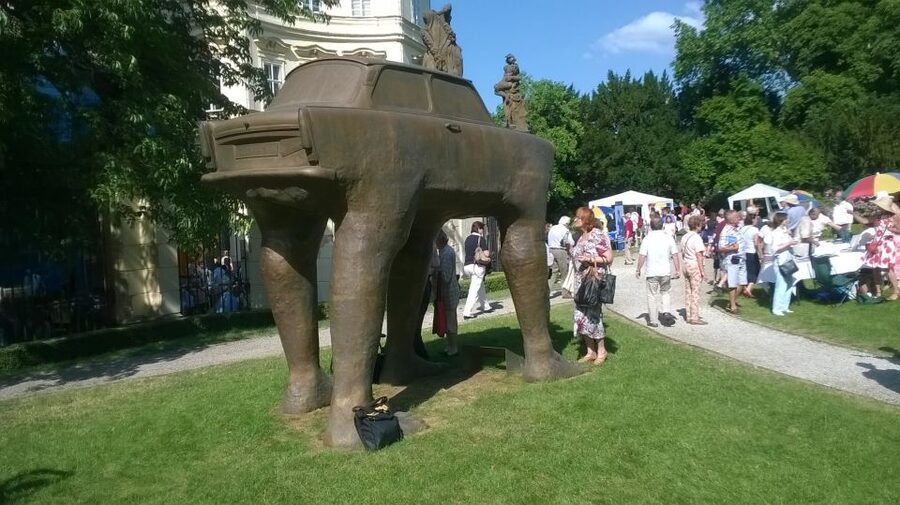
Next up is the John Lennon Wall, where the guide brings the scene into focus with a short photo stop and guided sightseeing. You’ll be looking at a public homage, and your guide connects it to Prague’s atmosphere during decades when free expression came with consequences.
This is one of those stops where Prague’s “street art energy” meets serious political history. You might see it as art first, but after the explanation you’ll start noticing why it became a magnet for people who wanted to claim their voice in public.
The balance is good here. You get time to look. You also get enough context to avoid turning it into a generic stop on a checklist. And since you’ve already been thinking about Jan Palach and the Velvet Revolution, the Lennon Wall reads differently, like another form of protest and memory.
Wenceslas Square, the National Museum Photo Stop, and Malostranské Square
From Lennon Wall, you’ll head toward Wenceslas Square, another major public space. You’ll have a photo stop, then time to visit and guided sightseeing there. A short Prague National Museum photo stop follows, and then you’ll continue toward Malostranské Square for another quick stop and sightseeing.
Why these urban stops matter on this specific tour: they reinforce that politics in Prague played out in streets and squares, not only in books. Your guide ties the city’s public spaces to the social pressure building over time, and to the sense that change was possible once people refused to accept the status quo.
You’ll likely walk a bit “on foot” between these points, which is useful. It lets the tour flow without turning every minute into a scripted stop. Also, Lesser Town areas around Malostranské feel different from Old Town, which helps your brain keep the narrative straight.
If you’re the type who gets annoyed by tours that only hit monuments, you’ll appreciate this structure. It’s still landmark-heavy, but it’s organized around how the city functioned as a stage.
German Embassy 1989: Genscher’s Balcony Moment and Why It Mattered
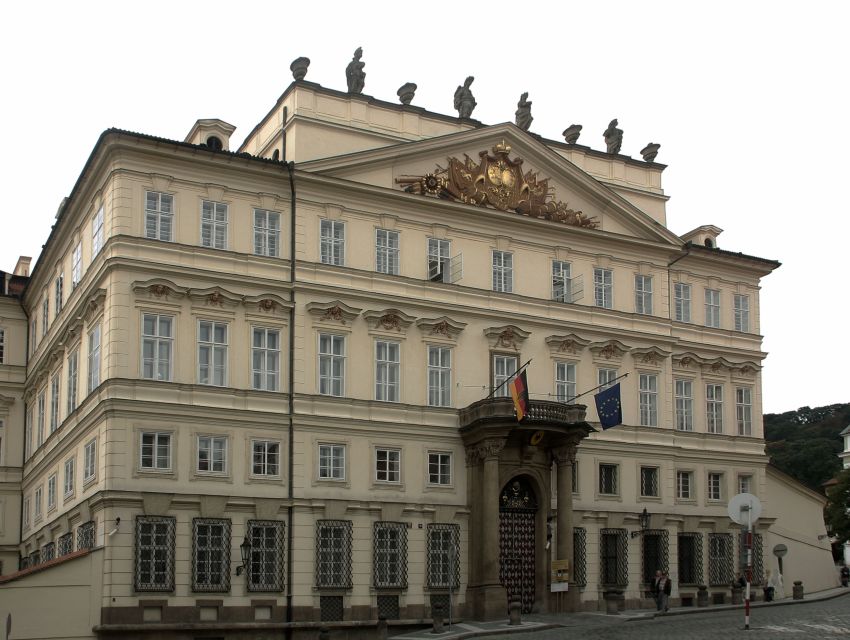
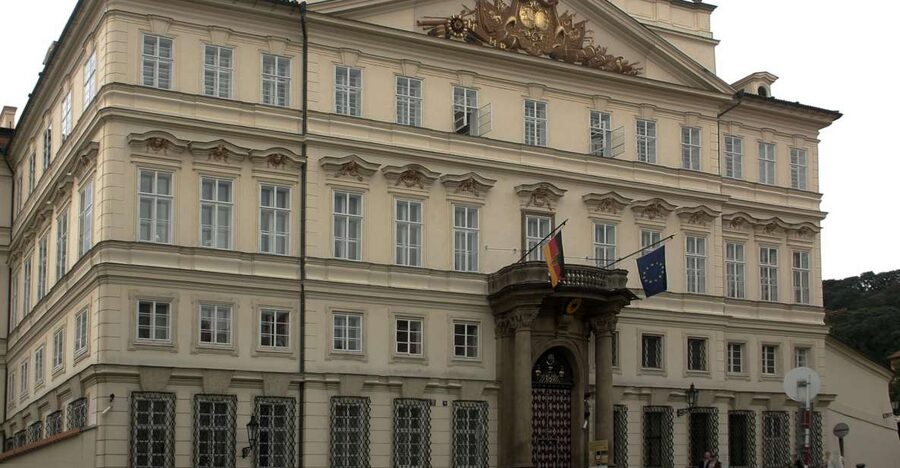
Now we reach the reason for the tour: the German Embassy in Prague, with a focus on the 1989 escape toward the West German mission. You’ll finish at Malostranské náměstí, and along the way you’ll see the embassy from outside with a photo stop and guided sightseeing.
Here’s the key story your guide explains clearly: in 1989, people from East Germany tried to flee to the West, and many routed through Prague. Your tour connects that refugee crisis to the German Embassy location, and explains how the scene became a symbol as communism shifted and collapsed across Central Europe.
The most memorable part is the balcony where Hans-Dietrich Genscher made his famous speech. Even though you’re not going inside, the outside viewpoint gives you a real sense of place. Past guests have found the balcony moment emotional, especially if they or their families experienced the news firsthand.
One more practical note: the embassy interior is not open to the public. So your expectation should be exterior views only, plus guided context that helps you read what you’re looking at. If you want a museum inside, this is not that tour.
Still, the value is in understanding how this building became a stage for history. You’ll leave with a mental map, where bridge views and city squares suddenly connect to one specific location and a specific turning point.
Price, Pace, and What You Get for $32
At $32 per person for about 150 minutes, this tour is priced like a budget-friendly highlight walk that punches above its weight. You’re not only paying for walking around central Prague. You’re paying for a licensed German-speaking guide who can tie the places together into one coherent story.
For me, the best value comes from two things:
1) You get multiple major sights in one route, including Charles Bridge, Lennon Wall, Wenceslas Square, and the final embassy exterior.
2) The history is anchored to specific events and named people, like Jan Palach and Hans-Dietrich Genscher, so the tour feels less abstract.
Pace matters. This is a walking tour with several photo stops, plus guided sections at bigger locations. Expect breaks of just a few minutes. If you prefer long sits and museum time, you might find the rhythm quick, but that’s also why the total time stays tight.
Language matters too. The tour is German with a licensed guide. If you read basic German or you’re comfortable with listening-based guidance, you’ll likely get more out of it. If you need English, you may want to look for an alternate language option in your planning.
Finally, the tour is not suitable for people with mobility impairments. The itinerary is made for walking between city center spots.
Who Should Book This Tour (And Who Might Skip It)
You’ll get the most out of this tour if you like Prague as a real political stage, not only a pretty city. It’s ideal if you’re interested in Central European history, the Prague Spring, and how the fall of the Iron Curtain played out across borders.
It also works well for repeat visitors who already “did the basics.” You’ll still hit the classics, but the story lens is different. Instead of just seeing where things are, you learn why certain places mattered to refugees and to public emotion.
Skip it if you want long, indoor time, or if you need step-free routes and mobility support. And if you want an embassy interior visit, plan on exterior views only.
Should You Book the Prague Highlights Walking Tour to the German Embassy in 1989?
Yes, if you want a single walk that strings together Prague landmarks and 20th-century turning points. The ending balcony moment at the German Embassy grounds the story in one physical place, and that helps everything you see earlier feel connected.
Book it when you have about two and a half hours, can handle steady walking, and you’re comfortable joining a German-language guide. If that fits, this tour is a memorable way to see Prague with sharper meaning.
If you’re unsure, use this rule of thumb: if Charles Bridge, John Lennon Wall, and Jan Palach already interest you, the embassy finale will likely click. If politics is a turnoff and you only want scenery, you might prefer a lighter highlights walk with fewer historical stops.
FAQ
How long is the tour?
The tour lasts about 150 minutes.
How much does the tour cost?
It costs $32 per person.
What language is the tour guide?
The tour is guided in German.
Is hotel pickup included?
Hotel pickup and drop-off are not included, but pickup may be optional depending on the selected option.
Where do I meet the guide?
Meet in front of the Faculty of Law. If you arrive by metro, get off at Staromětká. If you arrive by tram, take tram 17 and get off at Pravnicka Fakulta.
Will I be able to enter the German Embassy?
No. The interior of the embassy is not open to the public, but you can see the embassy from the outside.
What major stops are part of the walk?
You’ll pass or stop at places including the Old Jewish Cemetery area, Josefov, Jan Palach Square, the Velvet Revolution Memorial, Charles Bridge, John Lennon Wall, Wenceslas Square, and then the German Embassy exterior area.
Is the tour suitable for people with mobility impairments?
No, it is not suitable for people with mobility impairments.
Can I cancel and get a full refund?
There is free cancellation with full refund if you cancel up to 24 hours in advance.
Just added around Prague
- WWII and Communism History in Prague’s Old Town Private Tour★ 5.0 · 4 reviews
- Prague: Historical Walking Tour with Focus on World War 2★ 4.3 · 12 reviews
- World War II 4WD Tour from Prague with Lunch★ 4.4 · 3 reviews
- World War II History Tour of Prague’s Old Town★ 5.0 · 4 reviews
- Walking tour of Prague in French : Nové Město★ 4.9 · 16 reviews
- Walking tour of Prague in french: Old Town & Charles Bridge★ 4.9 · 62 reviews
- Organ Concert in St Francis Church Admission Ticket★ 4.5 · 88 reviews
- Unique salt cave in Prague★ 4.9 · 10 reviews
Walking Tours, compared.
3-Hour Walking Tour of Old Town & Prague Castle
Read our review →
Ghost Walking Tour Where Legends Come To Life
Read our review →
Jewish Quarter Walking Tour with Admission Tickets
Read our review →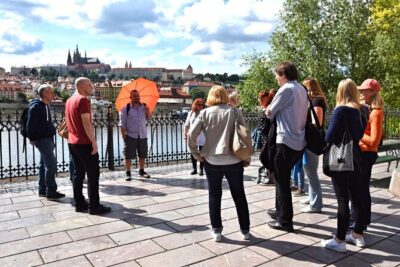
Prague Guided Walking Tour and Cruise with Authentic Czech Lunch
Read our review →
Old Town and Jewish Quarter Guided Walking Tour
Read our review →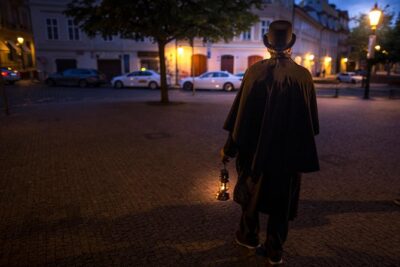
Prague Ghost and Legend of Old Town Walking Tour
Read our review →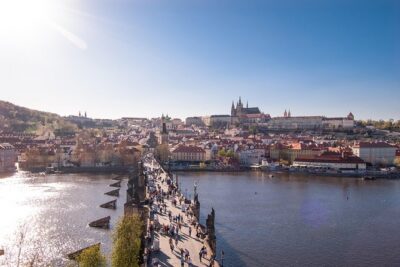
Prague 3-hour Afternoon Walking Tour including Prague Castle
Read our review →
Ghosts and Legends Nighttime Guided Walking Tour
Read our review →Browse the lists this tour appears in