Review · PRIVATE
Prague: Private Prague Art Nouveau and Cubism Tour
Prague’s 1900s faces change everything. This private tour threads Art Nouveau and Cubism through Prague’s New Town and then up toward Vyšehrad, using architecture as your main language. You start at the reconstructed Central Train Station from 1909, then move block by block, learning why these styles appeared, what they rebelled against, and why World War I changed the story.
What I like most is the clear, chronological narrative your guide brings, including how Art Nouveau grew out of 19th-century styles and how Cubism began as a revolt against it. I also like the mix of famous streets and lesser-seen details, with short stops that help you notice facades, ornament, and urban design you would likely pass without a second look. Guides such as Max and Eva are praised for making the explanation easy to follow and for answering questions on the spot.
One thing to consider: the pace packs in a lot. A few people felt the tour ran longer than necessary, especially toward the later part, so if you prefer fewer stops and longer photo time, this may feel slightly full.
In This Review
- Key things to look forward to
- Why Art Nouveau and Cubism click in Prague
- Meeting at Central Station, and why that matters
- Walking the New Town: Belle Époque streets you notice differently
- Prague Main Railway Station (quick guided start)
- Jubilee Synagogue: a fast stylistic checkpoint
- Municipal House: where the city shows off
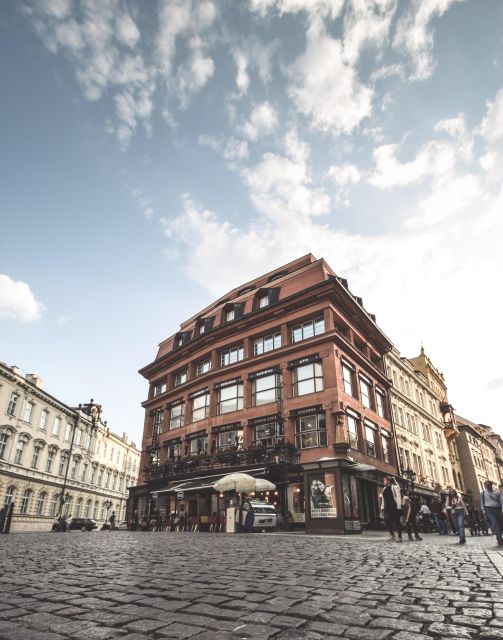
- House of the Black Madonna: another anchor in the route
- Wenceslas Square: time spent where style meets the real city
- A pattern you will come to recognize
- The story turns: from ornament to revolt
- Public transport to Vyšehrad: where Cubism gets daring
- Three Cubist Houses: quick stop, big takeaway
- Kovařovicova vila: another Cubist-style perspective
- Cubist house Vyšehrad č. p. 98: the final architectural punch
- Then, back toward town by tram
- Price and logistics: is $84 good value?
- Who this tour suits best
- Tips to get more from every stop
- Quick note on mobility and languages
- FAQ
- Where does the tour start?
- How long is the tour?
- What is the price per person?
- Is it a private tour?
- What languages are available?
- Is public transportation included?
- Is the tour wheelchair accessible?
- Is it suitable for children?
- What should I bring?
- Should you book this Prague Art Nouveau and Cubism tour?
Key things to look forward to
- 1909 Central Train Station as your starting point, giving you the modern-era context fast
- Art Nouveau to Cubism storyline, with why both styles rose and then got interrupted by World War I
- Municipal House and Wenceslas Square, used less like sightseeing stops and more like style anchors
- Tram and short public-transport ride, so you spend less time fighting the map and more time looking at buildings
- Vyšehrad-area Cubism, where the architecture turns bolder and more experimental
- A private group format, so you can ask questions in real time and get direct answers
Why Art Nouveau and Cubism click in Prague
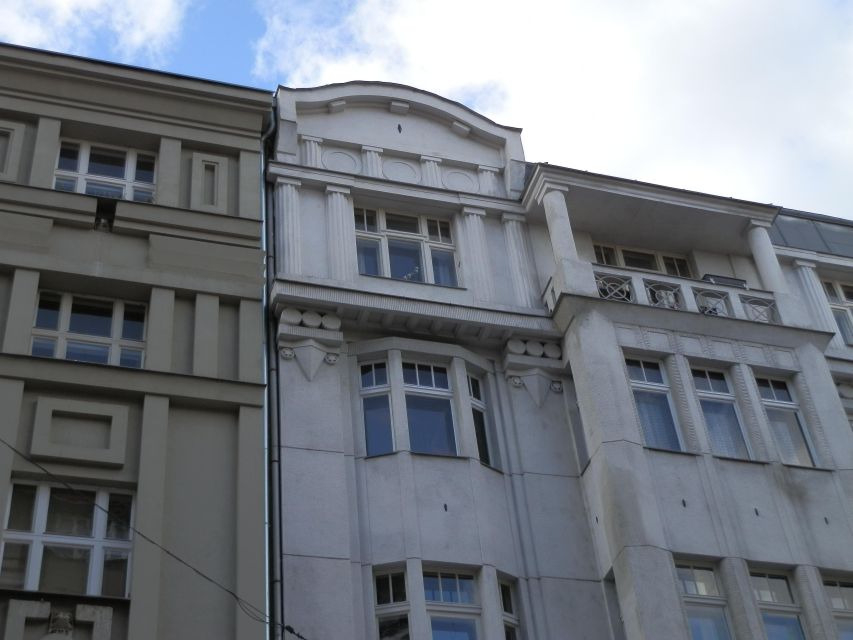
Prague is often sold through medieval lanes, historic squares, and castle views. This tour shifts the lens to something closer to your grandparents’ era, but still old enough to feel foreign: the early 20th century, when architects treated the city like a lab.
Art Nouveau is the first big idea. Your guide explains how it grew out of 19th-century trends and why it was seen as revolutionary at the time. Even if you are not a design nerd, the point is practical: Art Nouveau brought a new way of thinking about surfaces, lines, and ornament, and it helped shape modern aesthetics and architecture.
Then comes Cubism. Here, the story gets sharper. You learn how Cubism started as a revolt against the more popular Art Nouveau, and how both styles struggled to survive the upheavals around World War I. That historical link matters, because it turns a “style walking tour” into a real cause-and-effect lesson.
This is also why the guide’s narration matters. The architecture is only half the experience. The other half is learning how to read what you are seeing, so the city makes sense instead of just looking pretty.
A few more Prague outings to weigh up
- Prague Old Town: Private Tour
★ 5.0 · 1,223 reviews - Prague Airport Private Arrival Transfer
★ 4.5 · 991 reviews - Prague Airport Private Departure Transfer
★ 4.5 · 780 reviews
Meeting at Central Station, and why that matters
You meet at Prague’s Central Train Station, in the middle of Platform No. 1. The guide carries a red folder, and there’s a specific landmark at the start point: the bankomat UniCredit Bank.
Starting at a station is not a random choice. Prague’s Central Train Station area ties directly to the modern-era story the tour is telling. The tour’s timeline begins with the reconstructed station dating to 1909, which sets up a key idea: this is not just about old buildings, it’s about Prague reimagining itself as the 20th century arrived.
Logistics are handled in a straightforward way. After walking through the downtown core, the tour uses public transportation for a short ride to a more remote area under Vyšehrad Fortress. Near the end, you reach a tram stop conveniently placed for your ride back toward central Prague, and the public transport tickets are included in the tour price.
Practical tip: wear comfortable shoes. The itinerary includes multiple short legs on foot and several “look closely” moments, so your feet will do most of the work.
Walking the New Town: Belle Époque streets you notice differently
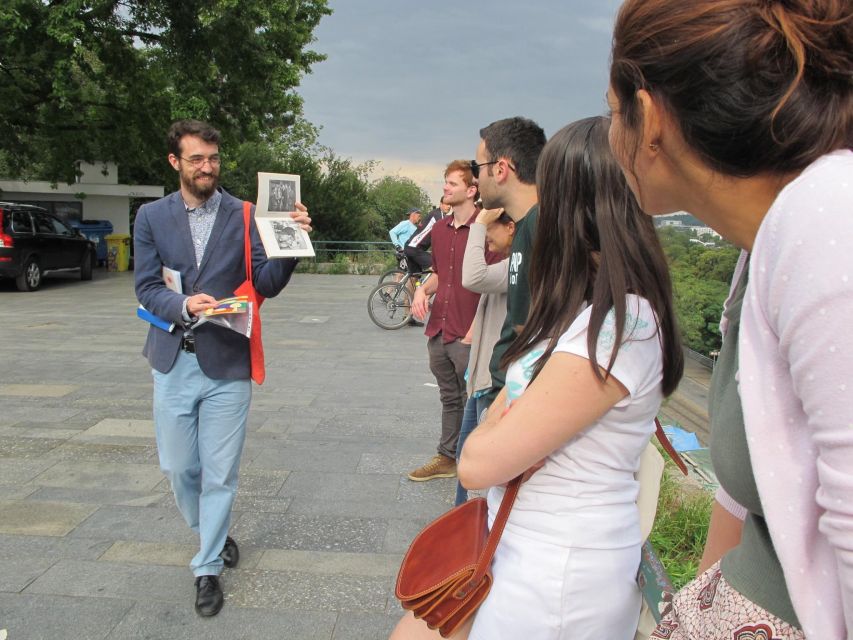
The downtown portion is where the tour teaches you the local habit of looking. You will stop often, usually for only a few minutes at a time, but each stop has a purpose: to connect the building in front of you to the style your guide is explaining right then.
Here is how the walking route unfolds and what each stop is likely doing for you:
Prague Main Railway Station (quick guided start)
You begin with a guided orientation at the station itself, around 15 minutes. This is your “setup chapter,” so the later facades and details feel less random.
A good benefit of this approach is that you do not waste the first hour trying to figure out what matters. You get the framework early.
Another way to fill an afternoon in Czechia:
- Prague: 50-Minute Sightseeing Evening Cruise
★ 4.2 · 33,780 reviews - Prague: Medieval Dinner with Unlimited Drinks
★ 4.4 · 19,847 reviews - Prague: Skip-the-line Castle Ticket and Optional AudioGuide
★ 4.3 · 11,121 reviews - Prague: Castle Tour with Local Guide and Entry Ticket
★ 4.6 · 10,422 reviews
Jubilee Synagogue: a fast stylistic checkpoint
Next up is a brief stop at the Jubilee Synagogue. The tour keeps it short, around five minutes, which suggests you are using it as a stylistic or historical point rather than a long museum stop.
Because the tour’s theme is early 20th-century architecture, these quick stops help you “tune in” while moving between areas.
Municipal House: where the city shows off
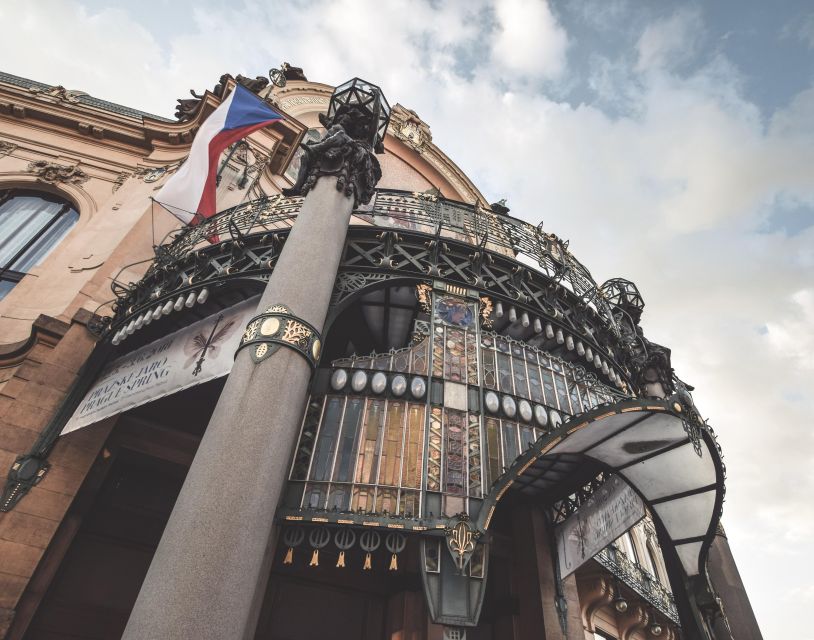
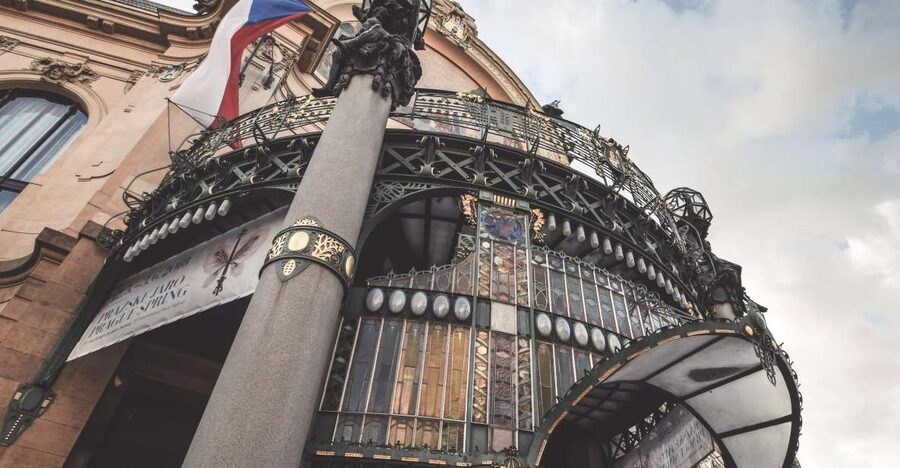
Municipal House gets a dedicated look, with about ten minutes of sightseeing. This is one of those places where architecture is doing more than sheltering people. It signals taste, identity, and status.
The guide’s job here is to help you connect the building’s look to the broader changes happening in the late 19th and early 20th centuries, so you can see it as part of the same story rather than a one-off landmark.
House of the Black Madonna: another anchor in the route
You also spend around ten minutes at the House of the Black Madonna. Like other named stops, it functions as a style anchor. You will be encouraged to notice details you might gloss over when you are simply passing through.
Wenceslas Square: time spent where style meets the real city
Wenceslas Square is included with about 20 minutes of sightseeing. This is a longer stop than most, which usually means you will be using the square as context: how the city looks when it is alive, how modern architecture sits in a broader urban space, and how your guide interprets style in real public areas.
A pattern you will come to recognize
As you move, you will keep encountering short interludes. After each named landmark, the tour includes on-foot segments and smaller “hidden in plain sight” details, the kind you notice only after someone teaches you what to look for.
If you want to get real value out of this tour, slow down at these points. It helps to focus on one thing at a time, like the way lines curve, how ornament frames windows, or how the building transitions between levels.
The story turns: from ornament to revolt
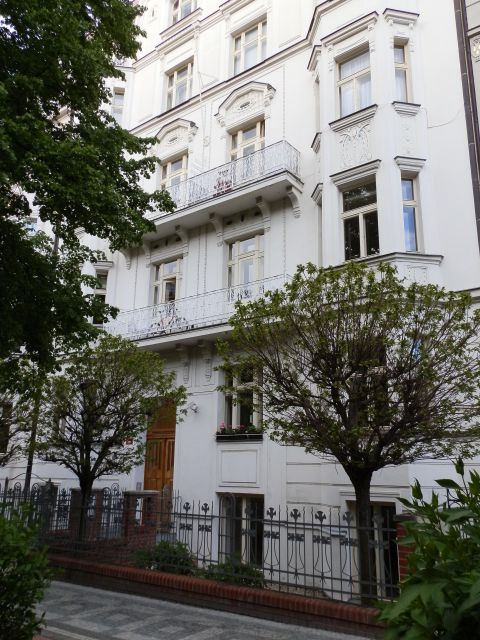
A key strength of this tour is the narrative link between Art Nouveau and Cubism, and how both fit into Prague’s 20th-century turning points.
Your guide explains:
- How Art Nouveau evolved from 19th-century styles
- Why it felt revolutionary
- How it shaped modern aesthetics and architecture
- How Cubism began as a revolt against Art Nouveau
- Why both styles did not survive intact through World War I
This is the part you will feel after the tour ends. The city will stop being a random collection of buildings and start feeling like a sequence of ideas. That also helps if you have already visited Prague before. Instead of redoing the classic highlights, you are learning a lens that stays with you when you wander later on your own.
And if you are in Prague for a week, this fits especially well as an “altogether different day.” You can pair it with a more traditional historical day, then use this one to see the city’s modern face.
Public transport to Vyšehrad: where Cubism gets daring
After a substantial stretch around central Prague, you take public transportation for a short ride to an area under Vyšehrad Fortress. The route here is important because it changes the feel of the tour. You are no longer only in the thick of tourist sight lines.
Instead, you shift to a more remote setting where the tour’s Cubism focus can land with more impact. This section is where the architecture is described as more daring, and that matches what you would expect from Cubism, a style built around breaking expectations.
Three Cubist Houses: quick stop, big takeaway
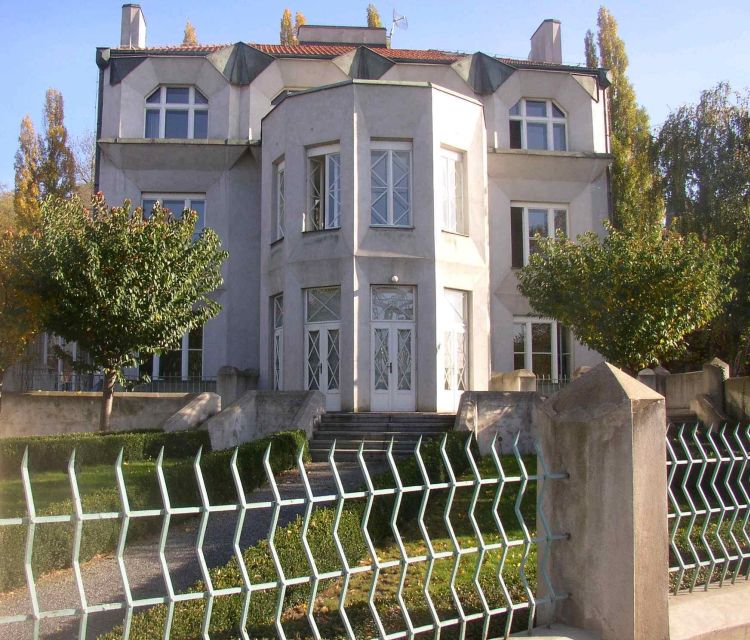
You visit the Three Cubist Houses with about five minutes of sightseeing. The short time can be intentional: these are the kind of buildings where you grasp the idea fast if someone points out the main features.
Do not rush your eyes here. Take a minute to look at angles, the sense of fragmentation, and how the composition refuses the smooth certainty of older styles.
Kovařovicova vila: another Cubist-style perspective
Next comes Kovařovicova vila, another about five minutes. It is likely included to show that Cubism in Prague is not one single look. Even if the theme is shared, the expression can vary by building.
Cubist house Vyšehrad č. p. 98: the final architectural punch
You end the architecture-focused part with the Cubist house Vyšehrad č. p. 98, again around five minutes. This final stop is a good closing statement, because it puts you in the same area and theme, without dragging you into unrelated sightseeing.
Then, back toward town by tram
At the end, you are near a tram stop that makes it easy to head back to the downtown area. The tram tickets back are included in your tour price, which is a practical detail that makes the logistics simpler.
Price and logistics: is $84 good value?
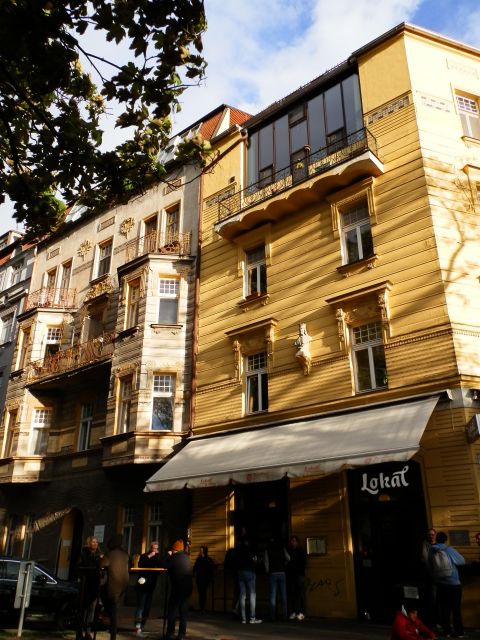
At $84 per person for a 1-day private tour, the value depends on what kind of traveler you are.
If you enjoy learning as you look, this price starts to make sense quickly. You get:
- A live guide in English or German
- A private group format
- A narrated timeline connecting Art Nouveau, Cubism, and World War I
- A route with multiple named architectural stops
- Public transport tickets included, plus trams used near the end
This is not a “self-guided photo walk.” The guide’s explanation is the product. The fact that people highlight guides like Max and Eva for clear storytelling and strong answers suggests that you are paying for interpretation, not just access.
One caution: if you mainly want relaxed strolling with lots of time per stop, this may feel like a tight schedule. The tour is heavy on short segments and guided moments, and a couple of people felt the later portion could be shorter.
Who this tour suits best
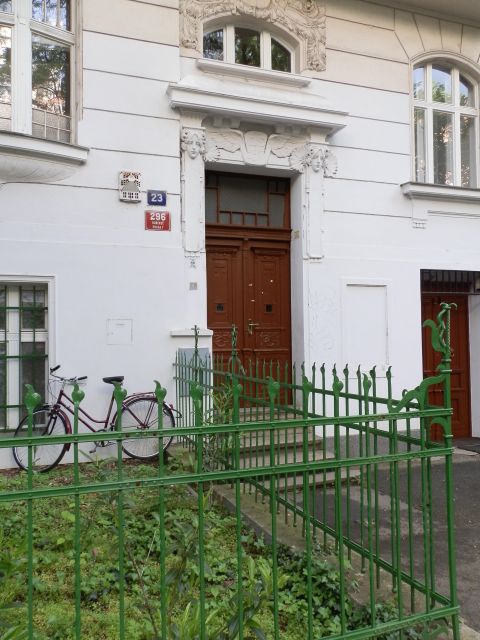
This tour is ideal if:
- You have been to Prague before and want something that does not only repeat classic landmarks
- You are here for about a week and want one day with a different theme
- You like architecture, but you prefer explanations that connect style changes to real historical events
- You want to see buildings you likely would not choose on your own
It may be less ideal if:
- You are traveling with kids under 12, since the tour is not suitable for that age group
- You struggle with walking multiple short legs and frequent stops, even though it is described as wheelchair accessible
If you are a first-time visitor, you might still enjoy it, especially if architecture is your thing. Just know the tour is theme-driven, not a full greatest-hits tour.
Tips to get more from every stop
You will do best if you come ready to look at details, not only the overall look.
- At each stop, pick one theme to watch: lines, curves, window framing, ornament placement, or the way shapes break up.
- Ask questions as they come up. This tour is set up for dialogue, and guides like Max and Eva are described as answering on the spot.
- Use comfortable shoes, because the tour’s rhythm depends on short walking segments.
- If you have an interest in how styles change over time, focus on the narration. The buildings make more sense when you understand the idea behind them.
Quick note on mobility and languages
This tour is wheelchair accessible and runs as a private group. The guide works in English and German.
If you communicate specific mobility needs, you will want to coordinate early. The tour involves walking and a public transport ride, so it helps to confirm the smoothest way to handle ramps, transitions, and time spent standing.
FAQ
Where does the tour start?
The meeting point is on Prague’s Central Train Station, in the middle of Platform No. 1. The guide is carrying a red folder, near the bankomat UniCredit Bank.
How long is the tour?
It is listed as a 1-day tour.
What is the price per person?
The price is $84 per person.
Is it a private tour?
Yes. It is a private group.
What languages are available?
The live guide offers English and German.
Is public transportation included?
Yes. Tickets for public transportation are included, including the tram return near the end.
Is the tour wheelchair accessible?
Yes, it is wheelchair accessible.
Is it suitable for children?
It is not suitable for children under 12.
What should I bring?
Wear comfortable shoes.
Should you book this Prague Art Nouveau and Cubism tour?
Book it if you want Prague through a modern lens, with Art Nouveau and Cubism tied to the real timeline of the early 20th century. The strongest reason to go is the guided storytelling that helps you read architecture instead of just snapping photos. At $84, the included transport and the private format make it a practical choice for a focused, thematic day.
Consider skipping it or shortening expectations if you prefer longer unhurried stops. The tour packs in many short looks, and the later part can feel dense. If that sounds like your style, this is one of the better ways to see Prague’s 1900-era face.
Just added around Prague
- WWII and Communism History in Prague’s Old Town Private Tour★ 5.0 · 4 reviews
- Prague: Historical Walking Tour with Focus on World War 2★ 4.3 · 12 reviews
- World War II 4WD Tour from Prague with Lunch★ 4.4 · 3 reviews
- World War II History Tour of Prague’s Old Town★ 5.0 · 4 reviews
- Walking tour of Prague in French : Nové Město★ 4.9 · 16 reviews
- Walking tour of Prague in french: Old Town & Charles Bridge★ 4.9 · 62 reviews
- Organ Concert in St Francis Church Admission Ticket★ 4.5 · 88 reviews
- Unique salt cave in Prague★ 4.9 · 10 reviews
Private, compared.


Shared Group/Private Segway Tour with Hotel Transfer
Read our review →
Winter Charm of Prague – private tour with PERSONAL PRAGUE GUIDE
Read our review →