
Review · WALKING TOURS
Prague Renaissance and Baroque Gardens Walking Tour
Prague gardens can look pretty, then suddenly turn political. This 3-hour walk ties garden design to power, faith, and taste, from Emperor Ferdinand I’s Italian influence to Baroque drama. I especially loved how the tour connects what you see, like the Singing Fountain and the Fig House, to the big ideas behind it. You also get an easy, story-driven rhythm that keeps the whole walk feeling relaxed, even when you are headed uphill.
My other big plus was Wallenstein Garden with its odd details, like albino peacocks and mythical fountains, plus the way the guide brings Albrecht von Wallenstein into the story. One thing to consider: the route includes stairs that can be narrow or steep, so it may not fit everyone’s pace. A private tour can be a smarter move if you know you need a more flexible path.
In This Review
- Key highlights to watch for
- Why Prague gardens feel like a time machine
- Meeting at Bagel Lounge Malostranska, then walking into the Castle world
- Emperor Ferdinand I and Italian landscapers at Prague’s Castle Gardens
- The Giardinetto and the Singing Fountain, a Renaissance trick you can hear
- Fig House and Orangery: citrus, figs, and the trade routes behind them
- Stag moat, Bull Stairs, and terraced gardens that read like chapters
- Wallenstein Garden: albino peacocks and Baroque mythology in the same breath
- Vrtba Garden in Mala Strana, 1720 Baroque walls and marine grotto views
- Price and what $123 buys you in real value
- Practical tips so you enjoy every step
- Who this tour suits best, and who should consider something else
- Should you book the Prague Renaissance and Baroque Gardens walking tour?
Key highlights to watch for
- Italian Renaissance design at Prague Castle, explained through Emperor Ferdinand I’s landscaping plan
- The Belvedere Summer Palace and Giardinetto, including the 1564 bell-bronze Singing Fountain
- Fig House and Orangery crops, from figs to citrus and almonds, plus the plant-and-trade stories behind them
- Wallenstein Garden’s theatrical details, including albino peacocks, grotto wall elements, and mythical fountains
- Vrtba Garden in Mala Strana, a walled Baroque garden from 1720 with top-courtyard marine-themed grotto views
- Guide-led storytelling, with English interpretation and strong, relaxed pacing (Miriam is a standout name from the past)
Why Prague gardens feel like a time machine
Prague’s gardens are not just places to pause. They are like outdoor textbooks for how people thought and lived. The Renaissance version tends to feel ordered, elegant, and intentional, with classic forms and symmetry trying to signal control. The Baroque version flips the mood. It’s more theatrical. It wants you to feel surprised, moved, and a little off balance in the best way.
The tour frames this shift with a simple truth: gardens often mirror what was happening politically and religiously. Early medieval gardens leaned practical, mainly for medicinal or culinary herbs, and in Prague you only find preserved examples in certain Gothic cloisters. Later, the hills around Prague carried vineyards that go back to a time before Charles IV, so the “garden world” here is bigger than just palace lawns.
Then comes the moment that really changes everything for what you will see on this walk. In the 1500s, Emperor Ferdinand I pushed for a true palace garden in the Mediterranean style. He was keen on lush, Italian Renaissance landscapes, and he brought in a strong team of Italian gardeners and architects. That choice turns the Castle area into a living showcase of taste traveling north.
More Walking Tours in Prague:
- Prague: 3-Hour Walking Tour of Old Town & Prague Castle
★ 4.7 · 5,696 reviews - Prague: Ghost Walking Tour Where Legends Come To Life
★ 4.4 · 5,253 reviews - Prague: Jewish Quarter Walking Tour with Admission Tickets
★ 4.7 · 3,729 reviews
Meeting at Bagel Lounge Malostranska, then walking into the Castle world
You meet at the door of Bagel Lounge Malostranska. That matters because it anchors your tour in the Lesser Town area, which sets you up for the Baroque finale later in the walk. The tour lasts about 3 hours, and it is paced as a guided history walk rather than a “see everything fast” sprint.
Because it is a walking tour with real garden steps, wear shoes you trust. Even if you walk regularly at home, Prague garden stairs can feel like a different sport. The good news is that a strong guide keeps you moving at a comfortable tempo and gives context so each climb feels purposeful instead of just exhausting.
English is the working language, and the tour offers private or small groups. If you like asking questions, small-group formats tend to feel more satisfying here, because garden design details can turn into a mini conversation without the guide needing to rush.
Emperor Ferdinand I and Italian landscapers at Prague’s Castle Gardens
The heart of the early story is Emperor Ferdinand I. You learn how he hired Italian landscapers for the Castle Gardens, bringing classicism north of the Alps. That is the key idea you should carry into this part: this is not “random greenery.” It’s design imported on purpose, built to project a certain worldview.
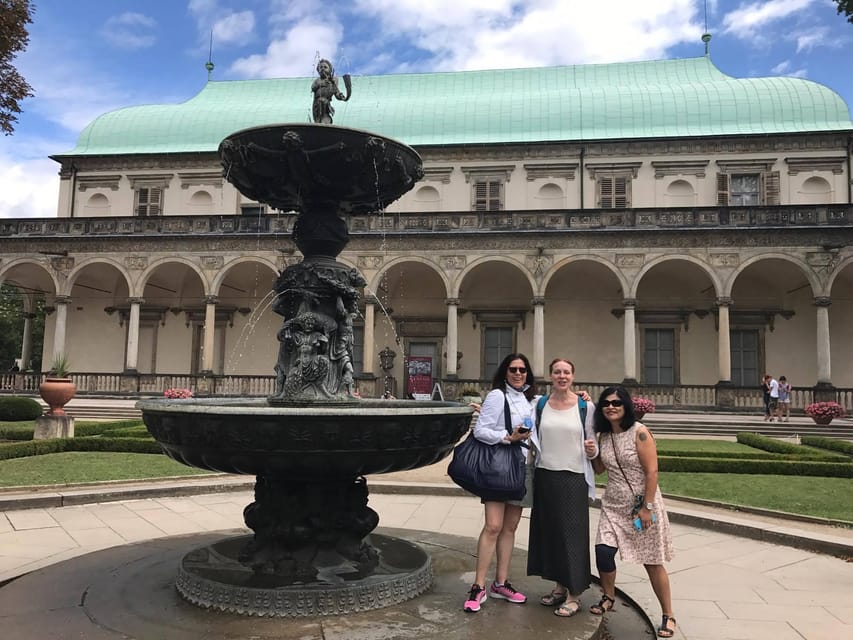
One of the most impressive stops is the Belvedere Summer Palace, commissioned by Ferdinand I as a gift to his wife, Queen Anne. She did not live to see its completion, which quietly adds a human note to all the pageantry. The relief carvings depict Ferdinand presenting Queen Anne with a flower from the Royal Gardens surrounding the palace. It’s one of those small details that makes you look longer, because you can tell it was meant to symbolize affection, status, and the garden as a kind of courtly theater.
The palace itself is often described as the most beautiful Renaissance structure outside of Italy, and it is designed by the Italian Paola della Stella. Even if you are not a museum person, it helps to know the name here. When you later hear Renaissance talk in Prague, you will know the style came in through real people, not just vague “influences.”
The Giardinetto and the Singing Fountain, a Renaissance trick you can hear
Right in front of the pleasure palace is the Giardinetto, and then the star detail: the so-called Singing Fountain. The fountain was cast in 1564 in bell bronze. The effect is simple but memorable. When water drops into the bowl, it resonates or “sings.”
This is one of those garden moments where the design is doing something practical and emotional at the same time. It’s not just visual decoration. It turns water into sound, which changes how you experience the space. You might find yourself pausing longer than planned, just to listen for the resonance as water falls.
If you enjoy design that mixes art and mechanics, this stop delivers. It also sets up the later Baroque mood shift, because you start to see how Prague garden-makers used spectacle, not just greenery.
Another way to fill an afternoon in Czechia:
- Prague: 50-Minute Sightseeing Evening Cruise
★ 4.2 · 33,780 reviews - Prague: Medieval Dinner with Unlimited Drinks
★ 4.4 · 19,847 reviews - Prague: Skip-the-line Castle Ticket and Optional AudioGuide
★ 4.3 · 11,121 reviews - Prague: Castle Tour with Local Guide and Entry Ticket
★ 4.6 · 10,422 reviews
Fig House and Orangery: citrus, figs, and the trade routes behind them
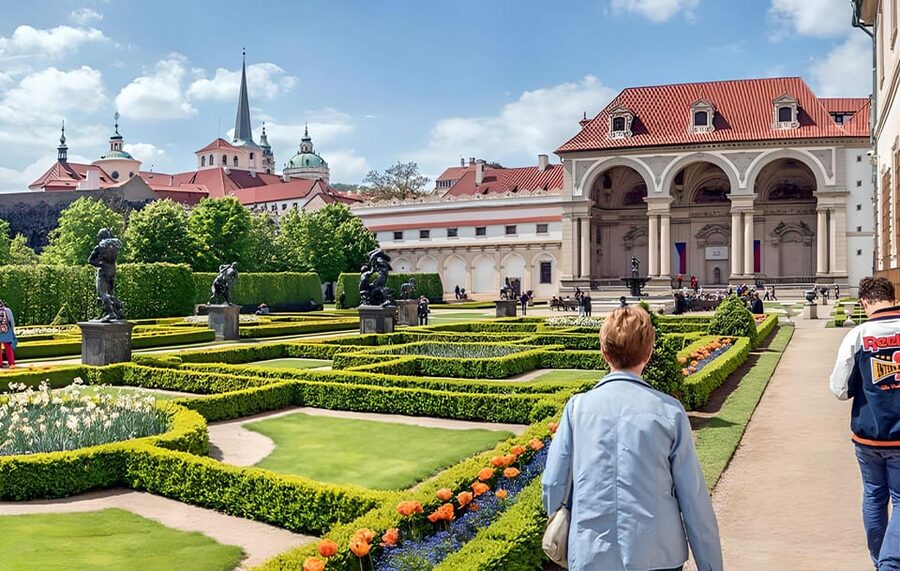
After the core palace structures, the walk moves into the Fig House and the Orangery. This is where the tour becomes practical in a fascinating way. These buildings were part of how the palace raised plants that were not native to Central Europe.
You learn that figs, almonds, oranges, and lemons were grown here, among the first in Central Europe. That might sound like trivia, but it’s actually a window into how elite gardens worked. They were partly about beauty, but they were also about experimenting with what the climate could be persuaded to grow.
There’s also a plant story involving tulips. The tour explains how tulips, previously unknown in Europe, were introduced to the Royal gardens as an exotic gift brought by the Sultan of Constantinople. So you get politics and trade, bottled into a flower story you can physically stand beside.
If you are the type who wonders where all the “exotic” plant lore comes from, this is one of the best parts of the tour. It turns garden curiosity into historical context, so when you see plants in other parts of Prague, you will understand the backstory more quickly.
Stag moat, Bull Stairs, and terraced gardens that read like chapters
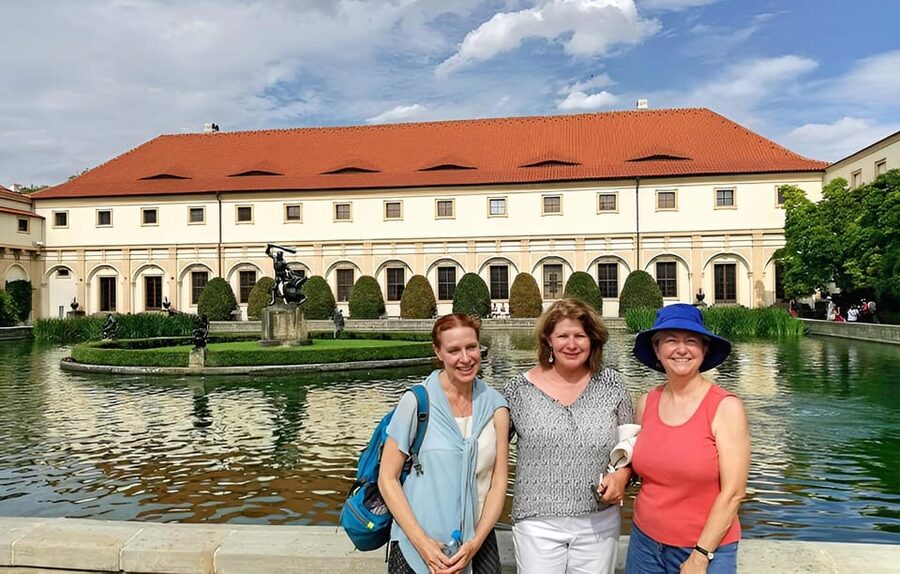
Before you go deeper into the South Gardens, you pause by the stag moat. It’s one of those details that helps you picture how the Castle grounds functioned as both display and controlled environment. Then you cross through a courtyard and head down the Bull Stairs to the South Gardens.
The stair section is one of the spots where your body will get a say in the experience. Even if the tour stays relaxed, you should expect some going up and down, and at times the stairs can be narrow or steep. If that’s a concern, you can consider booking a private tour so the guide can tailor the route and pace, potentially leaving out some sites.
Once you are in the South Gardens, you pass through the Garden of Paradise and the Garden on the Bulwark. You also move through terraced gardens below the castle. The terracing matters. It gives the garden structure and viewpoints, so each angle feels like a new scene, not just one long slope.
By the time you are moving toward the later gardens, the tour has helped you understand the “why” behind the “how.” You stop seeing terraces as scenery only, and start seeing them as design choices meant to create movement, reveal, and control sightlines.
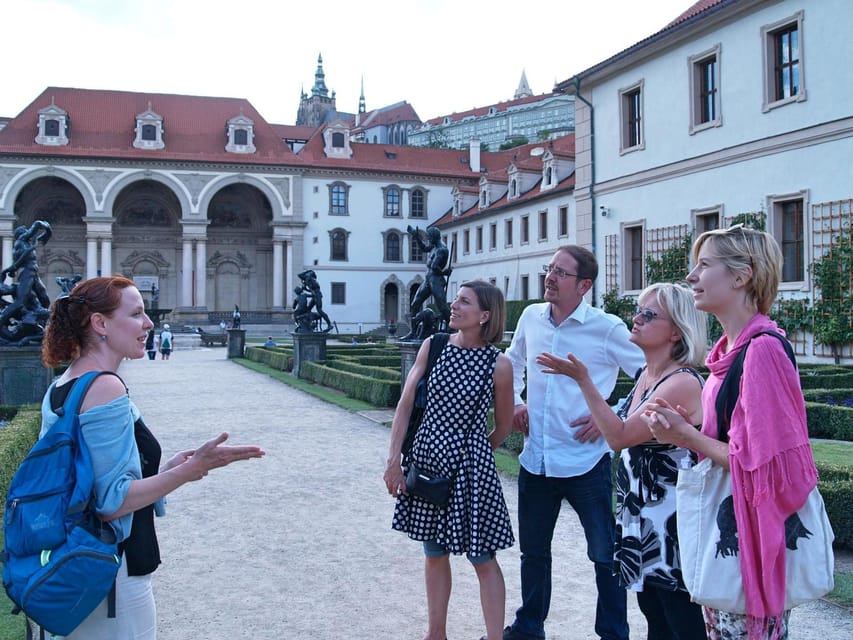
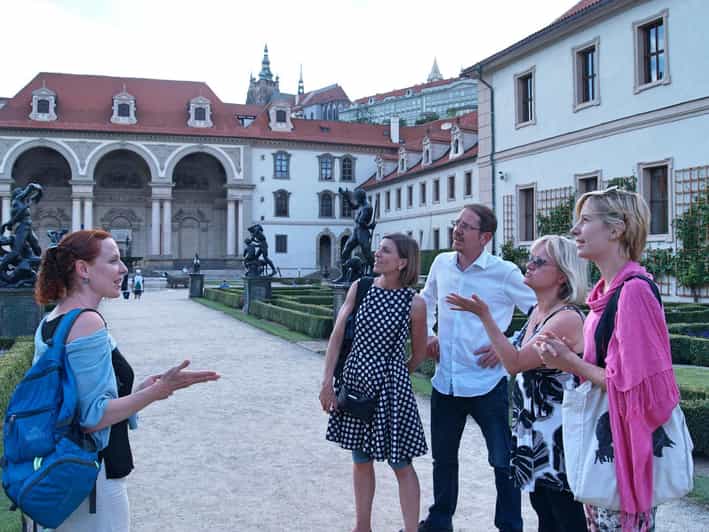
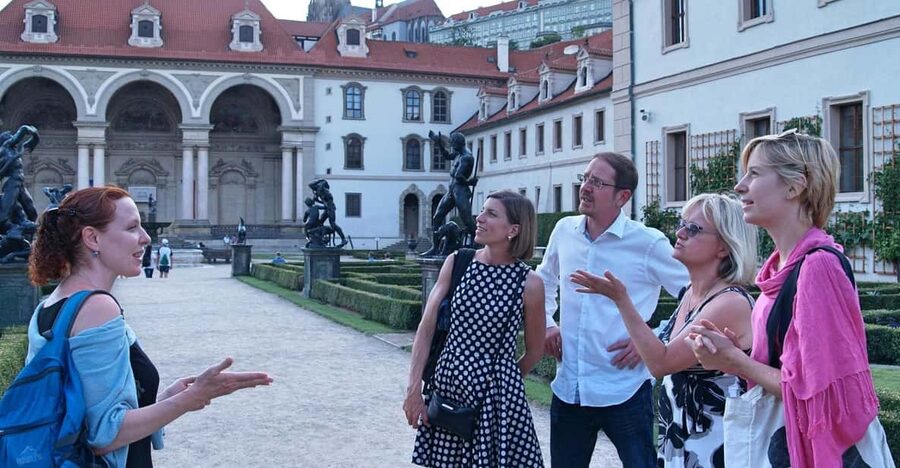
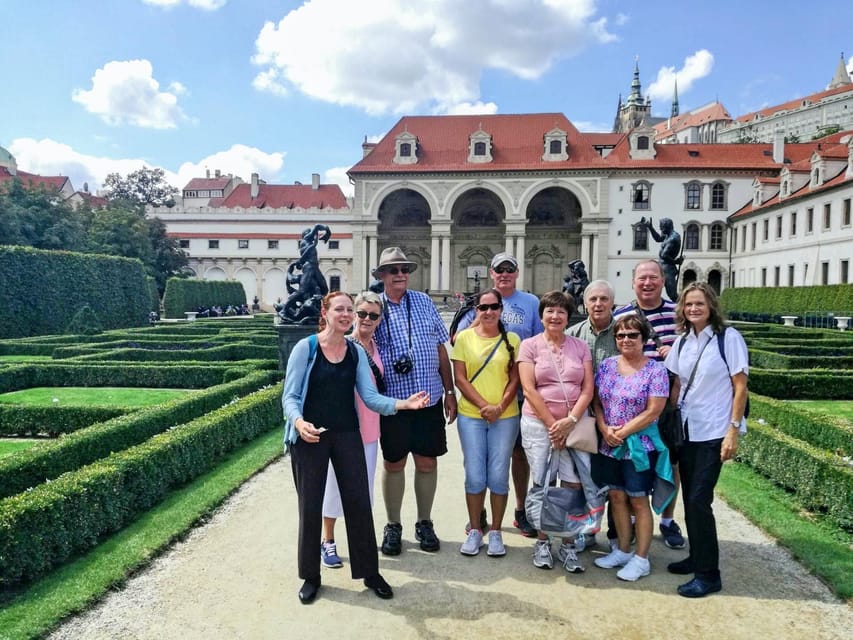
Wallenstein Garden: albino peacocks and Baroque mythology in the same breath
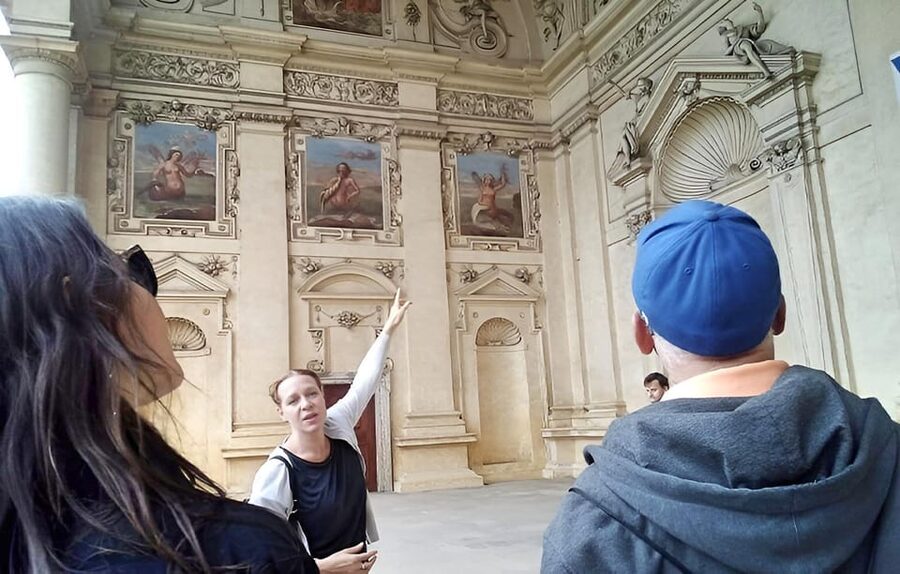
Then comes the garden that many people remember first: the grand Wallenstein Garden. This part is where Prague shifts from Renaissance order to Baroque theatrical philosophy.
Wallenstein Garden has a mix of surprising elements that feel almost storybook. You will see albino peacocks, Mannerist statues, a grotto wall element, and mythical fountains. The mythical part matters because it explains the mood. Baroque gardens were often built to stage drama, using symbolism and surprise effects to make visitors feel something.
The guide also connects the design to the dramatic life of the commissioner, Albrecht von Wallenstein. That extra context changes how you look at the statues and fountains. Instead of treating them as decorative props, you start reading them like coded messages tied to a powerful person and an intense era.
This is also one of the best “pause and look” moments. Because the garden has so many visual hooks, you can spend time just scanning details instead of constantly wondering where you are in the story. It makes the 3-hour length feel more generous, because the garden itself gives you built-in stops for your eyes.
Vrtba Garden in Mala Strana, 1720 Baroque walls and marine grotto views
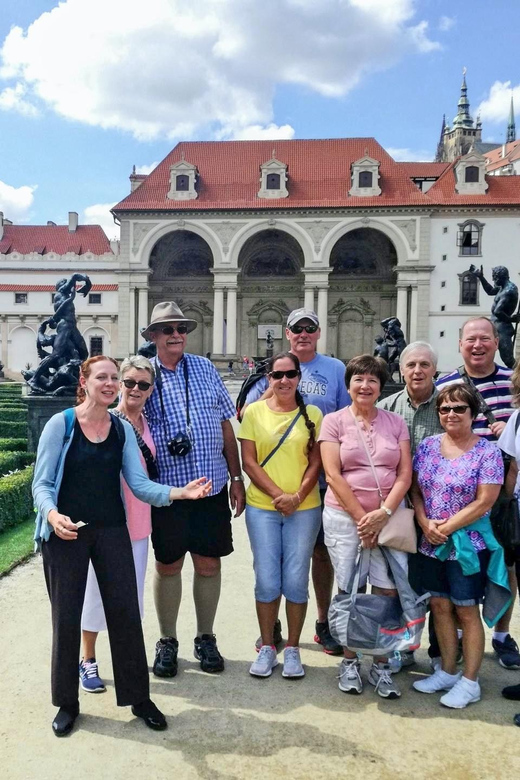
The finale is the Vrtba Garden, a walled Baroque garden dating from 1720. It’s in the Lesser Town, in Mala Strana, and it is a garden many visitors miss. Here, the point is not only that it looks beautiful, it’s that it offers a rarer glimpse of noble 18th-century life and Baroque landscaping style.
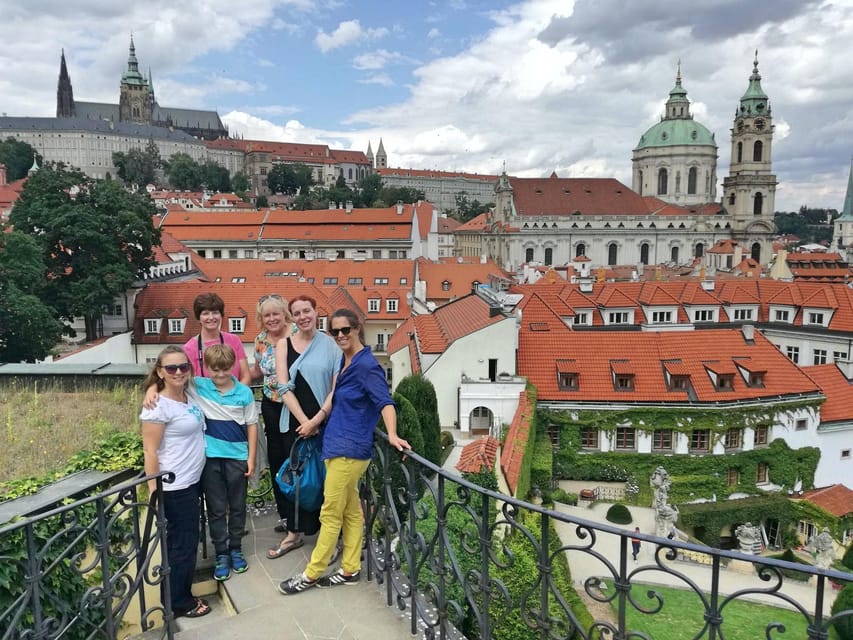
You learn the timing and design logic. The Vrtba Garden is tucked behind walls, so it feels like stepping into a different tempo. When you reach the top courtyard, the marine-themed grotto becomes part of the reward. From there, you get stunning vistas of Prague’s cityscape.
That viewpoint matters for one practical reason: it helps you connect the garden’s fantasy to real Prague. After hours in gardens and stonework, seeing the wider city snaps your brain back into place, so you leave with both a garden memory and a city picture.
Price and what $123 buys you in real value
At $123 per person for a 3-hour guided walk, you are paying for two things: guided historical interpretation and access to a set of designed garden spaces. The tour includes the 3-hour guided history walk and a historian guide.
What is not included matters for budget planning. Gardens under Prague Castle admission fee are not included, and Vrtba Garden admission fee is also not included. If you want to fully experience the interiors or paid sections, you will need to budget extra on top of the tour price.
Still, the value can be strong if you are the type who enjoys understanding what you are looking at. This tour is not a “stand here, take photos” loop. The guide connects Ferdinand I’s Italian hiring choices, the Crops grown in the Fig House and Orangery, and the Renaissance to Baroque shift, with real, named details. That kind of context costs less than doing a self-guided plan plus multiple separate explanations.
Also, the reviews history points to an easygoing teaching style. One guide name you may hear in the past is Miriam, with feedback describing her as excellent, informative, and relaxed. If that matches your preferred travel style, it can make the paid interpretation feel worth it, even with stair effort.
Practical tips so you enjoy every step
Here’s how I’d set yourself up for a smooth experience.
First, plan for stairs. The route includes walking up and down stairs that are sometimes narrow or steep. If you have mobility issues, consider a private tour so the guide can tailor the route and focus on the parts that fit your limits.
Second, bring patience for garden timing. Gardens are layered, and Prague’s best garden moments often come when you stop and look long enough to notice details. If you try to rush the walk, you will miss the point.
Third, if you care about plant stories, listen closely during the Fig House and Orangery section. That’s where the tour turns plants into a historical narrative about cultivation and exotic gifts.
Finally, bring comfortable layers. Stone, shade, and open garden pockets can feel different minute to minute, and a 3-hour stroll can get chilly or warm depending on the weather.
Who this tour suits best, and who should consider something else
This tour is a great fit if you enjoy European art and architecture but you do not want a lecture. You’ll like it if you enjoy gardens as design, as well as plants and the human stories behind them.
It also works well as a first serious Prague “gardens” experience. You get a wide range in a short time, from Renaissance pleasure spaces to Baroque wall gardens and views.
If you are traveling with limited mobility, the stairs are the main consideration. While the tour may still be doable with adjustments, the best plan is a private or tailored route, if that option is available for your dates, so you are not forced to push through discomfort.
Should you book the Prague Renaissance and Baroque Gardens walking tour?
Book it if you want Prague gardens with context. You will get a coherent story from Emperor Ferdinand I’s Italian Renaissance influence, through the plant and trade tales in the Fig House and Orangery, to the Baroque drama of Wallenstein Garden and the calmer enclosed elegance of Vrtba Garden.
Skip or modify it if stairs are a deal breaker. The tour can be adapted for private pacing, but if you cannot handle narrow or steep steps, you will likely enjoy the experience less.
If your idea of a great day is a guided walk where you actually learn something, and where the garden details keep surprising you, this one is a strong choice.
Just added around Prague
- WWII and Communism History in Prague’s Old Town Private Tour★ 5.0 · 4 reviews
- Prague: Historical Walking Tour with Focus on World War 2★ 4.3 · 12 reviews
- World War II 4WD Tour from Prague with Lunch★ 4.4 · 3 reviews
- World War II History Tour of Prague’s Old Town★ 5.0 · 4 reviews
- Walking tour of Prague in French : Nové Město★ 4.9 · 16 reviews
- Walking tour of Prague in french: Old Town & Charles Bridge★ 4.9 · 62 reviews
- Organ Concert in St Francis Church Admission Ticket★ 4.5 · 88 reviews
- Unique salt cave in Prague★ 4.9 · 10 reviews
Walking Tours, compared.

3-Hour Walking Tour of Old Town & Prague Castle
Read our review →
Ghost Walking Tour Where Legends Come To Life
Read our review →
Jewish Quarter Walking Tour with Admission Tickets
Read our review →
Prague Guided Walking Tour and Cruise with Authentic Czech Lunch
Read our review →
Old Town and Jewish Quarter Guided Walking Tour
Read our review →
Prague Ghost and Legend of Old Town Walking Tour
Read our review →
Prague 3-hour Afternoon Walking Tour including Prague Castle
Read our review →
Ghosts and Legends Nighttime Guided Walking Tour
Read our review →Browse the lists this tour appears in