
Review · COMMUNISM & COLD WAR TOURS
Prague Cold War Walking Tour
Cold War Prague is right on your route. What makes this walk so compelling is the historian-led focus on how Communist rule shaped real places and daily life, not just slogans. I especially liked the thoughtful, intellectual guidance and the way the route keeps moving through key sites, so the story feels connected. One thing to consider up front: Vitkov Hill has a steep climb.
I love the mix of places that range from hidden infrastructure to major public squares. You get hard-edged details like the preserved nuclear bomb-shelter corridors behind locked doors, plus heavy political sites like the Gottwald mausoleum area. Still, it is a political tour, so if you want only light sightseeing, this may feel intense.
You’ll be walking for about 3 hours at a moderate pace, with tram tickets included to help you link between stops. The group is kept small (max 8), and you can choose an afternoon or morning departure, which makes it easier to fit around your other Prague plans.
In This Review
- Key things that make this tour worth your time
- Why this Cold War walk feels different in Prague
- Price and what you really get for about $126.43
- Getting started at Náměstí Republiky and pacing your day
- Stop 1: Karlin-Zhizhkov pedestrian tunnel and the nuclear-bunker doors
- Stop 2: Vitkov Hill National Monument, Gottwald spaces, and Jan Žižka’s huge equestrian statue
- Stop 3: Prague TV Tower on Zizkov Hill for Brutalism angles
- Stop 4: Wenceslas Square, protest memory, and the Velvet Revolution timeline
- Stop 5: The upside-down King Wenceslas riding a dead horse
- How the route builds a complete Cold War story in just 3 hours
- Who should book this tour, and who may want a different option
- Should you book the Prague Cold War Walking Tour?
Key things that make this tour worth your time
- Historian-guided storytelling that ties Cold War politics to the actual buildings you see
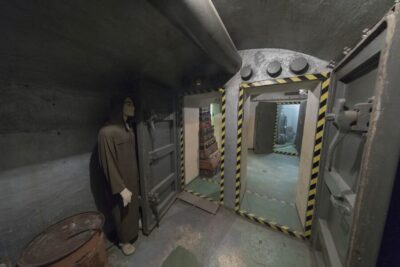
- Karlin-Zhizhkov pedestrian tunnel with locked doors to nuclear bomb-shelter corridors
- Vitkov National Monument including the Hall of the Soviet Soldier and Gottwald-related spaces
- Giant propaganda-era monuments explained through Czech nationalism and Communist messaging
- Wenceslas Square and the Velvet Revolution arc from parades to protest in one route
- Designed for small groups (max 8) so questions fit naturally into the walk
Why this Cold War walk feels different in Prague
Prague can look timeless, but this tour points your eyes at the layers of political control built into the city. Instead of treating communism as a museum topic, you see how it used architecture, monuments, and public space to teach people what to think, what to fear, and what to celebrate.
I also liked the tone. The walk is guided by a historian, and that shows in how the explanations move from big picture to specific details, like what propaganda tried to communicate and how Czechoslovakia’s political turns were felt on the street. Even the stops that are quick, like the TV tower viewpoint, are used to set context for what came before and what came next.
And yes, there is tragedy here. The tour includes places tied to leaders, curated public messaging, and political upheaval. But it stays grounded in real locations, so the whole thing lands as a practical geography of the Cold War, not just a lecture.
More Communism-era tours in Prague:
- Prague: Communism History and Nuclear Bunker Guided Tour
★ 4.7 · 2,417 reviews - Prague Communism History and Nuclear Bunker Tour
★ 5.0 · 1,742 reviews - Communism & Nuclear Bunker Tour + 70s Canteen Lunch (own expense)
★ 5.0 · 1,036 reviews
Price and what you really get for about $126.43
At $126.43 per person for roughly 3 hours, the price is not a budget bargain. What justifies it is the historian component, plus the fact that you’re covering multiple high-impact sites without having to plan the sequence yourself.
Here’s what you actually gain for your money:
- A planned route through the most important Communist-era places in Prague
- A historian guide to connect politics to what you’re looking at
- A small group (maximum 8) that keeps the experience personal
- Tram tickets included, which reduces friction when you’re hopping around the city
- Mobile ticketing, so you’re not stuck with paper coordination
A possible drawback tied to value: this is not a tour where you’ll “do everything” inside paid attractions. It is more about the guided context around key spaces, and some entry fees at major stops may not be included, like at Vitkov. If you mainly want indoor museum time, you might feel the schedule is more exterior-focused.
Getting started at Náměstí Republiky and pacing your day
Your tour begins at Náměstí Republiky 1077/2, Nové Město, and the end is back in Prague. Afternoon departure is listed as a 2:00 pm start, with the option to choose morning or afternoon when you book.
That matters because Prague sightseeing can sprawl. A guided walk like this gives you a defined arc. You start with Cold War-era survival infrastructure, then move up toward major political symbolism at Vitkov, then hit the broad public stages like Wenceslas Square and the protest space tied to the Lennon Wall.
Practical tip: wear shoes you trust. Even though the group is small, you are on foot through several neighborhoods, and the Vitkov climb is not just a stroll.
Stop 1: Karlin-Zhizhkov pedestrian tunnel and the nuclear-bunker doors
One of the first things I like about this tour is that it starts with fear made physical.
At Pedestrian Tunnel Karlin-Zhizhkov, you walk through a pedestrian tunnel and pay attention to the locked doors that lead to nuclear bomb-shelter corridors. Those doors are a real-time reminder that Cold War life included survival planning, not just party slogans. The fact that these areas are still maintained makes it feel less like old history and more like infrastructure that was built to last.
This stop is short, about 10 minutes, and it’s free in terms of admission. The value is how the guide uses it as a baseline for everything that follows: when leaders worry about nuclear threats, they also shape public messaging, institutions, and monuments to match.
If you’re the type who likes photos, this is a good place to grab a few early. The tunnel gives you dramatic lines and shadows, and the story is fresh in your head right at the start.
More Walking Tours in Prague:
- Prague: 3-Hour Walking Tour of Old Town & Prague Castle
★ 4.7 · 5,696 reviews - Prague: Ghost Walking Tour Where Legends Come To Life
★ 4.4 · 5,253 reviews - Prague: Jewish Quarter Walking Tour with Admission Tickets
★ 4.7 · 3,729 reviews - Prague Guided Walking Tour and Cruise with Authentic Czech Lunch
★ 5.0 · 3,627 reviews
Stop 2: Vitkov Hill National Monument, Gottwald spaces, and Jan Žižka’s huge equestrian statue
This is the tour’s main effort, and it is also where you’ll get the heaviest political symbolism.
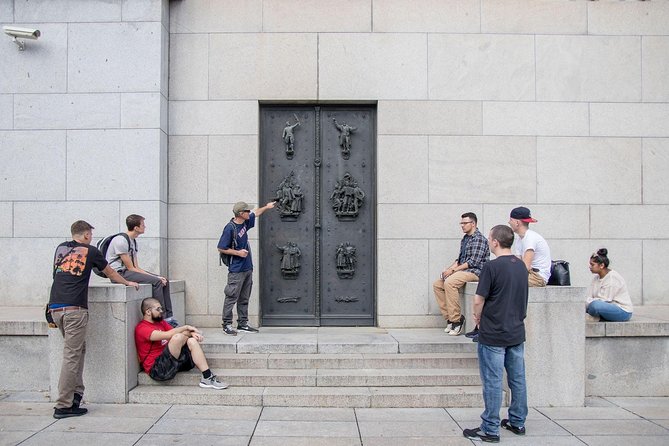
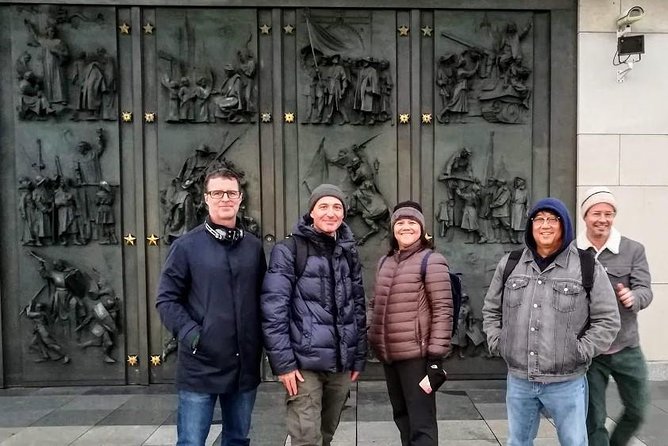
At Vitkov Hill, you reach the National Monument complex, which includes major sites tied to Communist leadership and Soviet-era messaging. The guide helps you connect the architecture and statuary to what the regime wanted you to understand. You’ll hear about propaganda and politics, and you’ll see the Hall of the Soviet Soldier.
The mausoleum-related material is one of the most striking parts of the route. You visit the mausoleum area where the mummified corpse of Klement Gottwald was displayed, plus the adjoining laboratory where his body was embalmed. Even if you have no interest in cult-of-personality history, these details are hard to shake, because they show how the state treated the body of a leader as something to preserve, display, and use for legitimacy.
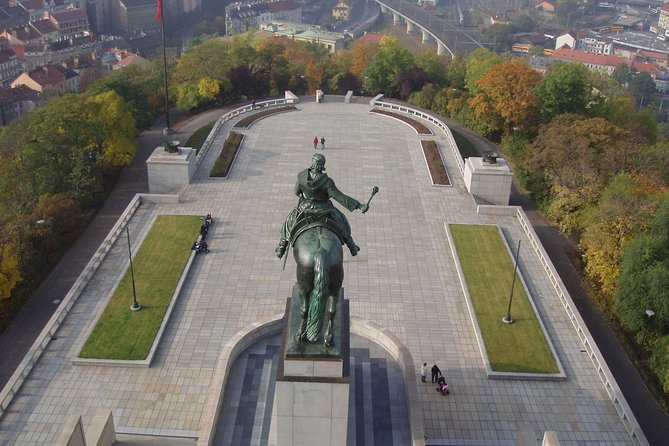
Then there is the equestrian monument. The tour highlights Jan Žižka’s statue as the world’s largest equestrian statue and also notes it as the third largest bronze equestrian statue. Either way, the point is the same: scale is political language here. The guide explains the importance of Czech nationalism in local Communist rule, and how even when the regime leaned Soviet, it still needed local identity to win people over.
Important practical note: Vitkov requires climbing uphill, with the monument climb taking about 20 to 30 minutes. If stairs and hills are tough for you, the tour specifically warns that you should consider a private option that leaves out Vitkov Hill and focuses on Cold War sites in the city center.
Also, admission at the Vitkov stop is listed as not included. So plan on the possibility of a fee if you want access beyond exterior viewing.
Stop 3: Prague TV Tower on Zizkov Hill for Brutalism angles
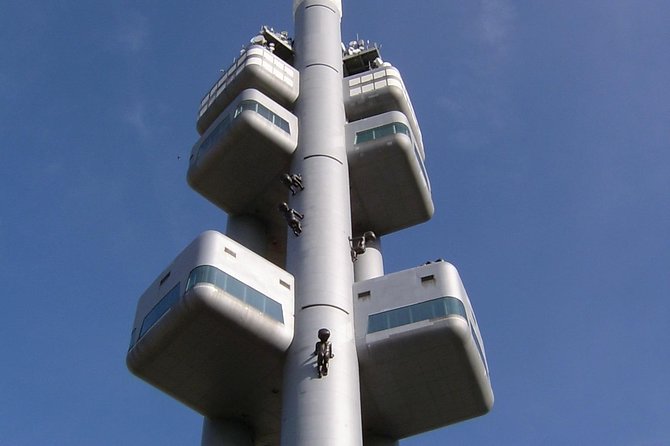
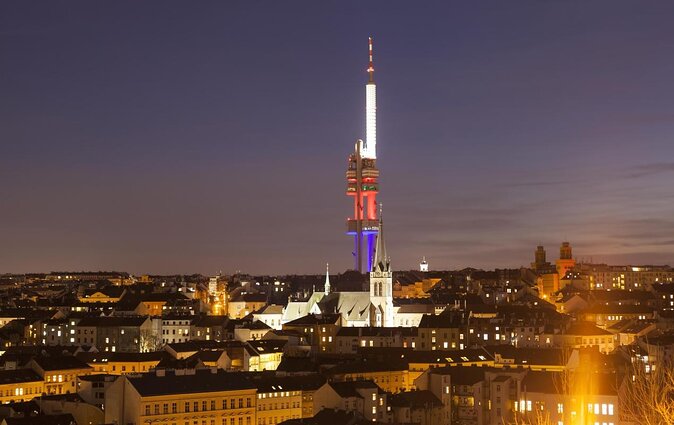
After the intensity of Vitkov, the tour gives you a quick breather with the Prague TV Tower, the Zizkov Television Tower. You’ll have about 5 minutes here, and the focus is viewpoint and style.
The guide points you toward the best way to see the Brutalist look of the tower. This is a small stop, but it’s useful. Brutalism in Prague carries its own Cold War and postwar design language, and it helps you see that the era’s legacy is not only political. It also shows up in how cities were built, and how public space can feel “official” even when you’re just looking at a skyline feature.
If you like photography, time your shots. Five minutes disappears fast.
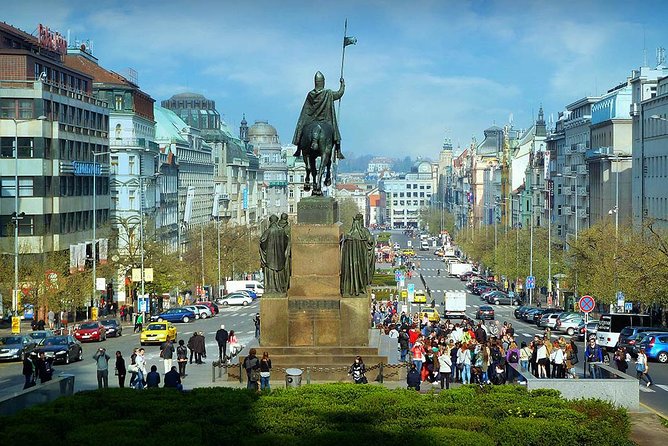
Stop 4: Wenceslas Square, protest memory, and the Velvet Revolution timeline
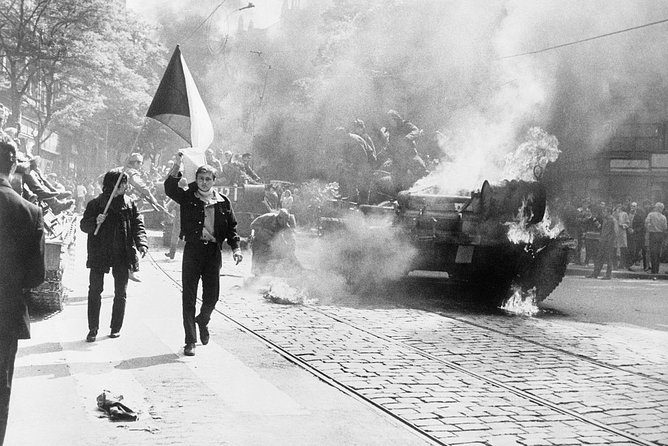
The heart of the street-level story is Wenceslas Square. You’ll spend about 20 minutes here, and the guide walks you through the square’s history from the 14th century into the 20th, when occupying powers held military parades there. Then you connect it to the darker period around Prague Spring and the emotional pivot of the Velvet Revolution, where major change ignited in a single day.
This stop is where the tour becomes easier to understand even if you’re not a politics person. Squares like this are where regimes demonstrate power, and where crowds demonstrate refusal. The guide helps you see why that contrast matters: the physical space stays, but the meaning can flip.
Two important details are woven into this part of the walk:
- You visit the John Lennon Wall, an important political protest site
- You pass the National Assembly building, described as the Communist government seat
Those pauses and pass-bys matter. The Lennon Wall gives you a people-driven, unofficial layer of dissent, while the National Assembly reminds you where formal power sat.
If you’re traveling with someone who finds Cold War stories too abstract, bring them to Wenceslas Square. It turns the ideas into something you can picture.
Stop 5: The upside-down King Wenceslas riding a dead horse
This quick stop, only about 5 minutes, is there for a reason. The upside-down statue of King Wenceslas riding a dead horse is an irony machine, and the guide connects it to contemporary Central European political atmosphere.
What I like about including this is that it bridges time. You’re not only staring at Soviet-era or Communist-era artifacts. You’re seeing how post-Communist culture can still use symbolism to talk back, question authority, and keep history from turning into something polite.
It’s short, free, and easy to miss if you’re only scanning for the big monuments. Pay attention to the meaning your guide brings out, because that is the point.
How the route builds a complete Cold War story in just 3 hours
Even though the tour is about 3 hours, it creates a clear narrative arc:
- Survival planning and fear of nuclear war in the tunnel
- Major Communist symbolism and leader cult material at Vitkov
- Postwar and Cold War-era design cues in brutalist Prague landmarks
- The public stage of Wenceslas Square, where power and protest collide
- Modern political symbolism, shown in the Wenceslas statue
That structure helps you avoid one common mistake on themed tours: knowing facts but not seeing how they connect. Here, you see the connection through location. And because the group is small, the guide can answer questions as they come up, which keeps you from feeling like you’re in a fast conveyor belt.
The overall effect is a more nuanced picture. By the end, you should be able to explain not only the rise of Communism in Czechoslovakia and the impact of the Velvet Revolution, but also why you still see echoes in today’s Czech Republic.
Who should book this tour, and who may want a different option
This walk is a great fit if you want:
- Guided context on Prague’s Communist-era sites
- A historian-led, place-based story (not just dates)
- Small-group pacing and time to ask questions
- A route that includes both symbolism (monuments, halls) and civic space (squares, protest walls)
It may be less ideal if you want:
- Mostly light, casual sightseeing with minimal heavy topics
- Zero walking uphill. Vitkov Hill climbing is a key part of the experience, and the tour itself suggests a private alternative that skips Vitkov for people who have difficulty climbing.
If you’re torn, think about how you like to travel. I find this kind of tour works best when you’re willing to look at the city like a text, where architecture and public space tell you what power tried to do.
Should you book the Prague Cold War Walking Tour?
I’d book it if your Prague trip includes at least one day where you’re open to serious history and you like learning by walking. The guide format is strong, and the stop selection is practical: you move through real Cold War infrastructure, major Communist symbolism, and the civic spaces tied to protest.
Two final decision helpers:
- If the Vitkov climb is a concern, plan for the alternative that skips Vitkov Hill, so you still get a Cold War-focused tour without the steep uphill effort.
- If you care about the value of a historian guide in a small group, this is one of those tours where the price feels more justified than a generic city walk, because the context is the whole product.
If you want Prague with meaning, not just pretty views, this tour delivers.
Just added around Prague
- WWII and Communism History in Prague’s Old Town Private Tour★ 5.0 · 4 reviews
- Prague: Historical Walking Tour with Focus on World War 2★ 4.3 · 12 reviews
- World War II 4WD Tour from Prague with Lunch★ 4.4 · 3 reviews
- World War II History Tour of Prague’s Old Town★ 5.0 · 4 reviews
- Walking tour of Prague in French : Nové Město★ 4.9 · 16 reviews
- Walking tour of Prague in french: Old Town & Charles Bridge★ 4.9 · 62 reviews
- Organ Concert in St Francis Church Admission Ticket★ 4.5 · 88 reviews
- Unique salt cave in Prague★ 4.9 · 10 reviews
Communism & Cold War Tours, compared.
Communism History and Nuclear Bunker Guided Tour
Read our review →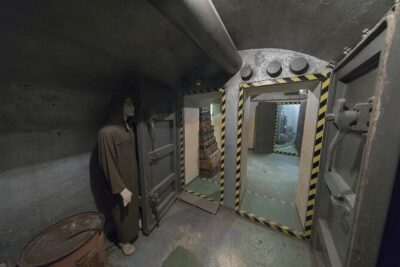
Prague Communism History and Nuclear Bunker Tour
Read our review →
Communism & Nuclear Bunker Tour + 70s Canteen Lunch (own expense)
Read our review →
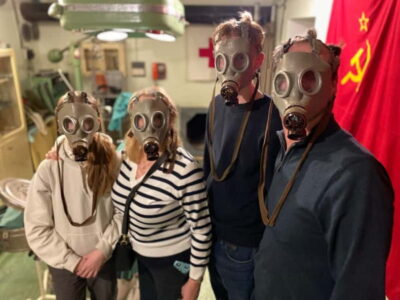
Communism and Bunker Tour with 70s Canteen Lunch
Read our review →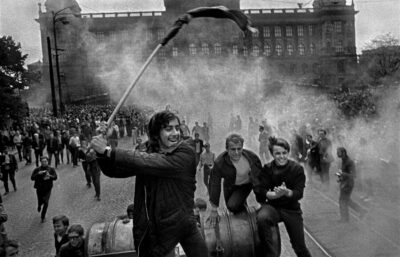
Second World War & Communism (Tip-based 3 hour tour)
Read our review →
Browse the lists this tour appears in