
Review · COMMUNISM & COLD WAR TOURS
Private Prague Cold War Walking Tour
Prague hides Soviet secrets in plain sight. This private 3-hour walk turns major communist-era sites into a clear story, guided in English by a historian, so you see more than monuments. I really like the undivided private guide time and the chance to step into places tied to real power, propaganda, and fear, like the Red Army Hall and Klement Gottwald’s former mausoleum. One thing to plan for, the route includes a steep climb on Vitkov Hill, so you’ll want to consider your mobility and stamina.
You also get a smart mix of heavy history and everyday life clues. The route connects Soviet-era messaging, controlled space, and public protest, from a Cold War nuclear shelter corridor to the streets where 1989 change gathered momentum. If you enjoy political history that actually connects to what people experienced on the ground, this is a good match. If you just want postcard views and light sightseeing, the themes here will feel serious.
In This Review
- Key highlights you should not miss
- How the private Cold War walk actually feels on the ground
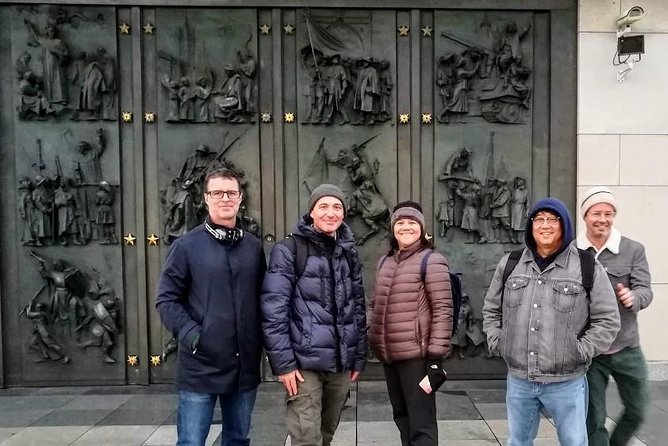
- Pedestrian Tunnel Karlin-Zizkov: a door you cannot ignore
- Vitkov Hill at the National Monument: Soviet soldier honor and Gottwald’s sealed past
- Zizkov Television Tower: Brutalism as a skyline landmark
- Wenceslas Square: parades, pressure, and the momentum of 1989
- John Lennon Wall: graffiti as a protest language
- The upside-down King Wenceslas statue: irony with a political edge
- Price and value for a group up to 10, with tram tickets included
- Guide style matters: names you may recognize from past groups
- What to pack and how to handle the Vitkov climb
- Should you book this Private Prague Cold War Walking Tour?
- FAQ
- Where does the tour start?
- How long is the private Prague Cold War walking tour?
- Is this tour private?
- Do you offer pickup from hotels?
- What language is the tour offered in?
- What is included in the price?
- Are entrance fees included?
- Is the tour difficult to walk?
- How much does it cost, and how many people can join?
- What is the cancellation policy?
Key highlights you should not miss
- A private historian guide in English focused on the Cold War years from 1948 to 1989
- Vitkov Hill at the National Monument, including the Hall of the Red Army and Gottwald’s former mausoleum
- The John Lennon Wall, where hope and Western-style freedom showed up as graffiti
- Wenceslas Square and the 1989 Velvet Revolution, plus context about 1968 Prague Spring and Warsaw Pact tanks
- The locked Karlin-Zizkov pedestrian tunnel doors, hints of bomb-shelter corridors still kept up
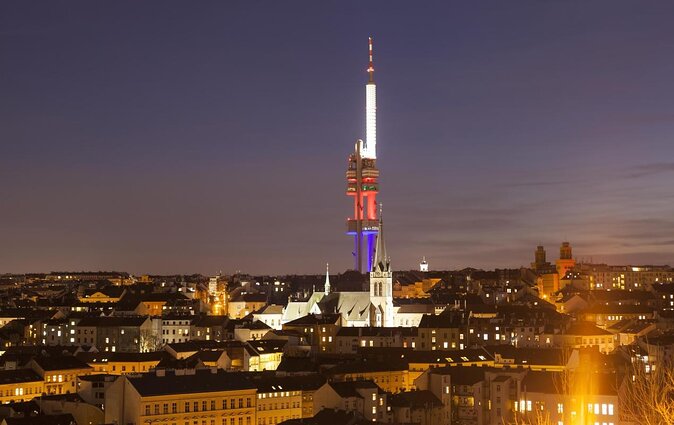
- Brutalist Zizkov Television Tower viewpoints, including skyline angles toward Old Town
How the private Cold War walk actually feels on the ground
This is built for a small group, up to 10 people, and it runs about 3 hours. You’ll meet your guide in central Prague, near Náměstí Republiky (the meeting point is at Náměstí Republiky 1077/2 by Kostel Svaty Josef). If hotel pickup is arranged, that will be noted, otherwise you plan to arrive 15 minutes early at the default spot.
The biggest practical win is the pacing. A private tour lets you ask questions when something clicks, like why a monument looks the way it does, or what daily life might have felt like when speech and press were controlled. You’re not stuck with a headset and a rushed “next stop” script. You also get tram tickets included, which helps if you need quick transit between areas.
There is a choice of morning or afternoon departure, so you can aim for softer light depending on what you like. Also, you’ll be walking enough to need moderate fitness. The tour is not long on paper, but it is not flat, either.
More Communism-era tours in Prague:
- Prague: Communism History and Nuclear Bunker Guided Tour
★ 4.7 · 2,417 reviews - Prague Communism History and Nuclear Bunker Tour
★ 5.0 · 1,742 reviews - Communism & Nuclear Bunker Tour + 70s Canteen Lunch (own expense)
★ 5.0 · 1,036 reviews
Pedestrian Tunnel Karlin-Zizkov: a door you cannot ignore
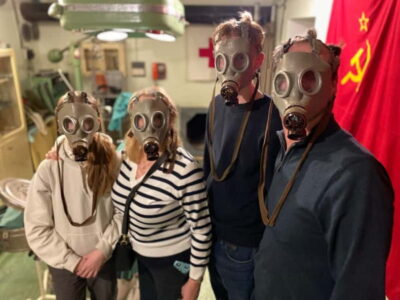
The first stop is the Pedestrian Tunnel Karlin-Zhizhkov, a narrow space that changes the mood fast. You walk through the pedestrian passage and pay attention to the locked doors that point to nuclear bomb-shelter corridors built during the Cold War and still maintained.
This is one of those stops where you get the “why” behind the Cold War story. The point is not just that shelters existed. It’s that the state prepared for catastrophe, and those preparations sat under ordinary city life. Even before you reach the grand monuments, you start seeing how the Cold War worked in layers: public streets above, controlled safety infrastructure below.
Timing here is short, around 10 minutes, so it doesn’t drag. The value is that it gives you a physical reminder that this era was about more than speeches. It was about fear management, planning for worst-case scenarios, and keeping power ready.
Practical tip: this is a walk-through moment more than a museum stop. Wear comfortable shoes. You’ll want steady footing.
Vitkov Hill at the National Monument: Soviet soldier honor and Gottwald’s sealed past
If the tour has a “center of gravity,” it’s Vitkov Hill. You head up to the National Monument, which sits above the city and gives you both history and a viewpoint payoff later.
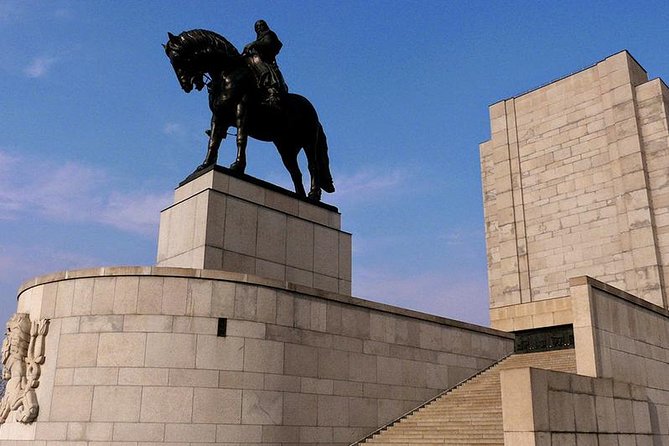
The National Monument complex includes a major stop for Cold War symbolism: the Hall of the Soviet Soldier. It was designed to honor Soviet soldiers killed during World War II in Eastern Europe. As you look at the structure and decorative elements, the story becomes clear: architecture can be propaganda. Even tribute can be political messaging.
Then comes the part that feels almost unreal, Klement Gottwald’s former mausoleum. Gottwald was the President of Czechoslovakia from 1948 to 1953. The mausoleum once displayed his mummified body, and there’s an especially chilling detail in how the display worked. Staff used a laboratory and temperature-control setup to maintain the embalmed body. That means this wasn’t just a burial site. It was a controlled, maintained display meant to shape public perception.
You’ll also see the large World War I monument element tied to Czech and Slovak warriors, including the statue of Jan Zizka, which is described as the third largest bronze equestrian statue in the world. Even if you don’t care about bronze scale, the size helps you understand why the state wanted grand markers. Big objects made big claims.
A big practical note: admission at Vitkov is not included in the tour price. So, budget for entry costs separately.
Also, the climb is real. The tour description flags a steep climb of about 20 minutes up Vitkov Hill. If you have mobility issues, you can request skipping Vitkov Hill and focusing on other Cold War related stops. That flexibility matters, because you shouldn’t have to suffer just to learn history.
Zizkov Television Tower: Brutalism as a skyline landmark
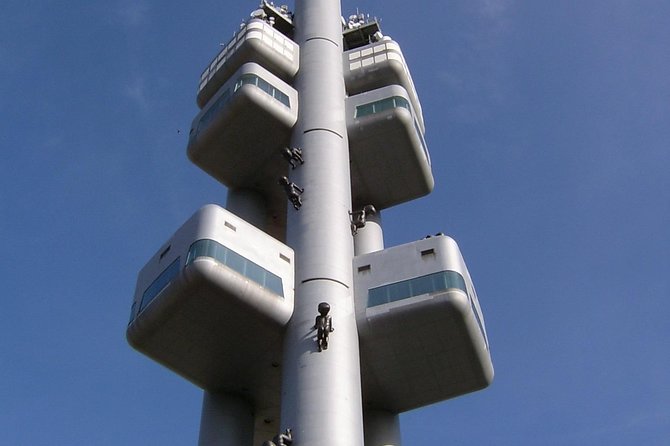
After Vitkov, you move toward the Zizkov Television Tower. This is a quick stop, around 5 minutes, focused on what you can see and why it matters visually.
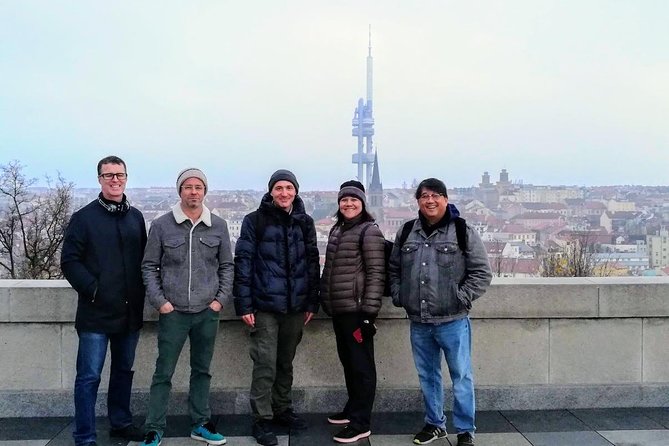
The tower is described as a Brutalist-style landmark, and you get a best-view moment from nearby. This is not a deep-lecture stop. It’s more like a “look at the form, then think about the era” pause. Brutalism in the built environment can signal a whole attitude toward modernity, power, and planning, and it helps you connect Cold War ideology to what the city chose to build and emphasize.
The entrance is listed as free here, so you’re not paying extra for the viewpoint. It’s a relief after the heavier museum type content. You get a chance to step back, look out, and regroup.
If you’re someone who loves how the skyline communicates politics, you’ll enjoy this. Prague is famous for beauty, but this part shows another side.
More Walking Tours in Prague:
- Prague: 3-Hour Walking Tour of Old Town & Prague Castle
★ 4.7 · 5,696 reviews - Prague: Ghost Walking Tour Where Legends Come To Life
★ 4.4 · 5,253 reviews - Prague: Jewish Quarter Walking Tour with Admission Tickets
★ 4.7 · 3,729 reviews - Prague Guided Walking Tour and Cruise with Authentic Czech Lunch
★ 5.0 · 3,627 reviews
Wenceslas Square: parades, pressure, and the momentum of 1989
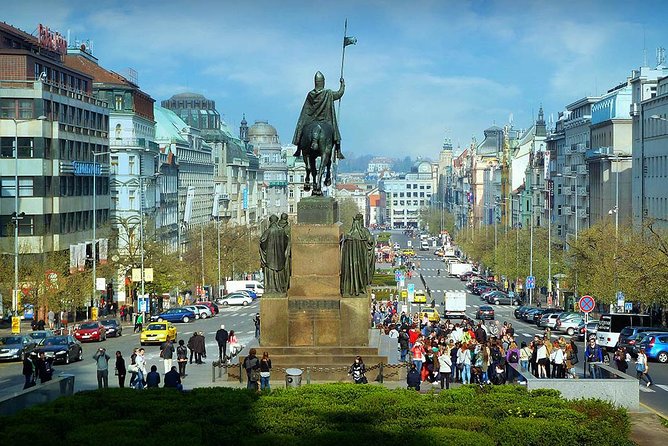
Next you reach Wenceslas Square, a place that has seen centuries of political shifts. You walk through it with the guide connecting those layers, from its early founding days to later eras of occupation, public parades, and tragic turning points tied to the Cold War.
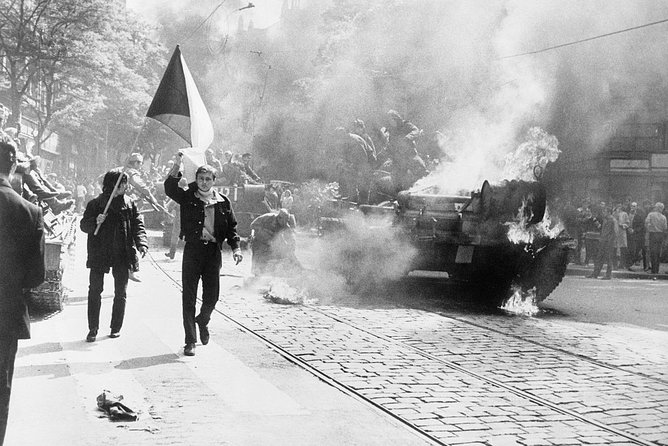
Here, the story lands on the late 20th century. You’ll hear about the 1968 Prague Spring, when freedom of speech and an independent press were allowed to blossom for about eight months before the Warsaw Pact crushed it. The guide also references the moment when Warsaw Pact tanks converged on the square, turning a public space into a pressure point.
Then the focus moves to 1989, the Velvet Revolution. You’ll walk among monuments to brave protestors and learn how demonstrations and public resolve built into the change that ended communist rule. This stop can feel emotional if you care about how ordinary people forced history to bend.
Time-wise, you’re in Wenceslas Square for around 20 minutes. That’s enough to get meaning without feeling stuck for hours. It’s also a practical choice, because this area is central and easy to re-orient around afterward if you want to keep exploring independently.
Pro tip: bring a water bottle if it’s warm. Sitting in a square for any time can make you realize you underestimated the weather.
John Lennon Wall: graffiti as a protest language
After considering the square’s political timeline, you’ll also stop at the John Lennon Wall. This is one of Prague’s most recognizable pieces of political street art, and it fits the Cold War theme perfectly.
The guide frames it as the scene where people expressed Western-style freedom through graffiti messages of hope and revolution. The reason this stop works on a walking tour is that it’s immediate. You don’t need a background to recognize that the wall is a voice. When you put it beside heavy sites like Gottwald’s mausoleum, it creates contrast: control versus expression.
This part of the tour gives you a chance to see how resistance and longing can show up in ordinary, public places. It’s not just history as text. It’s history as visible street behavior.
If you like museums, you can still enjoy this. But it hits differently. The John Lennon Wall is personal, and it invites you to read it the way you’d read messages on a wall today.
The upside-down King Wenceslas statue: irony with a political edge
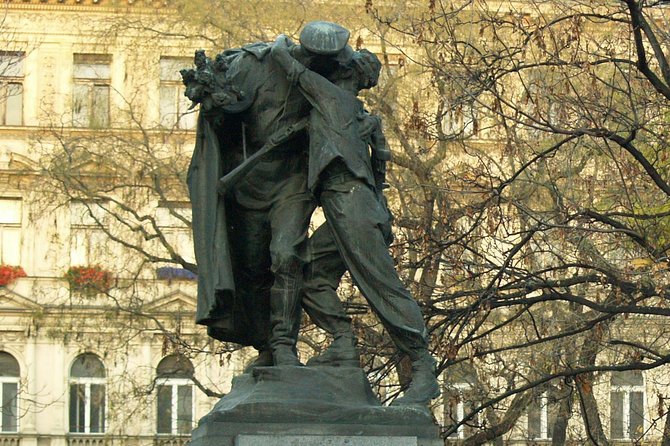
You’ll finish with a shorter stop at the Upside-Down Statue of King Wenceslas riding a dead horse. Even if you think you understand the Czech political mood, this sculpture adds an extra layer of irony.
The key is how the guide ties it to contemporary Central European political atmosphere. The idea is that symbols of leadership and authority can be flipped, literally, to show disagreement with the powers they represent. It’s satire you can stand in front of and study.
This stop is brief, about 5 minutes, and it’s free to view. Think of it as a final nudge: after monuments and major squares, this one reminds you that political ideas keep evolving, and art keeps commenting.
Price and value for a group up to 10, with tram tickets included
The price is listed as $390.37 per group for up to 10 people. That’s the big value question: is it worth it for your size and interests?
Here’s how I think about it. Private tours cost more because you’re buying time and focus, not just transportation from one point to another. In this case, you’re also paying for a historian-style guide and a route that covers high-impact Cold War sites, including Vitkov’s National Monument complex and the contrast between Soviet-era messaging and protest symbolism like the John Lennon Wall.
You’ll also get tram tickets included, which is a small but real cost saver for a route that crosses different neighborhoods. Food and drinks are not included, but you can easily plan your own breaks before and after.
Potential drawback on cost: entrance at Vitkov is not included. So if you’re budgeting, plan for the added ticket. Still, the tour’s strength is that you’re not just sightseeing. You’re guided through meaning, especially with the Gottwald and Soviet soldier content, plus the 1968 and 1989 narratives anchored to specific spaces.
If you’re traveling as a couple, it can feel like a splurge. If you’re traveling with a small group of friends, it becomes more comfortable fast. For families, it can also work well if your group is interested in history and can handle the climb.
Guide style matters: names you may recognize from past groups
The tour’s quality hinges on the guide. The names that show up in past feedback include Alzbeta and Vadim, and both are praised for turning buildings and locations into a story you can follow.
Alzbeta is described as weaving historical details into the sites with skill, and adding personal family experiences that help the Cold War era feel specific, not generic. That personal touch matters because communist-era history can otherwise become a list of dates. When a guide connects a memory or family angle to a monument, you remember it.
Vadim is praised for sharing political themes in historical context, and for engaging groups by asking questions and relating topics back to what you’re seeing. There’s also mention of practical restaurant and bar recommendations, which is not a history detail, but it’s a real travel win. After a serious tour, having a good local suggestion can turn the rest of your evening into something smoother.
Another plus from Vitkov: the viewpoint at sunset is described as stunning. Even if you do not time your departure for golden hour, Vitkov’s height makes the skyline payoff believable.
What to pack and how to handle the Vitkov climb
The tour calls for moderate physical fitness. The big challenge is the steep climb up Vitkov Hill, about 20 minutes. It is not an option you should ignore, because you’ll be doing it while your brain is also trying to absorb dense history.
What I’d do as a practical traveler:
- Wear supportive shoes, especially if streets are slick.
- Dress in layers if you go in shoulder season, because hill air can change quickly.
- Bring water if the day is warm, even if you do not plan a long stop for snacks.
If mobility is an issue, the tour offers a way to adapt. You can tell the organizers so you skip the Vitkov Hill climb and focus on other Cold War related sites. That keeps the experience from becoming a forced endurance test.
Should you book this Private Prague Cold War Walking Tour?
Book it if you want history with location power. The combination of Soviet soldier symbolism, Gottwald’s former mausoleum story, and public protest sites like Wenceslas Square and the John Lennon Wall makes this tour feel grounded. It’s also ideal if you appreciate private pacing and want time to ask questions, not just a checklist of sights.
I’d skip it, or at least reconsider timing and fitness, if you want a light sightseeing day. The themes here are serious, and the Vitkov climb takes effort. Also, remember that admission fees are not included for Vitkov, so your total trip cost may be a bit higher than the per-group price.
If your group is made up of history lovers, students, or anyone who likes political context tied to real spaces, this is a strong way to understand Prague past and present in one focused walk.
FAQ
Where does the tour start?
The tour starts at Náměstí Republiky 1077/2, Nové Město, 110 00 Praha-Praha 1, Czechia. If hotel pickup is not arranged, you meet your guide 15 minutes before start time at the default meeting point, Kostel Svaty Josef, Náměstí Republiky 1077/2, 110 00 Praha 1.
How long is the private Prague Cold War walking tour?
It runs for about 3 hours.
Is this tour private?
Yes. It is a private tour, and only your group participates.
Do you offer pickup from hotels?
Pickup is offered, but hotel pickup and drop-off are not included. If pickup has been arranged, it will be noted.
What language is the tour offered in?
The tour is offered in English.
What is included in the price?
Included items are a historian guide and tram tickets. You also receive a mobile ticket.
Are entrance fees included?
Not all. Entrance is listed as not included for the National Monument at Vitkov. Entrance is free for the other listed stops.
Is the tour difficult to walk?
It involves a steep climb of about 20 minutes up Vitkov Hill, so the tour is best for travelers with moderate physical fitness. If you have mobility issues, you can request skipping Vitkov Hill to focus on other Cold War sites.
How much does it cost, and how many people can join?
The price is $390.37 per group, up to 10 people.
What is the cancellation policy?
You can cancel for a full refund if you cancel up to 24 hours in advance of the experience’s start time. If you cancel less than 24 hours before, the amount paid is not refunded.
Just added around Prague
- WWII and Communism History in Prague’s Old Town Private Tour★ 5.0 · 4 reviews
- Prague: Historical Walking Tour with Focus on World War 2★ 4.3 · 12 reviews
- World War II 4WD Tour from Prague with Lunch★ 4.4 · 3 reviews
- World War II History Tour of Prague’s Old Town★ 5.0 · 4 reviews
- Walking tour of Prague in French : Nové Město★ 4.9 · 16 reviews
- Walking tour of Prague in french: Old Town & Charles Bridge★ 4.9 · 62 reviews
- Organ Concert in St Francis Church Admission Ticket★ 4.5 · 88 reviews
- Unique salt cave in Prague★ 4.9 · 10 reviews
Communism & Cold War Tours, compared.
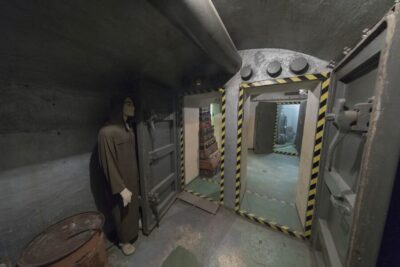
Communism History and Nuclear Bunker Guided Tour
Read our review →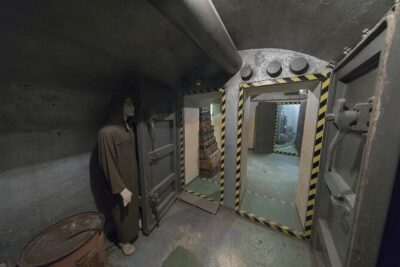
Prague Communism History and Nuclear Bunker Tour
Read our review →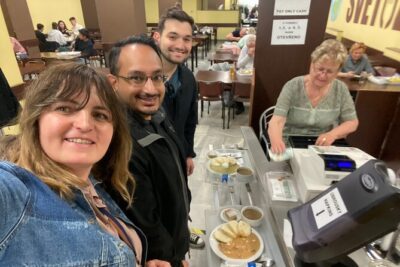
Communism & Nuclear Bunker Tour + 70s Canteen Lunch (own expense)
Read our review →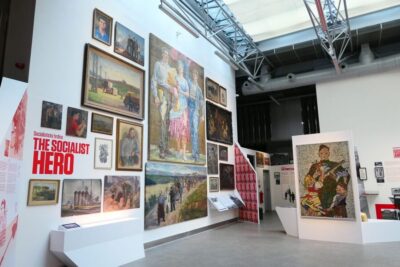
Communism and Bunker Tour with 70s Canteen Lunch
Read our review →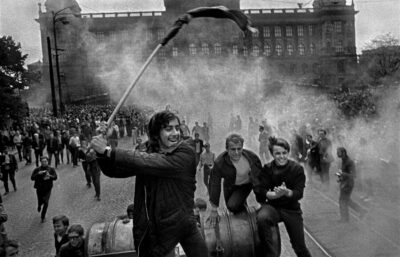
Second World War & Communism (Tip-based 3 hour tour)
Read our review →
Browse the lists this tour appears in