
Review · WWII & HOLOCAUST TOURS
Prague: WWII Guided Tour & The Crypt of Operation Anthropoid
Prague gets real under Nazi pressure. This guided walk ties visible WWII scars in the Old Town to the underground world of the Operation Anthropoid crypt, with a live guide who makes the whole story feel personal. I especially like how the tour follows the streets and then turns down into history, moving from city details you can see to places you can actually stand inside.
One possible drawback is that this is a walking-heavy route and it is not suitable for wheelchair users, so plan for uneven streets and underground steps.
In This Review
- Key highlights at a glance
- From Prašná Brána to a WWII Story You Can Read on the Walls
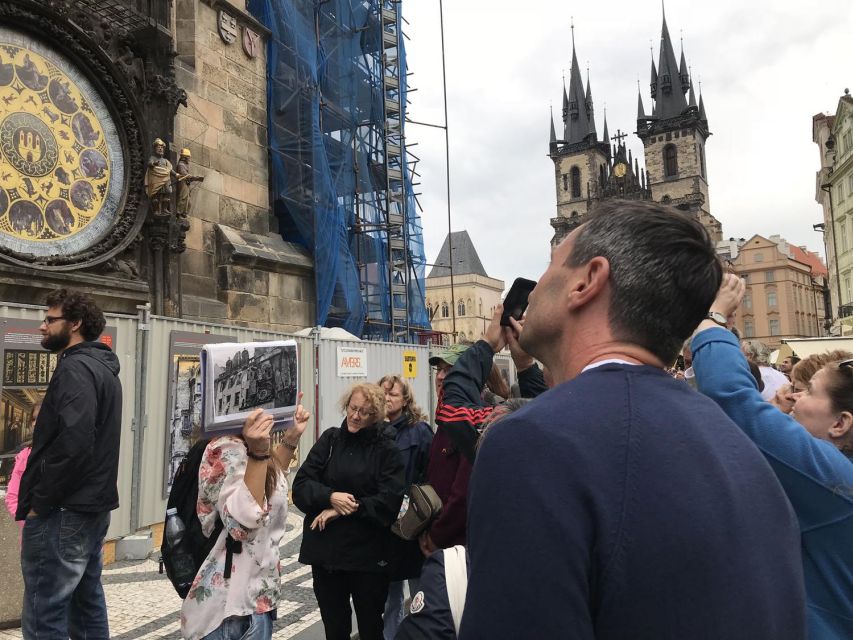
- The Old Town WWII Walk: What You Actually Notice
- What makes this section valuable
- One practical note
- U Kunštátů Palace Cellars: 12th-Century Underground Shelter
- Why this stop is worth the detour
- Consideration
- The Private WWII Artifacts Collection: Why Memorabilia Changes the Story
- What to expect in this section
- The one potential downside to know upfront
- Saints Cyril and Methodius Crypt: Operation Anthropoid Comes Into Focus
- What makes the crypt museum visit different from a typical museum stop
- The Heydrich and Uprising Story: How the Pieces Click
- Tram Ride Included: Saving Time and Keeping You Moving
- How to Get Ready: Shoes, Weather, and the Pace
- Who This Tour Fits Best
- Value for Time: Three Types of Stops in 150 Minutes
- Should You Book This Operation Anthropoid and WWII Tour?
- FAQ
- Where is the meeting point for the tour?
- How long is the tour?
- Is the tour in English?
- What is included in the price?
- What is not included?
- What are the key places you visit?
- Is it stroller accessible and are pets allowed?
- Can I bring a service animal?
- Is the tour wheelchair friendly?
Key highlights at a glance
- Old Town WWII street walk with a guide who points out what still lingers on building walls
- U Kunštátů Palace underground cellars from a medieval 12th-century setting, used as makeshift shelter
- A private WWII artifacts collection with original memorabilia and period visuals
- Saints Cyril and Methodius crypt museum visit focused on Operation Anthropoid and resistance
- Stories of resistance and the Prague Uprising framed around the mission to remove Reinhard Heydrich
From Prašná Brána to a WWII Story You Can Read on the Walls
Your tour starts at Republic Square, just outside Prašná Brána (Powder Tower). The meeting point is about 30 meters in front of the tower by the metro stop Náměstí Republiky, beside the green kiosk. Your guide will be holding a black umbrella with a white logo, so it is usually easy to spot the group fast if you arrive a few minutes early.
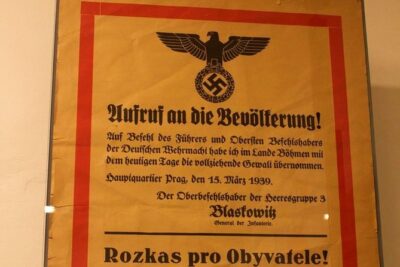
From there, you move into the Old Town on foot. The aim is not just to recite dates. You get a guided experience that shows how the war changed daily life in Prague, then points out reminders you can still see on the streets. If you like history that has a physical address, this is the right format. The guide also tends to use visuals and old photos to help you line up the past with what stands in front of you now.
In a lot of cases, the tour is led by guides who take storytelling seriously. Names you may hear include Pavel, Paul, George, Hannah, Ottokar, and Anna, and their style typically stays consistent: clear explanations, a steady pace, and lots of room for questions.
More wartime history tours in Prague:
- WWII in Prague Tour & The Crypt of Operation Anthropoid
★ 5.0 · 817 reviews - Small-Group World War 2 & Operation Anthropoid Tour in Prague
★ 5.0 · 231 reviews - Prague: World War 2 and Operation Anthropoid Walking Tour
★ 4.8 · 193 reviews
The Old Town WWII Walk: What You Actually Notice
The walking portion is where you start building context. Prague’s WWII story did not happen in a vacuum, and this tour treats it like something that unfolded block by block. Expect to hear how the occupation affected ordinary people, and how the city became a place where fear, resistance, and survival all mixed together.
This is also the part that helps you understand why later stops matter. When you learn what people risked and why certain locations mattered, the underground spaces and crypt museum stop feeling like separate attractions. They feel like chapters.
What makes this section valuable
- You are learning with your eyes open. The tour is designed around what remains on the walls and in the urban fabric.
- You get the why, not just the what. The guide connects events to the lived experience of Prague residents.
- The tone is human. Even when the subject is grim, the storytelling focuses on real decisions and real consequences.
One practical note
This is rain or shine, so bring a layer and plan for slick surfaces in cold months. Several guides have talked through the story while groups navigate slippery Old Town streets, so grippy shoes matter more than you might expect.
A few more Prague outings to weigh up
- Prague: Castle Tour with Local Guide and Entry Ticket
★ 4.6 · 10,422 reviews - Prague: Klementinum Library & Astronomical Tower Guided Tour
★ 4.5 · 5,050 reviews - Prague Guided Walking Tour and Cruise with Authentic Czech Lunch
★ 5.0 · 3,627 reviews - Prague: Old Town and Jewish Quarter Guided Tour in German
★ 4.8 · 3,143 reviews
U Kunštátů Palace Cellars: 12th-Century Underground Shelter
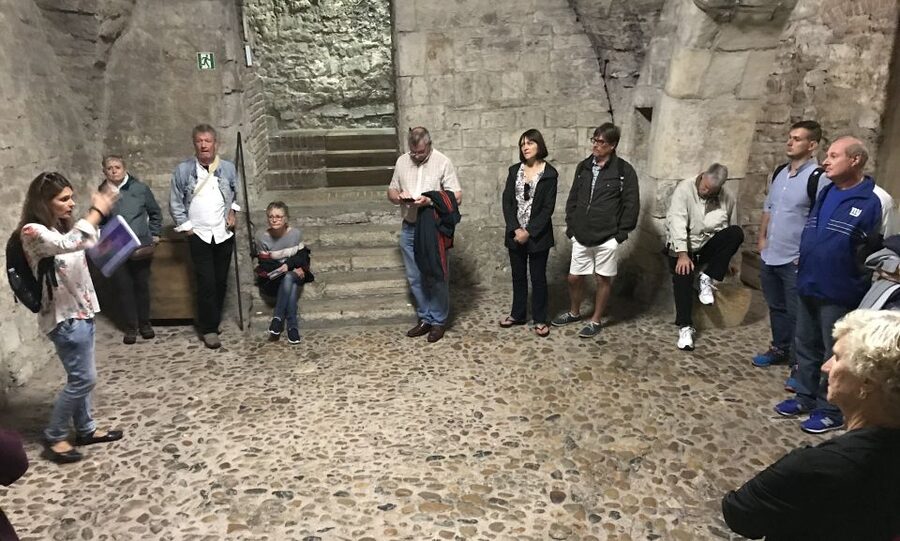
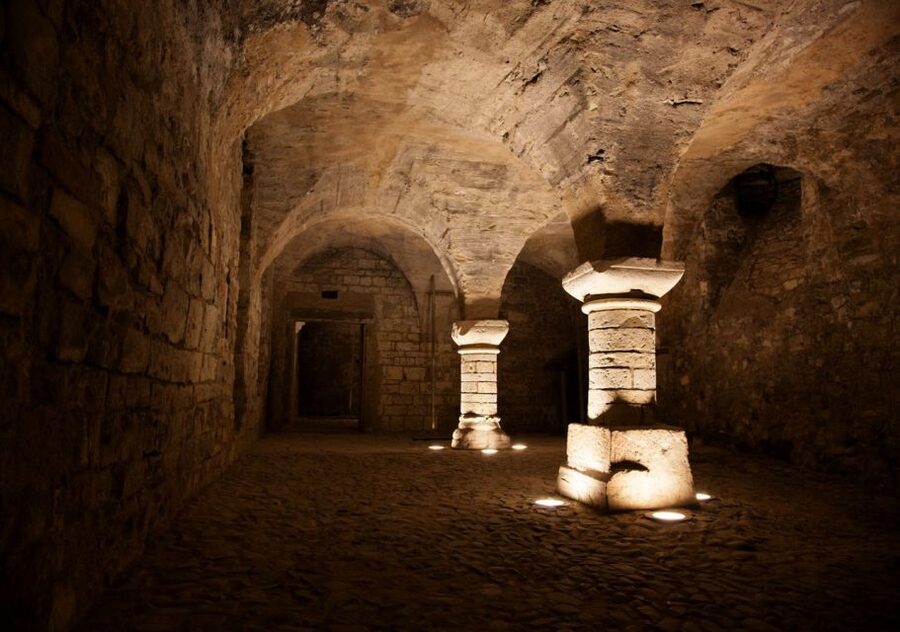
Next comes the part many people remember most: going underground at the U Kunštátů Palace, a 12th-century site in the center of Old Town. You explore the underground cellars, which served as makeshift shelter.
This stop changes the whole emotional temperature of the tour. Outside, you are walking through the visible city. Down here, you feel the scale of hiding and the practical reality of living with danger nearby. The guide uses the space itself as a teaching tool, describing how these cellars could function during wartime. It is one thing to read about fear. It is another thing to be physically under the city while someone explains what people needed to do to stay alive.
Why this stop is worth the detour
- The setting is original. You are not just viewing a display, you are inside the historic underground spaces.
- The tour connects architecture to survival. You start to understand how a city can protect and endanger at the same time.
- It breaks the rhythm. After street walking, underground exploration gives your brain a fresh angle on the same story.
Consideration
Underground spaces can mean stairs, tighter areas, and cooler temperatures. This tour is stroller accessible, but you should still think about how comfortable you are in confined, uneven areas.
The Private WWII Artifacts Collection: Why Memorabilia Changes the Story
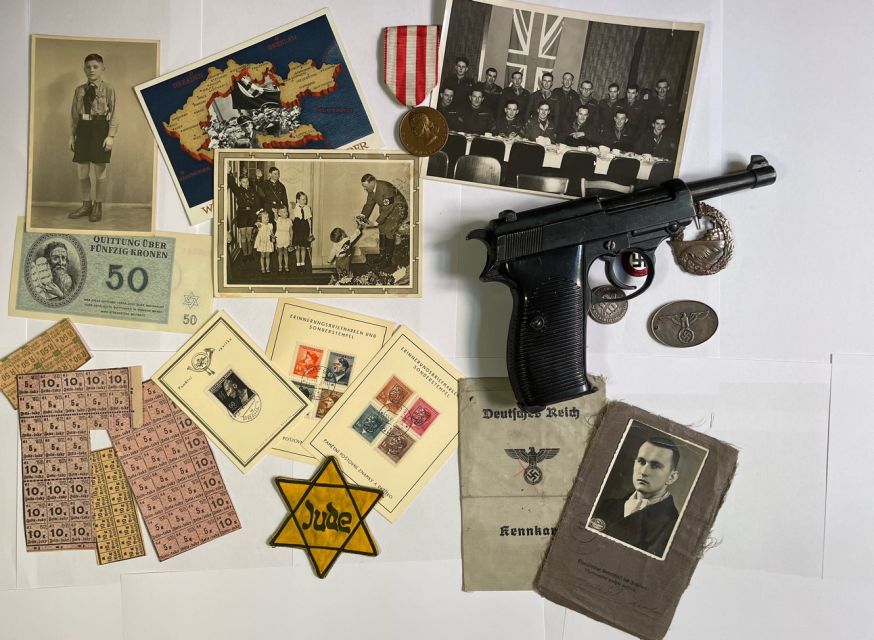
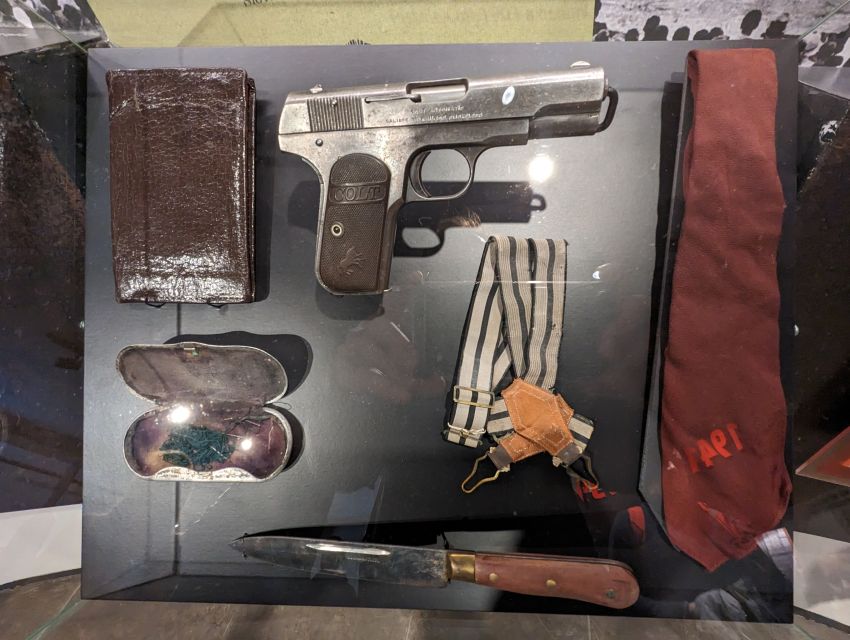
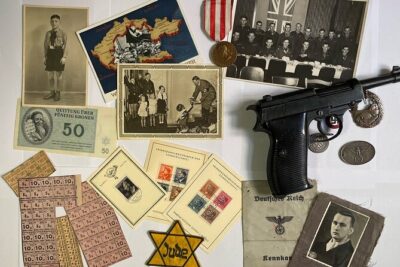
After the cellars, you get access to a private collection of WWII artifacts and memorabilia. This is not just a quick photo stop. The materials are meant to give you a rare glimpse into the war period, and the guide typically uses these objects to strengthen the details you learned outside.
A recurring theme with the guides is using real period items alongside photos and documents, and in some cases, groups may even get the chance to handle certain memorabilia. That kind of contact is powerful because it shifts the war from a distant subject to something tangible. Even if you consider yourself more of a casual history fan, this part can be a wake-up moment.
What to expect in this section
- Original-looking items, carefully framed by the guide’s explanations
- Context built around everyday life and conflict, not only major battlefield events
- A more personal tone, because objects carry human stories even when the facts are hard
The one potential downside to know upfront
Not everyone loves the final stretch where memorabilia may be presented in an end-of-tour setting. One common reaction is that the crypt and mission story feel like the core, while the memorabilia stop can feel like a bonus side piece. If you are mostly here for Operation Anthropoid, you will still get plenty of mission focus at the crypt museum, so you are not missing the main event.
Saints Cyril and Methodius Crypt: Operation Anthropoid Comes Into Focus
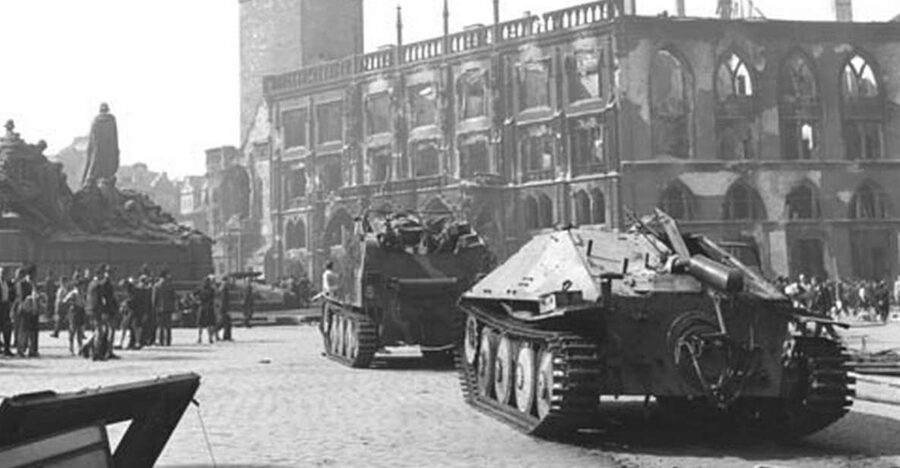
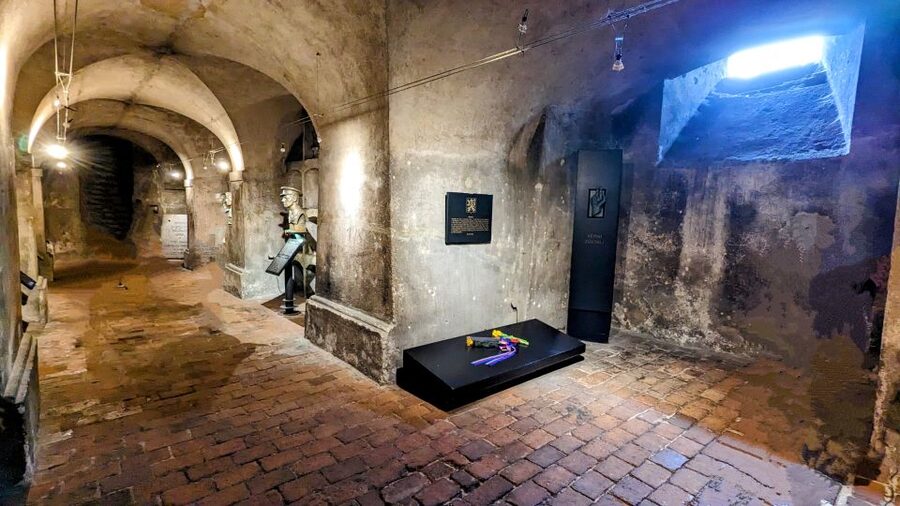
The tour’s emotional and narrative peak is the visit to Saints Cyril and Methodius Crypt and Cathedral, including the museum of Operation Anthropoid located below the cathedral.
Here, you move from general occupation context into a specific mission: the heroic resistance plan intended to eliminate SS Obergruppenführer Reinhard Heydrich, one of the most feared Nazi figures. The guide explains why Heydrich mattered, and how the operation fit into the wider atmosphere of resistance.
This is also where you hear the story of the Prague Uprising and the way citizens faced the Nazi regime as the city’s pressure built. If you care about how resistance actually happened, this stop gives you a clearer picture of what planning, risk, and sacrifice looked like on the ground.
What makes the crypt museum visit different from a typical museum stop
- It is site-based. You are in the location tied to the mission story, not just in a generic exhibit space.
- The guide gives you sequence. You understand the build-up, then the operation, then what followed.
- It lands on consequences. The focus stays on what happened to people after the mission and why it mattered.
In particular, you will likely hear the mission described with attention to the fate of the resistance fighters involved, including references to the small group who carried out the operation and paid the highest price.
The Heydrich and Uprising Story: How the Pieces Click
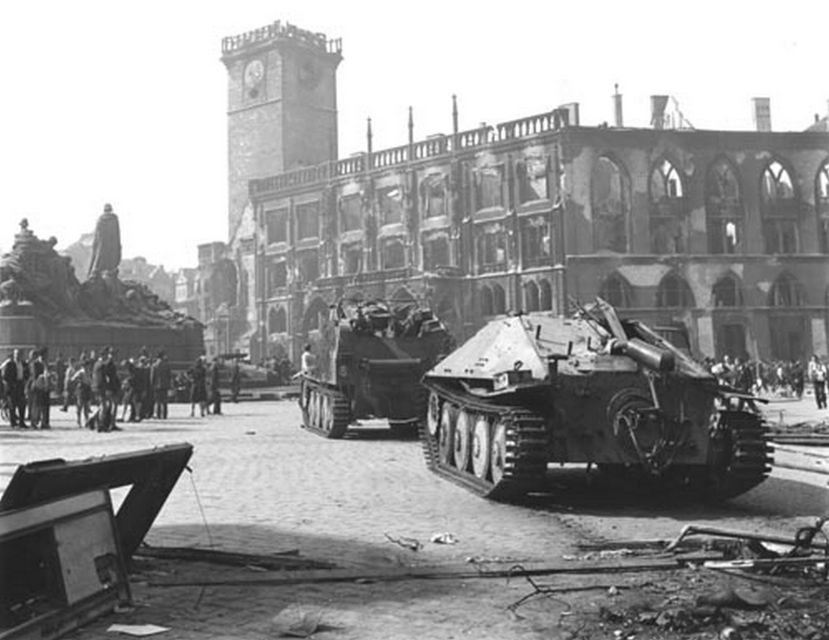
A smart thing about this tour is how it teaches you to hold two ideas at once. The first is that occupation was not abstract. The second is that resistance was not a slogan. The tour keeps bringing you back to the same thread: fear was real, but so was action.
By the time you reach the crypt museum, you should feel like the story clicks into place:
- Old Town street context explains how people lived under pressure
- U Kunštátů cellars underline what hiding and survival meant
- The artifact collection adds human texture, so names and events do not stay theoretical
- The crypt museum gives you the mission detail and the wider Prague Uprising impact
If you want one practical tip, it is this: go into the crypt portion ready to listen closely. The guide is doing a lot of connecting there, and it is where you can learn the most in the least time.
Tram Ride Included: Saving Time and Keeping You Moving
You also get a public transportation ticket. Several guides build a short ride into the flow of the day, which helps you cover more ground without turning the whole tour into long-distance slogging.
This matters because your total duration is about 150 minutes, so every segment needs to earn its place. The tram time is basically there to keep the walking manageable while still hitting the important WWII locations.
It also helps you move between areas that would be more annoying to cover at street pace, especially when it is wet or cold.
How to Get Ready: Shoes, Weather, and the Pace
This tour is designed to be an active walking day, and it runs rain or shine. Even if the city looks charming outside, you are still moving through real streets, so plan for:
- Walking shoes with traction
- A rain layer if weather turns
- A small daypack for water or a warm layer
If you are coming with family, the tour is stroller accessible, which is a real plus in a city with uneven sidewalks. Just remember that the underground segments may be tighter or have stairs, so going slowly is normal.
If you use a wheelchair, note that the tour is not suitable for wheelchair users, according to the provided info.
Who This Tour Fits Best
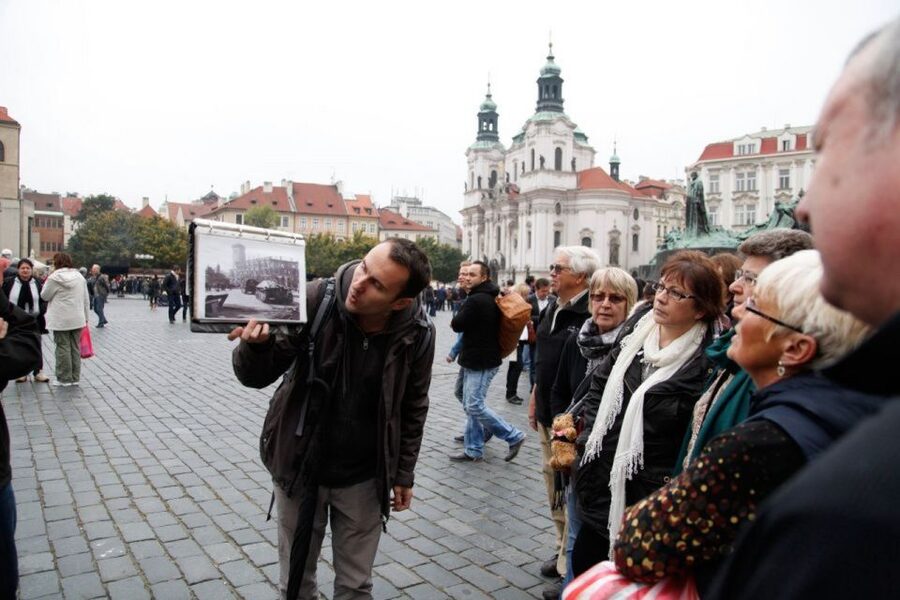
This experience works best for you if:
- You want a WWII-focused tour that connects events to specific Prague locations
- You like guides who use photos, documents, and original artifacts to make the story concrete
- You care about Operation Anthropoid and want the mission told in the context of the city
- You prefer a guided walk over reading on your own at major monuments
It is also a good choice if you want a tour that feels more like a story you can trace with your feet, rather than a checklist of places.
Value for Time: Three Types of Stops in 150 Minutes
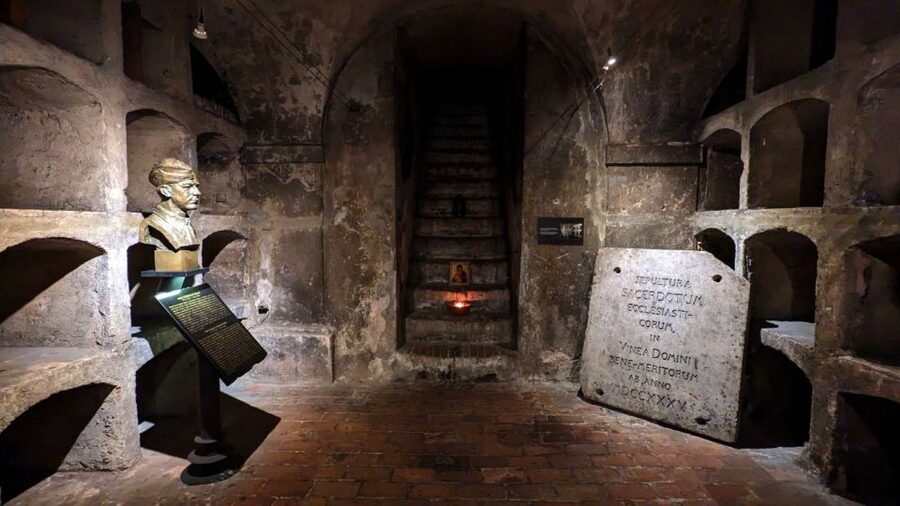
At $42 per person for about 150 minutes, you are paying for more than just a walk. You are getting:
- A live English guide
- Entry to the U Kunštátů underground cellars
- Entry to Saints Cyril and Methodius crypt and cathedral
- A visit to the Operation Anthropoid museum
- A public transportation ticket
- Access to a private WWII artifacts and memorabilia collection
So the value is in the mix. You are not only touring buildings. You are also getting time in underground spaces and inside a mission-focused museum setting, plus object-based context from the private collection.
If your priority is WWII storytelling with a physical backbone, it is a solid use of half a day.
Should You Book This Operation Anthropoid and WWII Tour?
Book it if you want Prague WWII history that has location, context, and human stakes. The combination of Old Town street narrative, U Kunštátů cellars, and the Operation Anthropoid crypt museum is the big reason to choose this tour. The guides, whether you meet Pavel, George, Hannah, Ottokar, or Anna, tend to bring structure and follow-through, and the artifact portion often turns the story from facts into something you can almost touch.
Skip it, or at least think twice, if you hate walking on slippery streets, or if you need wheelchair-friendly access. Also consider that the memorabilia segment at the end can feel more like an extra stop than the core mission for some people, so keep your attention on the crypt museum portion if that is your main interest.
If that sounds like you, this is one of the more meaningful WWII experiences you can fit into a Prague visit, and it is priced in a way that makes sense for what is included.
FAQ
Where is the meeting point for the tour?
Meet your guide about 30 meters in front of Prašná Brána (Powder Tower) in Republic Square. The closest metro stop is Náměstí Republiky. Your guide stands next to the green kiosk and holds a black umbrella with a white logo.
How long is the tour?
The duration is listed as 150 minutes.
Is the tour in English?
Yes, the live tour guide is English.
What is included in the price?
Included: the guide, entry to the underground cellars of U Kunštátů, entry to the Saints Cyril and Methodius Crypt and Cathedral, a public transportation ticket, and access to a private collection of WWII artifacts and memorabilia.
What is not included?
Hotel pickup and drop-off are not included.
What are the key places you visit?
You visit the U Kunštátů underground cellars, the Saints Cyril and Methodius Crypt and Cathedral, and the Operation Anthropoid museum in the crypt, plus a private WWII artifacts collection.
Is it stroller accessible and are pets allowed?
It is stroller accessible, and pets are not allowed.
Can I bring a service animal?
Yes, service animals are allowed.
Is the tour wheelchair friendly?
No, the tour is not suitable for wheelchair users.
Just added around Prague
- WWII and Communism History in Prague’s Old Town Private Tour★ 5.0 · 4 reviews
- Prague: Historical Walking Tour with Focus on World War 2★ 4.3 · 12 reviews
- World War II 4WD Tour from Prague with Lunch★ 4.4 · 3 reviews
- World War II History Tour of Prague’s Old Town★ 5.0 · 4 reviews
- Walking tour of Prague in French : Nové Město★ 4.9 · 16 reviews
- Walking tour of Prague in french: Old Town & Charles Bridge★ 4.9 · 62 reviews
- Organ Concert in St Francis Church Admission Ticket★ 4.5 · 88 reviews
- Unique salt cave in Prague★ 4.9 · 10 reviews
WWII & Holocaust Tours, compared.
WWII in Prague Tour & The Crypt of Operation Anthropoid
Read our review →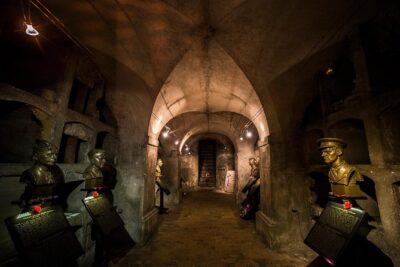
Small-Group World War 2 & Operation Anthropoid Tour in Prague
Read our review →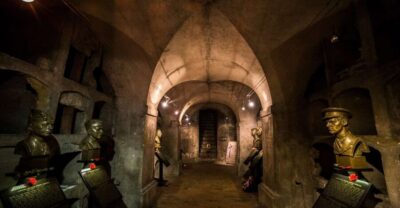
World War 2 and Operation Anthropoid Walking Tour
Read our review →
Terezin In-Depth Holocaust Tour From Prague’s Center (max 7 pax)
Read our review →
Second World War & Communism (Tip-based 3 hour tour)
Read our review →Browse the lists this tour appears in