
Review · WWII & HOLOCAUST TOURS
Small-Group World War 2 & Operation Anthropoid Tour in Prague
Prague can look peaceful, then it doesn’t. This small-group WWII walk takes you through real occupation-era locations and ties them directly to the assassination of Reinhard Heydrich and Operation Anthropoid. You also finish at a memorial that makes the final chapter feel personal, not just historical.
I love the way this tour turns street corners into a timeline. Two standouts for me are the guided story from the Protectorate onward and the way the route includes major, specific locations tied to resistance planning and Nazi reprisals, not just general war background. You can feel the guide shaping the chaos into something you can actually follow.
One thing to consider: the subject matter is heavy, and there is a fair amount of walking and standing. If you want war scenes like you see in some other countries, Prague mostly gives you the context and consequences, not nonstop battlefield drama.
In This Review
- Key highlights you’ll remember
- Entering Prague’s WWII story on foot, in 3 hours
- Where you start, how long you’ll walk, and what to bring
- The route: from Versailles and inflation to the Protectorate
- The occupation tightens: students, universities, and Heydrich’s turning point
- Resistance networks and the lead-up to Operation Anthropoid
- Heydrich’s shadow: Lidice, Wenceslas Square, and Nazi reprisal logic
- Gestapo walls, betrayal, and the hunt that followed
- Prague’s 1945 damage and two covert missions
- Visiting St. Cyril and Methodius, then the Heydrich Terror crypt
- Price and value: what $33.88 buys you (and what it doesn’t)
- Who should book this WWII Prague walk?
- Should you book this tour?
- FAQ
- How long is the WWII and Operation Anthropoid tour?
- Where does the tour start?
- Where does the tour end?
- What language is the tour offered in?
- Is the tour a small group?
- Is food included?
- Is admission included for the church and memorial?
- Is the tour appropriate for kids?
- What fitness level do I need?
- Are service animals allowed?
- Can I cancel for free?
Key highlights you’ll remember
- A focused 3-hour format that fits cleanly between sightseeing plans
- Real occupation-era buildings tied to Czech resistance and Nazi power
- Operation Anthropoid context including the lead-up stories and why Heydrich mattered
- Stop-by-stop storytelling that helps you picture what everyday life looked like under occupation
- Lidice and other reprisals explained with the human cost made clear
- The end at the Heydrich Terror crypt where the resistance sacrifice is central
Entering Prague’s WWII story on foot, in 3 hours
This tour is built for a specific kind of traveler: the one who wants more than postcard history. Prague survived the war with much of its beauty intact, so the city can fool you. The guide flips that feeling. You’re looking at familiar buildings, then learning exactly what they meant under Nazi control.
The timing matters. At about 3 hours, you get a tight narrative arc: the road toward the Protectorate, the pressure of occupation on Czech life, the resistance response, and then the shockwaves after Heydrich’s assassination. That arc is hard to assemble on your own without pages of notes and guesswork about what’s worth stopping for.
And because it’s small-group, you’re not trapped in a rigid script. You can ask questions and get the guide’s framing in real time, which is a big deal when the story includes tricky dates, shifting regimes, and overlapping operations.
More wartime history tours in Prague:
- Prague: WWII Guided Tour & The Crypt of Operation Anthropoid
★ 4.7 · 1,030 reviews - WWII in Prague Tour & The Crypt of Operation Anthropoid
★ 5.0 · 817 reviews - Prague: World War 2 and Operation Anthropoid Walking Tour
★ 4.8 · 193 reviews
Where you start, how long you’ll walk, and what to bring
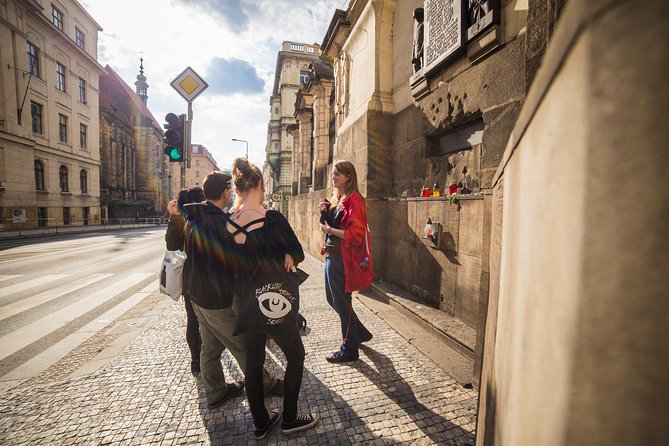
You’ll meet in central Prague at Týnská 627/7, Staré Město. The start time is 1:30 pm, and the tour ends near the Orthodox Cathedral of Saints Cyril and Methodius at Resslova 9a.
Practical side notes that make the experience smoother:
- Plan on moderate physical fitness since this is a walking route with standing at stops.
- Bring comfortable shoes. You’ll be outside most of the time.
- The tour is in English, and it includes a local guide throughout.
- Your ticket is mobile, so you’ll want your phone charged and accessible.
- It’s limited to a maximum of 30 people, so you’re not fighting for position at every photo stop.
Also, don’t show up starving expecting this to solve lunch. Food and drinks are not included, so you’ll want to eat before or after, not during.
The route: from Versailles and inflation to the Protectorate
A lot of WWII tours jump straight to 1939. This one helps you understand why the Czech lands became such a key piece in Nazi strategy.
Early on, you get the “how Europe got here” foundation. The guide walks you through the aftermath of World War I, including how the Treaty of Versailles reshuffled power and contributed to instability. Then the story moves into the economic pain of the Great Depression and the rise of nationalism across the continent. It’s the kind of context that helps later events make sense, instead of feeling random.
From there, you hit the political steps that specifically target Czech lands. You’ll hear about the Sudeten Deutsche Party, the Munich Agreement, and the creation of the Protectorate of Bohemia and Moravia. What I like is the specificity. You’re not just hearing big-swing explanations. You’re connecting names and decisions to what you see in Prague’s urban landscape.
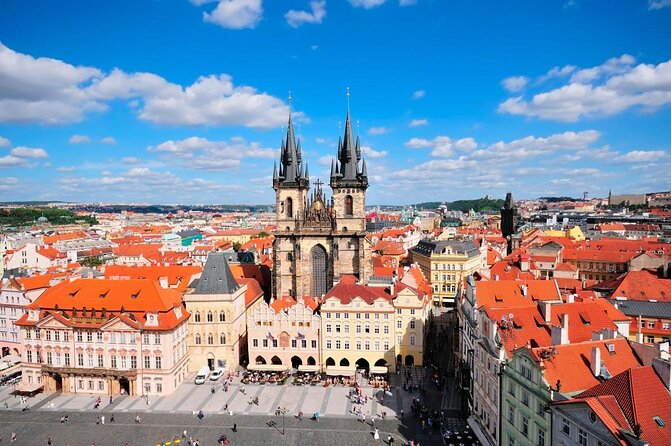
At one point, the guide also gives you a moment for the view of the Gothic church that dominates the Old Town, the sort of landmark people notice without thinking about what happened around it. That contrast is deliberate. It nudges you to keep your eyes open, not just your camera.
The occupation tightens: students, universities, and Heydrich’s turning point
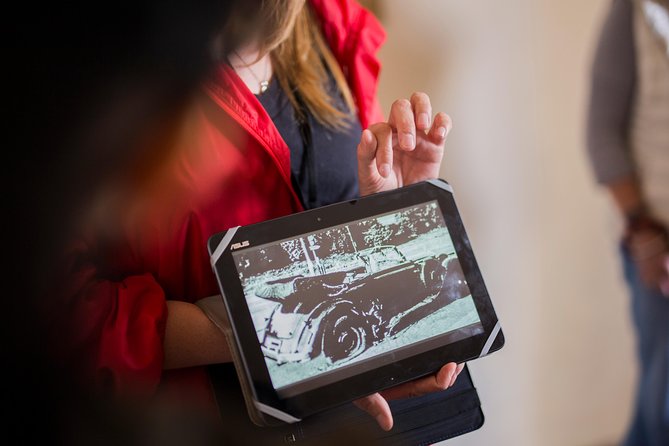
Next, the tour leans into how occupation pressure reached regular life. Along Celetná Street, you learn about November 17, 1939, when Czech students were executed and Czech universities were closed. The guide also explains the situation in the Czech lands under Konstantin von Neurath and then the major shift when Reinhard Heydrich was appointed on September 27, 1941.
This is one of those “small date, big consequence” sections. The guide makes the turning point clear so it doesn’t become yet another timeline fact you’ll forget after lunch. When Heydrich enters the story, the mood of the whole walk changes.
You’ll feel that shift again when the guide connects the Nazi crackdown to the resistance response, and you start seeing how people tried to fight back even when the system was designed to crush them.
Another way to fill an afternoon in Czechia:
- Prague: 50-Minute Sightseeing Evening Cruise
★ 4.2 · 33,780 reviews - Prague: Medieval Dinner with Unlimited Drinks
★ 4.4 · 19,847 reviews - Prague: Skip-the-line Castle Ticket and Optional AudioGuide
★ 4.3 · 11,121 reviews - Prague: Castle Tour with Local Guide and Entry Ticket
★ 4.6 · 10,422 reviews
Resistance networks and the lead-up to Operation Anthropoid
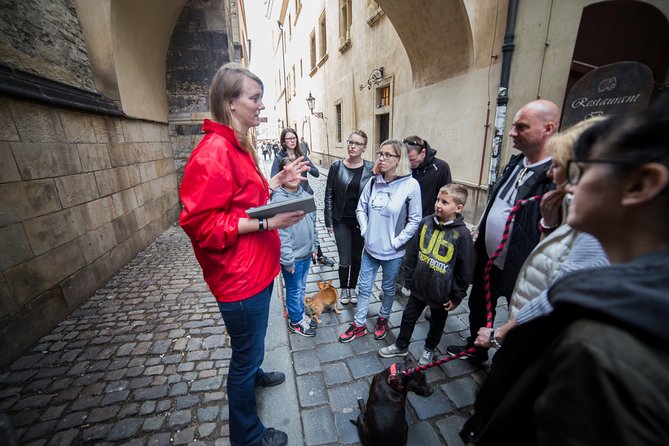
At Melantrichova, the tour gets more operational. You hear about the exiled government in London and earlier resistance efforts connected to the assassin plan, including references to Operation Benjamin and the code names Silver A and Silver B. You also see the building tied to the apartments of Josef and Marie Svatoš, described as a key resistance hideout.
I like this part because it’s not abstract. It shows resistance as a web of housing, planning, and logistics, not just one dramatic mission. If you’ve always imagined resistance as mainly speeches or secret meetings, this stop gives you a more realistic picture of how it worked in daily life.
Then the route adds a tangible link to the assassination aftermath. At the Baťa Department Store, you’ll hear how the space was used to display objects found at the assassination scene. That detail helps you understand why Nazis wanted the story to feel controlled and public, even while the resistance was trying to stay invisible.
Heydrich’s shadow: Lidice, Wenceslas Square, and Nazi reprisal logic
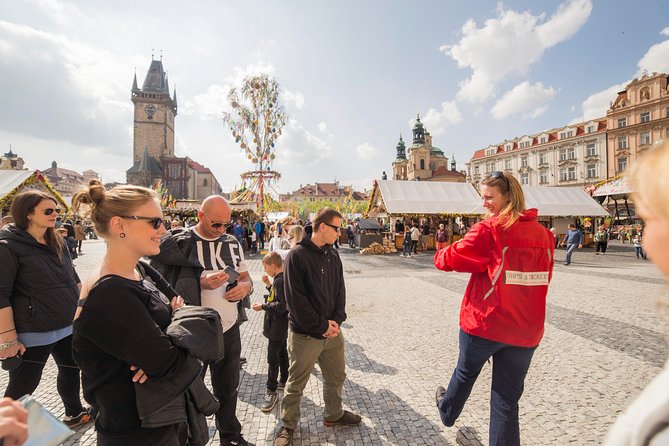
At Wenceslas Square, the guide brings you to one of the darkest reprisals connected with the Heydrich assassination. You learn the story of the village Lidice, where on June 10, 1942, men were executed and women were sent to concentration camps. The village ceased to exist.
This section is emotionally intense, and you’ll want to give it your full attention. The guide keeps it grounded and factual, and the pacing matters. It’s not a doom-and-gloom stop for its own sake. The point is to show the Nazi system’s logic: punish communities to deter resistance.
After that, the walk moves from tragedy back into the “how Nazis ran Prague” lens. At the Esplanade Hotel Prague, you hear about it as a favorite hotel of the Nazis during the occupation. It’s another reminder that the occupation was not only brutal policing, it was also routine presence, comfort for the occupiers, and fear for everyone else.
Gestapo walls, betrayal, and the hunt that followed
The route takes a hard turn into the mechanics of terror at Petschek Palace. You’ll learn that it functioned as a Gestapo headquarters, where Czechoslovaks were interrogated, tortured, and killed in large numbers.
Then comes one of the sharpest turning-point details in the story. On June 16, 1942, Karel Čurda is described as entering the building and betraying his comrades. That act becomes part of the search for Heydrich’s assassins, and the guide explains how betrayal changed what happened next.
One practical takeaway here: when you walk by famous Prague buildings, they can look like normal architecture. This tour gives you the historical “decoder ring.” You start noticing how the city layout and power centers shaped what people could do and where they would try to hide.
Prague’s 1945 damage and two covert missions
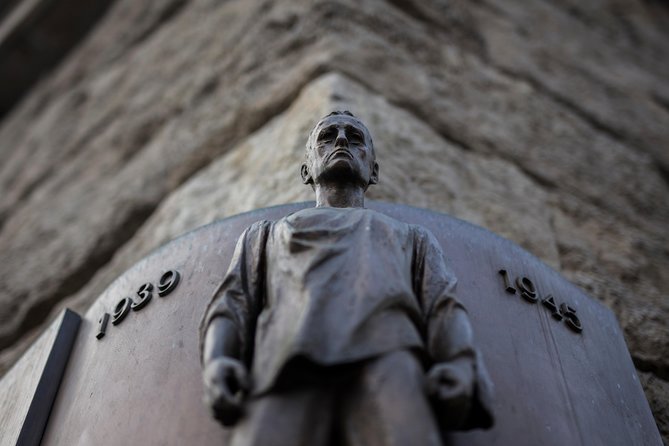
The tour also includes stops that widen the wartime picture beyond the assassination theme.
Near the National Museum complex area, you’ll hear a general overview of the museum’s scope and how the collection spans multiple areas like natural history, arts, music, and librarianship. You’re not there for a museum visit, but it gives a sense of how Prague’s cultural identity kept showing up even as war pushed everything around.
At Vodičkova, the guide explains two covert operations that were unfortunately unsuccessful, named Tin a Bioscop. And at Karlovo náměstí, you learn about the bombing of Prague in 1945.
If you’re wondering about the “where was the fighting” question, this is the answer the city provides. Prague’s war story is less about visible battlefield chaos and more about occupation control, resistance action, and the punishments that followed. You leave understanding why the war mattered here, even when streets did not look like war zones day after day.
Visiting St. Cyril and Methodius, then the Heydrich Terror crypt
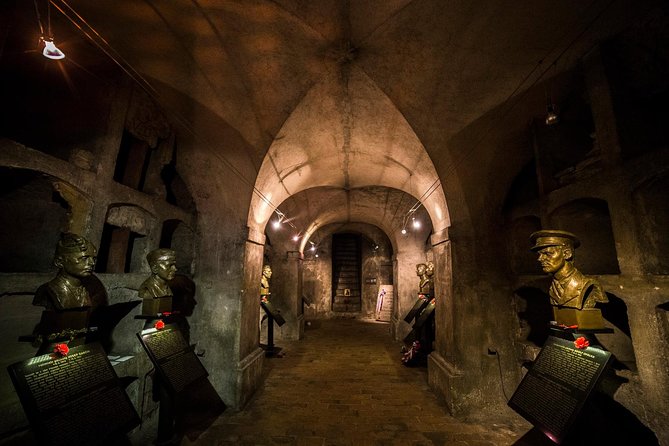
The tour ends by grounding everything you heard in a real place of memory. You’ll visit St Cyril and St Methodius Cathedral with a guide for about 15 minutes. This isn’t a quick glance. It’s time to take in the space while the guide ties it back to the events, including what the Nazi response meant after the assassination.
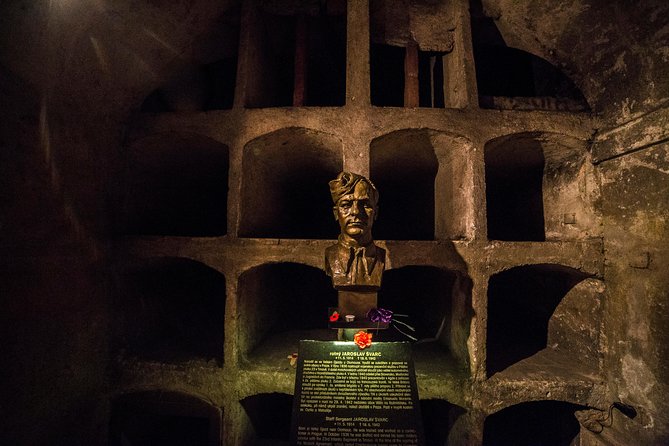
Then you head to the National Memorial To The Heroes Of The Heydrich Terror, where you’ll spend about 20 minutes. You also visit the crypt, described as where the Czech paratroopers paid the ultimate price.
This final stop is the one I’d call “why the tour is worth it.” The mission stories earlier in the route can still feel like names in a book. In the crypt, the guide’s narrative lands with physical weight. You understand the scale of sacrifice, not just the plot points.
Price and value: what $33.88 buys you (and what it doesn’t)
At $33.88 per person for an about 3-hour small-group walk, you’re paying for interpretation, not for rides or admission-heavy sightseeing. Most stops are free, and the main paid elements you do get are the guided cathedral visit and the memorial/crypt time.
So here’s how I’d judge value:
- It’s strong value if you like storytelling tied to specific places, because you’re getting the guide’s narrative across multiple key sites.
- It’s good value if you hate getting lost or wasting time trying to figure out what’s connected to Operation Anthropoid.
- It might feel less valuable if you’re expecting dramatic ruins at every stop, since Prague often looks intact and the meaning comes from what happened there.
One helpful nuance from guide variety: the subject is hard, and the tour depends heavily on how the guide paces and explains. Many guides in this format earn praise for being enthusiastic and answering questions, but like any walking tour, the delivery style can vary. If you prefer lively storytelling, this tour’s design still supports it, and a smaller group helps.
Who should book this WWII Prague walk?
I think this tour is a great match for you if:
- You want a tight WWII narrative centered on Czech occupation experience and resistance.
- You care about the assassination of Reinhard Heydrich and the details connected to Operation Anthropoid.
- You like learning from places you might otherwise walk past without stopping.
You might want to skip it if:
- You only want visible battlefield scenes and heavy war damage.
- You’re traveling with very young kids. This tour specifically says it’s not recommended for small children due to WWII-related facts.
- You get impatient with walking and standing for a story that is mostly explained rather than a sequence of big physical exhibits.
Should you book this tour?
Yes, if you want Prague’s WWII story made clear and human. The best reason to book is the structure: the guide connects the city’s landmarks to the occupation system, then ties resistance action to key moments like Heydrich’s assassination and what followed. The ending at the Heydrich Terror crypt is also a strong finish, because it gives your learning a place to settle.
If you’re on the fence, I’d make the decision based on two questions: Do you want context, names, and consequences, not just sightseeing? And are you comfortable with a respectful but heavy subject? If your answers are yes, this tour is a smart use of time in Prague.
FAQ
How long is the WWII and Operation Anthropoid tour?
It lasts about 3 hours.
Where does the tour start?
You meet at Týnská 627/7, Staré Město, 110 00 Praha-Praha 1, Czechia.
Where does the tour end?
The tour ends at the Orthodox Cathedral of Saints Cyril and Methodius, Resslova 9a, 120 00 Praha 2-Nové Město, Czechia.
What language is the tour offered in?
The tour is offered in English.
Is the tour a small group?
Yes. The experience has a maximum of 30 travelers.
Is food included?
No. Food and drinks are not included.
Is admission included for the church and memorial?
Yes. The visit to St Cyril and St Methodius is included, and the National Memorial to the Heroes of the Heydrich Terror visit is included as well.
Is the tour appropriate for kids?
It is not recommended for small children because it includes WWII-related historical facts. Children up to 6 years old are free of charge, and children must be accompanied by an adult.
What fitness level do I need?
You should have moderate physical fitness, since there is walking and some standing.
Are service animals allowed?
Yes, service animals are allowed.
Can I cancel for free?
Yes. Free cancellation is available if you cancel at least 24 hours before the experience start time.
Just added around Prague
- WWII and Communism History in Prague’s Old Town Private Tour★ 5.0 · 4 reviews
- Prague: Historical Walking Tour with Focus on World War 2★ 4.3 · 12 reviews
- World War II 4WD Tour from Prague with Lunch★ 4.4 · 3 reviews
- World War II History Tour of Prague’s Old Town★ 5.0 · 4 reviews
- Walking tour of Prague in French : Nové Město★ 4.9 · 16 reviews
- Walking tour of Prague in french: Old Town & Charles Bridge★ 4.9 · 62 reviews
- Organ Concert in St Francis Church Admission Ticket★ 4.5 · 88 reviews
- Unique salt cave in Prague★ 4.9 · 10 reviews
WWII & Holocaust Tours, compared.
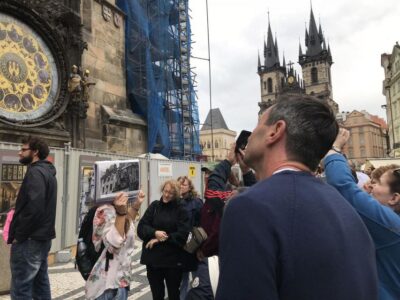
WWII Guided Tour & The Crypt of Operation Anthropoid
Read our review →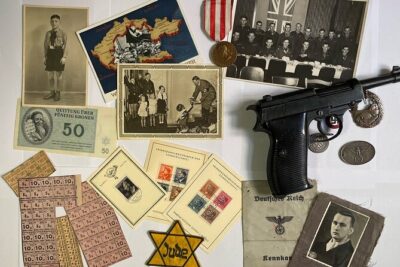
WWII in Prague Tour & The Crypt of Operation Anthropoid
Read our review →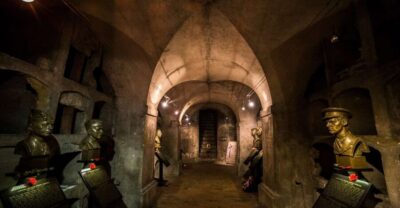
World War 2 and Operation Anthropoid Walking Tour
Read our review →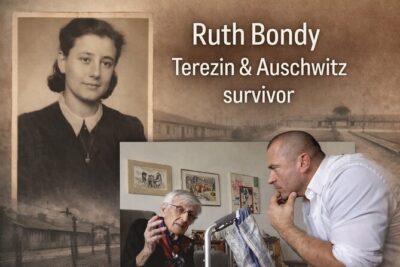
Terezin In-Depth Holocaust Tour From Prague’s Center (max 7 pax)
Read our review →
Second World War & Communism (Tip-based 3 hour tour)
Read our review →Browse the lists this tour appears in