
Review · COMMUNISM & COLD WAR TOURS
Prague Communism and World War II Walking Tour
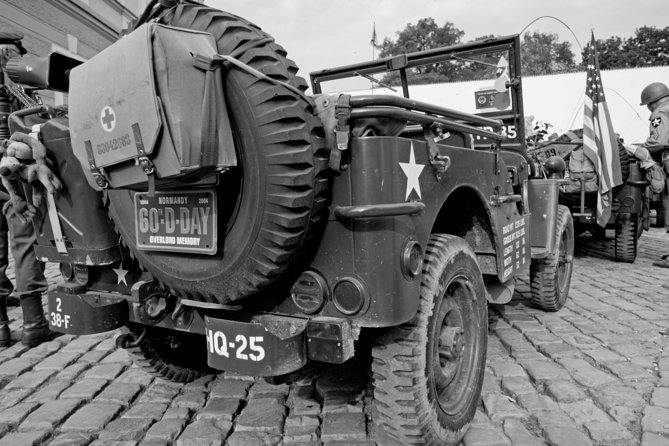
Prague tells its 20th-century story on foot. This walk follows the arc from Nazi occupation to Soviet control and the 1989 Velvet Revolution, using city landmarks to make the dates stick. You start near the Old Town Bridge Tower area, then move through spots that shaped Czech life and identity under shifting regimes.
I love how the tour gives fast city orientation along the way, not just dates on a page. I also love that the guide brings the story closer through human scale details, and in past tours specific guides have shared first-hand links to 1989 or school life under communism. The group stays small (up to 25), so you can ask questions without feeling like a number.
One possible drawback is that this is history-and-politics first. If you want lots of underground sites, bunker-style details, or a heavy focus on Jewish Quarter stops, you may feel you wanted more physical wartime specifics than what this walking route emphasizes. Also, there is no food stop built in, so plan to grab a snack or coffee before or after.
In This Review
- Key Things to Know Before You Go
- Starting at Křižovnické náměstí, then getting your bearings in Old Town
- Old Town Bridge Tower View and the Joseph Stalin statue story
- New Town’s political turning points: from democracy to occupation
- Wenceslas Square: Prague Spring, 1969 self-sacrifice, and 1989 Velvet Revolution
- How guides turn big events into human-scale stories
- Price and value for a 2-hour, guide-led history walk
- Pacing, comfort, and what to bring for this walking day
- Where to go after: follow-ups like the Museum of Communism
- Should you book this Prague Communism and WWII tour?
- FAQ
- How long is the Prague Communism and World War II walking tour?
- What does the tour cost?
- What time does the tour start?
- Where does the tour meet?
- Where does the tour end?
- Is the tour in English?
- How large are the groups?
- Is a mobile ticket used?
- Are food and drinks included?
- Can I cancel and get a refund?
Key Things to Know Before You Go
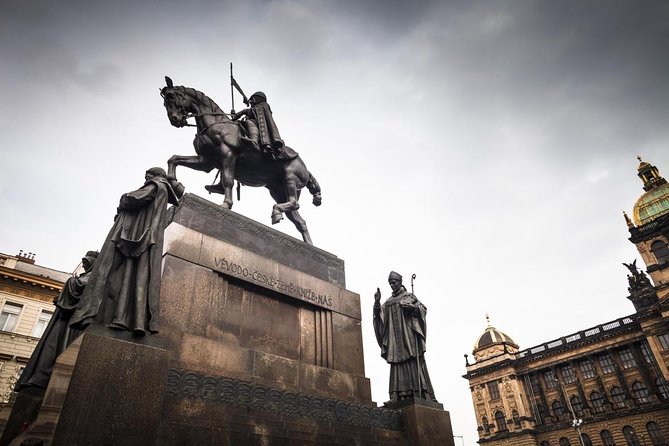
- Chronological walk through the Nazi and communist eras, with Prague Spring and 1989 as the turning points
- Three central areas: Old Town near the castle view, New Town, then Wenceslas Square
- Operation Anthropoid gets real attention, including why it matters in WWII Czech memory
- A small-group format (max 25) makes questions and conversation easier
- Comfort matters, since you will be on your feet for about 2 hours and the pace can vary by the guide and pace of discussion
Starting at Křižovnické náměstí, then getting your bearings in Old Town
The tour begins at Křižovnické náměstí, right in central Prague, and starts at 10:00 am. From the beginning, it is designed to help you see the city while you hear the story. You do not just stand and listen. You walk from landmark to landmark, using the geography to understand what rulers controlled and what Czech people lived through.
This is also a good timing choice. Late morning is often when tour groups start to bunch up around the biggest icons. A good guide can help you keep moving and focus on the key points instead of getting stuck behind crowds.
The route also sets expectations for what kind of tour this is. It is a walking history lesson, but it is not a museum visit. That means some topics are explained with context and examples, then anchored to a view, a plaque, or a street corner.
If you like your Prague with a bit of grit and truth, this format works. If you prefer light and postcard-only sightseeing, you might find the emotional weight heavy. But as history goes, it is delivered with energy and clarity, especially when you can ask the guide why certain events mattered.
More Communism-era tours in Prague:
- Prague: Communism History and Nuclear Bunker Guided Tour
★ 4.7 · 2,417 reviews - Prague Communism History and Nuclear Bunker Tour
★ 5.0 · 1,742 reviews - Communism & Nuclear Bunker Tour + 70s Canteen Lunch (own expense)
★ 5.0 · 1,036 reviews
Old Town Bridge Tower View and the Joseph Stalin statue story

Your first stop centers on the Křižovnické náměstí area and heads into the Old Town Bridge Tower neighborhood for a panoramic view of Prague Castle. That sightline is more than scenic. It is a reminder that power has always looked down over Prague, and today you can still feel how the city is organized around authority.
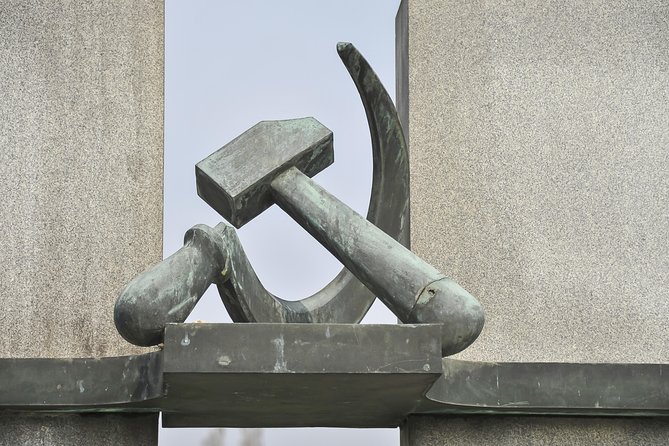
One detail I like here is the Stalin statue story. The guide explains that near this region there once stood the largest statue of Joseph Stalin in the world. Even if you only remember the basics, this kind of fact turns a word like communism into something physical. It also gives you a reason to look at the castle view through a 20th-century lens, not just a medieval one.
From there, the guide sets up the timeline step by step. You are not thrown into communism with no context. You get enough foundation to understand how WWII set the stage, how Soviet influence became real control, and why Prague later became a symbol of resistance.
Practical note: expect a bit of standing for the castle panorama. In winter or rainy weather, wear shoes you trust on uneven pavement. You’ll be moving constantly, but you may pause for sightlines and photos.
New Town’s political turning points: from democracy to occupation
Next comes New Town, where the story widens beyond a single era. This is where you learn what led the Czech nation from the grip of the Austrian monarchy to an independent Czechoslovak democratic state. The tour also connects that political freedom to economics, describing the strength of the era and highlighting how it was one of the last functioning democracies in Eastern and Central Europe after 1933.
Then the pace shifts into WWII. You hear about the suffering under the Nazi Protectorate of Bohemia and Moravia. The guide uses this period to explain how occupation changed daily life, not just borders on a map.
A standout topic here is Operation Anthropoid. The tour frames it as the only successful assassination of a senior Nazi leader during World War II. That matters because it shows Czech resistance was not only about surviving. It was also about acting, planning, and taking enormous risks.
The tour does not stop at WWII either. It moves into the communist regime’s methods and the enduring influence of the USSR, showing how a democratic state was transformed into a dictatorship. The emphasis is on what that meant for human life, and how quickly freedoms can shrink once control tightens.
What to watch for on this stop: listen for the contrast. The guide is building an emotional logic in your head. Democracy, then occupation, then dictatorship. When it clicks, the later scenes on Wenceslas Square hit harder.
Wenceslas Square: Prague Spring, 1969 self-sacrifice, and 1989 Velvet Revolution
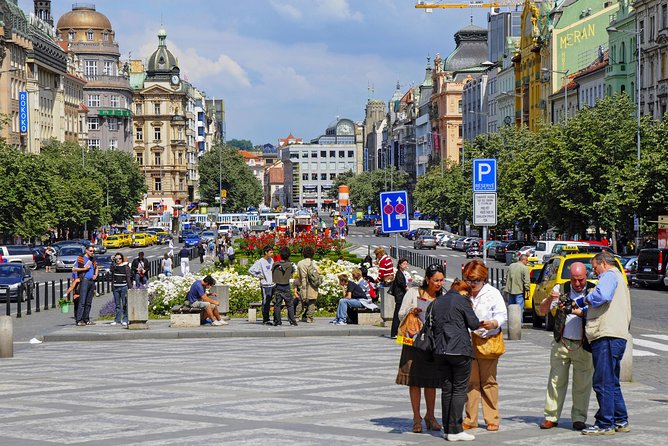
The final major stop is Wenceslas Square, and it is the tour’s emotional climax. You start by picturing Prague Spring in 1968, followed by the reality of Soviet tanks entering Prague. The guide ties this directly to a specific landmark moment, explaining how Soviet fire hit the building of the National Museum on Wenceslas Square.
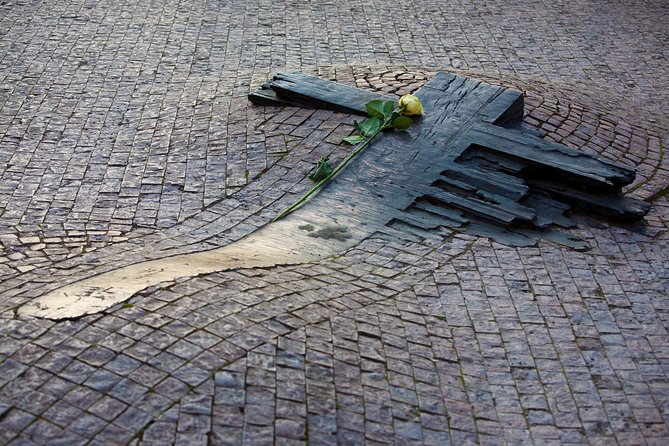
Then comes 1969 and a heartbreaking chapter that few first-time visitors know well. The tour notes that, on the same square, Prague remembers young students who burned themselves alive to unite the nation against their common enemy. The guide does not treat this like trivia. It is presented as a turning point in how people understood sacrifice and national identity.
From there, the walk moves through the atmosphere of the 1970s and 1980s, looking at how history reflects in the streets you pass. That is where the tour earns its “more than facts” reputation. It helps you see how a place holds memory, even when the buildings look the same as they always have.
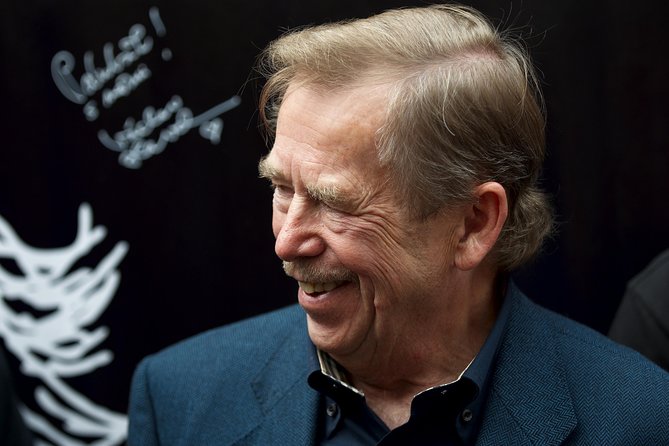
Finally, the guide brings you to 1989 and the Velvet Revolution. You hear stories about Václav Havel and courageous students, plus the role of brutal police forces and clashes at Narodní třída. The tour even includes some humorous and obscure stories from newly gained freedom, which is important. It shows that liberation was not only anger and fear. It was also relief, strange moments, and a people trying to live again.
If you’re short on attention span: this is the part to pay extra focus to. It’s the payoff for the whole timeline.
More wartime history tours in Prague:
- Prague: WWII Guided Tour & The Crypt of Operation Anthropoid
★ 4.7 · 1,030 reviews - WWII in Prague Tour & The Crypt of Operation Anthropoid
★ 5.0 · 817 reviews - Small-Group World War 2 & Operation Anthropoid Tour in Prague
★ 5.0 · 231 reviews - Prague: World War 2 and Operation Anthropoid Walking Tour
★ 4.8 · 193 reviews
How guides turn big events into human-scale stories
What repeatedly shows up as a highlight is the guide. This tour is led by a professional guide, and the best versions are driven by conversation.
You might get a guide who provides a gripping, first-hand account. In one group, the guide had been a student demonstrator during the Velvet Revolution, and that personal link makes 1989 feel like it happened yesterday, not decades ago. Another common element is family life under communism. One guide story includes school atomic drills, which helps you understand how fear and politics seeped into childhood routines.
Guides also tend to help you connect dots you might otherwise miss. For example, someone with deep familiarity can explain why democracy in Czechoslovakia mattered before the occupation, or what changed in daily life when the communist system took over.
You’ll also notice how guides keep the walk lively. One key theme from the experience is that questions are welcome. In several cases the tour ran a bit long because the guide had time to talk and answer follow-ups. That is a good sign. It means you are not just sitting through a script.
And since this is a walking format, the guide’s interaction affects your day. If you are the type who likes to stop, ask one more question, and keep learning, you’ll likely enjoy the conversation on this tour.
Price and value for a 2-hour, guide-led history walk
At $30.12 per person for about 2 hours, this tour sits in the “small cost, big context” zone for Prague. You are paying for a professional guide, a tight route through three major areas, and a story you can’t easily gather from a quick stroll.
There’s also evidence the value lands. The overall rating is 4.7 from 28 reviews, and 93% of people recommend it. That does not guarantee your exact guide style will match your taste, but it does suggest most people find the learning payoff worth it.
The best part for value is the structure. The tour does not scatter topics randomly. It follows major turning points: Austrian era to independence, WWII occupation and resistance, then communist rule, Prague Spring, and finally 1989.
One reason the price feels fair is that you are not paying extra for admissions. The itinerary indicates admission tickets are free at the listed stops, so you’re not stuck later with surprise costs.
Just plan for the missing piece: there’s no food or drinks included. You’ll want to schedule your meal after the walk. If you are doing this in the morning, coffee nearby or a quick lunch stop soon after will make the rest of your day feel smoother.
Pacing, comfort, and what to bring for this walking day
This is a walk, so wear shoes that handle cobblestones and city sidewalks without punishing your feet. Even when the tour is labeled as about 2 hours, the real time can vary. Some groups experienced extensions beyond the stated time, especially when the guide had room for extra questions or when the group size was small.
Small groups can also change pacing. When the tour ends up intimate, you may move slower and talk more. That can be a win, but it may also mean you’re still walking longer than planned.
Bring a light layer. Prague weather can swing. Also bring a phone with enough battery for quick map checks and photos. The guide may point out viewpoints and street-level details worth capturing.
If you get motion sensitive, note that you will be outside for most of the walk. That is normal for a walking tour, but it helps to plan for the kind of day you’re having.
Finally, mentally prepare for the emotional content. A few stops include violence, occupation, and personal tragedy. If you want the history without the weight, consider whether another tour might fit you better. If you want to understand why modern Prague feels the way it does, this is a strong route to do it.
Where to go after: follow-ups like the Museum of Communism
By the end, you’ll likely want to convert the stories into something you can still see. One guide recommendation from the experience is the Museum of Communism, described as terrific. It can be a logical next step if you want artifacts, photos, and a denser look than a walking route allows.
Also, guides often share ideas for food and drink after the tour. There are examples of guides taking time for coffee or pointing toward a great beer spot. That can be a fun way to transition from heavy history into regular Prague life.
If you’re building a bigger itinerary, this tour works well as an early history anchor. It gives you a frame for what you’ll see later, especially around the Old Town, New Town, and the Wenceslas Square area.
Should you book this Prague Communism and WWII tour?
Book it if you want an efficient way to understand Prague in the 20th century, with a timeline that links WWII, Nazi occupation, communist control, Prague Spring, and 1989. You’ll likely appreciate the walk for getting your bearings fast while also learning why specific places carry emotional weight.
Consider skipping it or pairing it with something more site-specific if you mainly want tunnels, hideouts, or very detailed battlefield-style WWII stops. There is also a chance the Jewish Quarter coverage may feel light depending on your interests, so if that is your top priority, plan an extra stop elsewhere.
My take: at this price, with the solid rating and the strong reputation for guide storytelling, it’s a smart way to understand Prague beyond postcards. If you like history that connects to streets and views, this tour should earn a slot on your calendar.
FAQ
How long is the Prague Communism and World War II walking tour?
It runs for about 2 hours.
What does the tour cost?
The price is $30.12 per person.
What time does the tour start?
The start time is 10:00 am.
Where does the tour meet?
The meeting point is Křižovnické náměstí, Praha 1-Staré Město, near the Old Town Bridge Tower area.
Where does the tour end?
The tour ends in Prague city centre.
Is the tour in English?
Yes, it is offered in English.
How large are the groups?
The maximum group size is 25 travelers.
Is a mobile ticket used?
Yes, you get a mobile ticket.
Are food and drinks included?
No, food and drinks are not included.
Can I cancel and get a refund?
Yes. You can cancel for free up to 24 hours in advance for a full refund.
More Walking Tours in Prague
- Prague: 3-Hour Walking Tour of Old Town & Prague Castle
★ 4.7 · 5,696 reviews - Prague: Ghost Walking Tour Where Legends Come To Life
★ 4.4 · 5,253 reviews - Prague: Jewish Quarter Walking Tour with Admission Tickets
★ 4.7 · 3,729 reviews - Prague Guided Walking Tour and Cruise with Authentic Czech Lunch
★ 5.0 · 3,627 reviews
Just added around Prague
- WWII and Communism History in Prague’s Old Town Private Tour★ 5.0 · 4 reviews
- Prague: Historical Walking Tour with Focus on World War 2★ 4.3 · 12 reviews
- World War II 4WD Tour from Prague with Lunch★ 4.4 · 3 reviews
- World War II History Tour of Prague’s Old Town★ 5.0 · 4 reviews
- Walking tour of Prague in French : Nové Město★ 4.9 · 16 reviews
- Walking tour of Prague in french: Old Town & Charles Bridge★ 4.9 · 62 reviews
- Organ Concert in St Francis Church Admission Ticket★ 4.5 · 88 reviews
- Unique salt cave in Prague★ 4.9 · 10 reviews
Communism & Cold War Tours, compared.
Communism History and Nuclear Bunker Guided Tour
Read our review →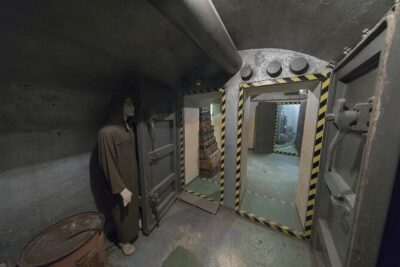
Prague Communism History and Nuclear Bunker Tour
Read our review →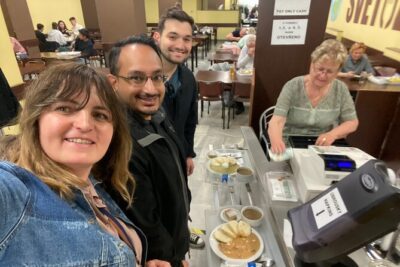
Communism & Nuclear Bunker Tour + 70s Canteen Lunch (own expense)
Read our review →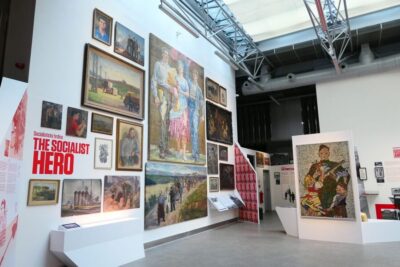
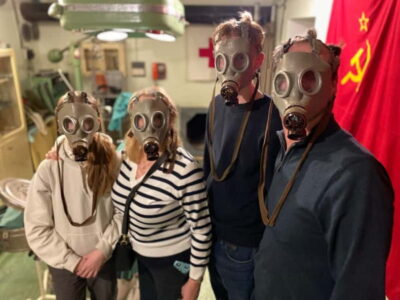
Communism and Bunker Tour with 70s Canteen Lunch
Read our review →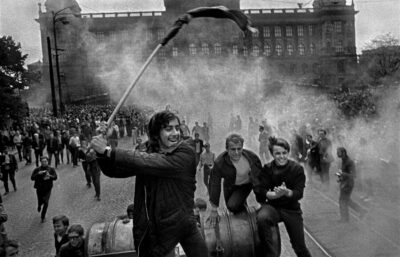
Second World War & Communism (Tip-based 3 hour tour)
Read our review →
Browse the lists this tour appears in